Bhoon+ House in Bangkok: A Roof That Bends to Let a Shared Tree Grow Through
anonym studio builds a new home on a 376-square-meter former lawn in Bangkok, carving a notch into the roof to let a courtyard tree grow right through the structure—while keeping a visual connection to the original house next door.
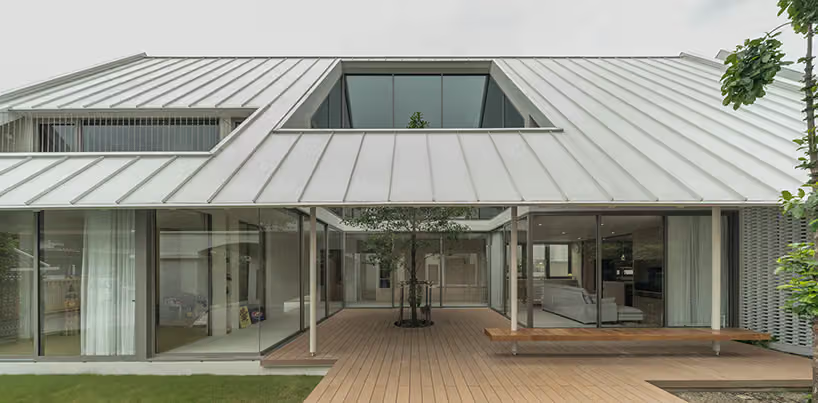
A roof is supposed to be one continuous plane, but in Bhoon+ House by anonym studio in Bangkok, there's a deliberate gap cut into it—just so a tree in the courtyard has room to grow. This willingness to "break" the roofline for the sake of a single tree sets the tone for the entire house: the courtyard isn't an afterthought sitting beside the architecture, it's baked into the building itself.
The site was originally a 376-square-meter lawn belonging to a family home in Bangkok. When it came time to build a new house here for another branch of the family, the goal was to avoid severing the connection with the existing house. anonym studio's solution was to preserve the entire original lawn as a shared courtyard between both homes—keeping the two houses linked spatially and visually, while still giving the new household its own layer of privacy.
The site faces east onto the street, so a full east-facing facade would mean brutal direct sunlight. anonym studio's move was to carve the courtyard into the middle of the building, effectively opening up a north-facing edge within the long volume. Light comes in from the north, and the main living spaces naturally orient toward the courtyard—cutting down on solar exposure at the front while still allowing generous glazing throughout.
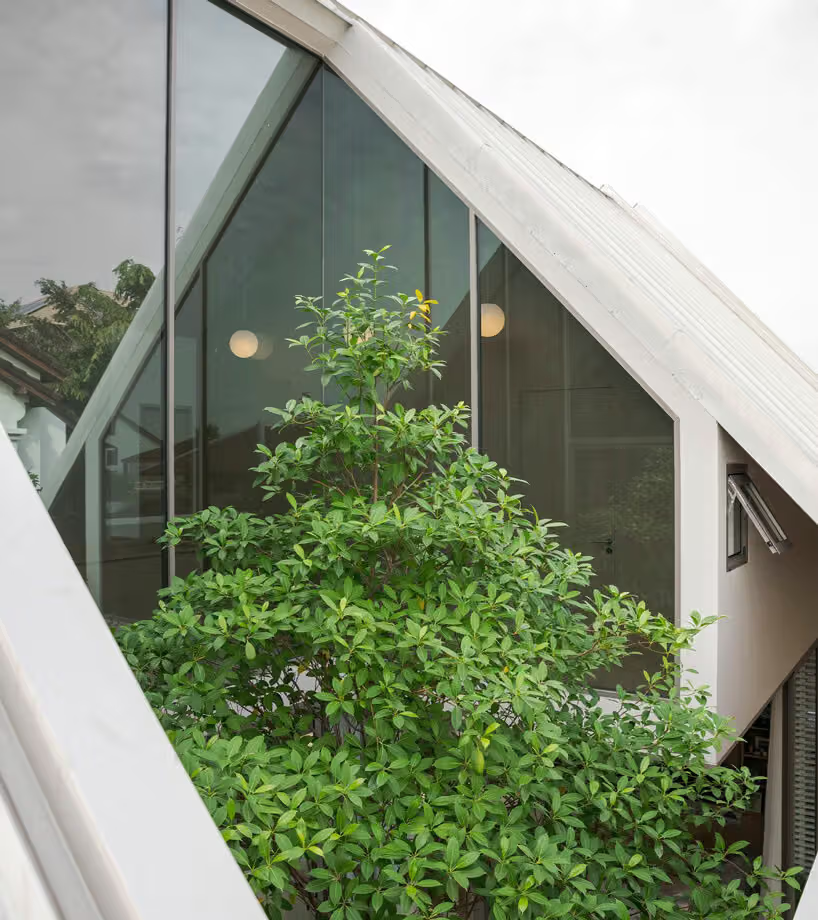
The standout move is that recessed section of roof. It's not a bolted-on skylight structure—it's a deliberate setback within the continuous roof plane, sized precisely to fit the canopy of the courtyard tree. The result is a roofline with a distinct break in it, and a tree that, in a sense, has "grown into" the building's form rather than simply standing in the yard to be looked at.
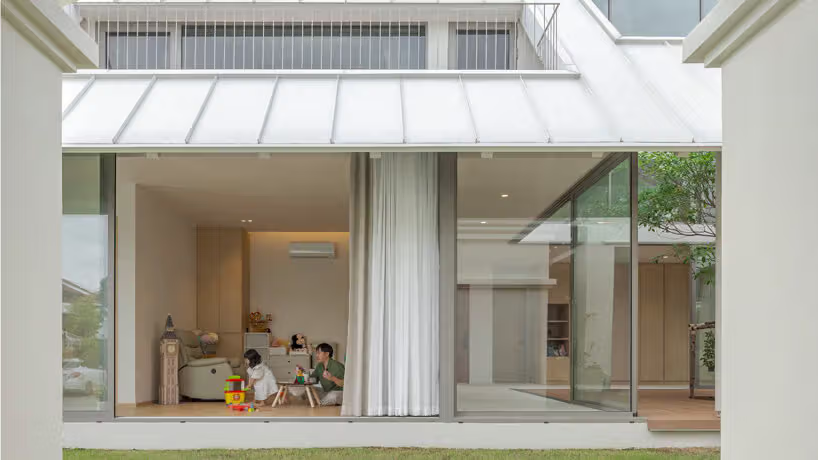
Inside, roughly 400 square meters of living, dining, and kitchen space flows together as one continuous public zone, with large windows placed at several corners of the plan to pull the eye toward the courtyard and garden. The kitchen has operable louvered shutters for ventilation, while the service areas and Thai kitchen are tucked toward the back, expressed on the exterior as a curved volume of white-painted brick. Gaps in the brickwork let light and air filter through—a deliberate contrast to the expansive glass on the courtyard-facing side.
Upstairs, private bedrooms wrap around a central void, with glass corridors between floor levels letting light pass through. A room originally planned for board games is enclosed by a full-height glass wall, catching light filtered in from an adjacent balcony. The master bedroom features an east-facing glass wall with garden views, a sloped ceiling, and a raised platform that extends the room into an informal lounging area.
At the center of the courtyard, alongside the tree, sits a semi-outdoor deck finished in composite wood decking, sheltered by a deep overhang—functioning both as an extension of the living space and as a transition point between indoors and out. The newly planted tree strengthens the visual relationship between the two households, its canopy reaching up to the second-floor windows so that the greenery below can be seen from the main rooms of both homes. In effect, it reconnects two separate households' daily lives back to a single shared landscape.