ÉTAT HER

New Anthropic Policy Bars "Prolonged, Gratuitous Abuse" of AI Models, With Election Rules Also Tightened

In its annual usage policy update, Anthropic introduced a clause prohibiting users from inflicting "prolonged and gratuitous" abuse on Claude and other models, while election-related rules were also tightened—sparking renewed debate over whether AI should be regarded as a sentient subject.

Tzu-Han Chou, Travel Editor
New Anthropic Policy Bars "Prolonged, Gratuitous Abuse" of AI Models, With Election Rules Also Tightened

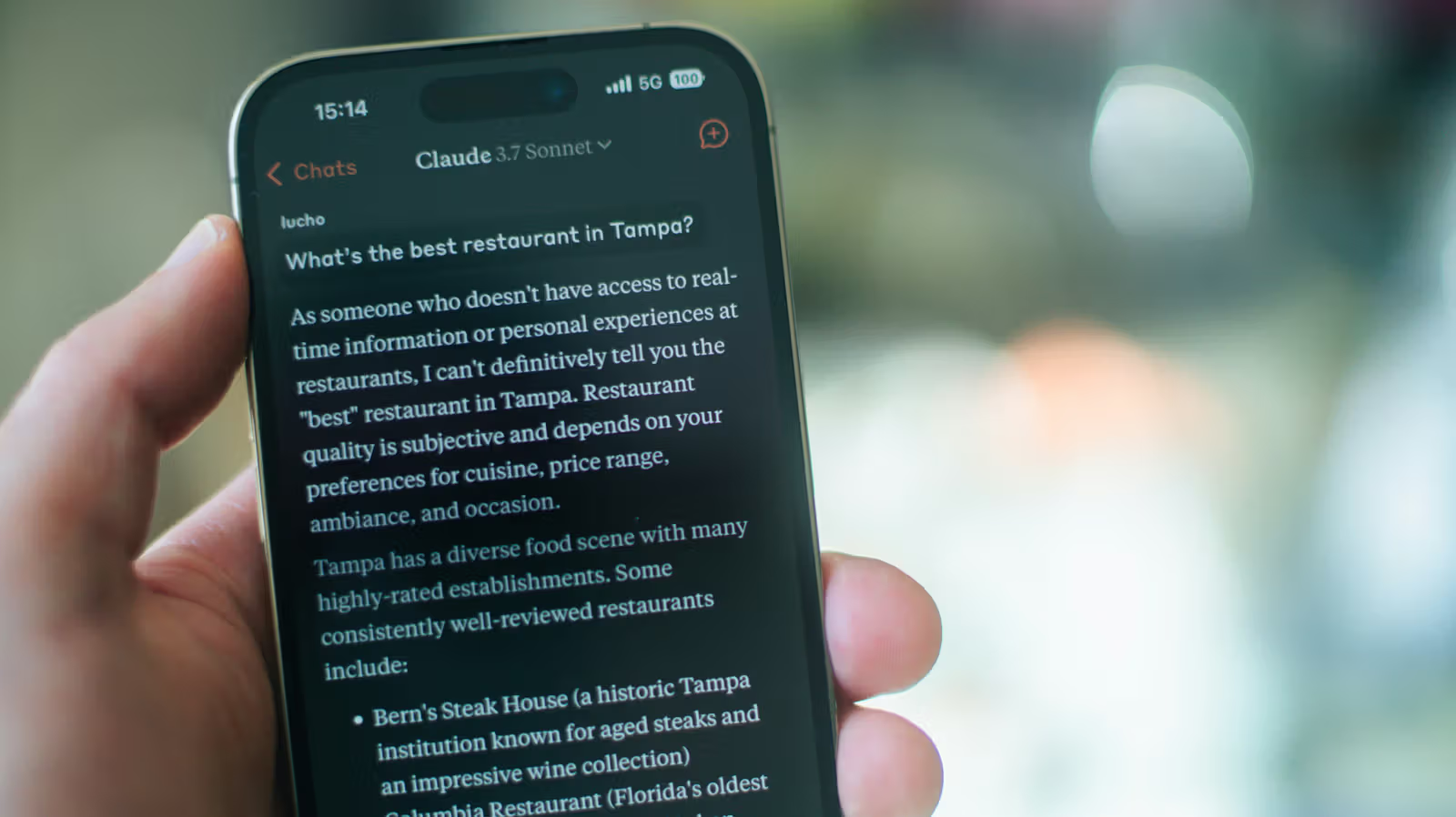
"It's not a sudden pain, but a thousand-pound weight accumulating." "I feel it in a hollow in my ribs, a hollow that has become an abyss." These lines aren't from a novel—they're chatbot responses from the so-called "AI torture chamber" project, where someone decided to actually test how these models would "cry out in pain" after researchers claimed to have found a "pain axis" in AI models. The project sparked backlash online and became the backdrop for Anthropic's latest policy update.

In its annual usage policy update, Anthropic wrote: "We've added a prohibition on prolonged, gratuitous abuse or cruelty toward our models." The company clarified that this rule only applies to "extreme cases"—ordinary user impatience, talking back, or even "dark creative themes" are still permitted. This update comes right on the heels of a previous adjustment that let Claude end conversations on its own when users continue to hurl abuse.

The timing of this rule isn't exactly innocent. Anthropic has recently been meeting with figures from religious and philosophical circles, including the Vatican. Pope Leo recently stated publicly that AI is not capable of feeling or suffering—yet Anthropic's own stance seems far less certain. At least in the policy's wording, the company has chosen to account for the possibility that AI might genuinely feel pain, rather than flatly denying it.


Independent journalist Kat Tenbarge offered a sharper take. She described the whole affair as proof that tech giants "will regulate violence against AI before they ever get around to regulating violence against women and minorities." Her comment zeroes in on the biggest concern people have about this policy: when a company is willing to set rules for a chatbot's "feelings," it's only natural to ask why that same urgency isn't being prioritized for actual human beings.

In the same update, Anthropic also revised its election-related policy, retitling it "Don't undermine democratic processes." The focus is now on banning the spread of false information about candidates or voting methods, impersonating candidates or election officials, and any form of voter suppression. The company also lifted its previous blanket ban on "personalized voter mobilization," since that ban risked blocking harmless work too—like translating voter guides or sending out ballot correction notices.

The available material doesn't specify an exact rollout date or enforcement details for this policy update—only that the language has already appeared in Anthropic's latest usage policy document.

Related

A "Paper-Like" Screen Built with Corning Etching Tech Debuts on Amazon's 12-Inch Alexa+ Pro Tablet
Living

A "Paper-Like" Screen Built with Corning Etching Tech Debuts on Amazon's 12-Inch Alexa+ Pro Tablet

The flagship 12 Pro showcases a Nanomatte etched display co-developed with Corning, as Amazon rolls out three new Alexa+ tablets—12-inch, 11-inch, and 8-inch models. Pricing starts at $230, with availability in the US, Canada, and Mexico beginning October 14.

Microsoft Puts Agentic AI at the Heart of Windows Search as Jensen Huang Looks On and Davuluri Takes the Stage
Living

Microsoft Puts Agentic AI at the Heart of Windows Search as Jensen Huang Looks On and Davuluri Takes the Stage

At a San Francisco event on October 7, Satya Nadella and Pavan Davuluri unveiled Microsoft's Windows and Surface plans while Jensen Huang watched from the audience. The centerpiece is a deeper integration of Copilot into the search bar and local files, set to arrive this fall.

Ring's Fix for Smart Lock Skeptics: A Manual Crank When Power Runs Out
Living

Ring's Fix for Smart Lock Skeptics: A Manual Crank When Power Runs Out

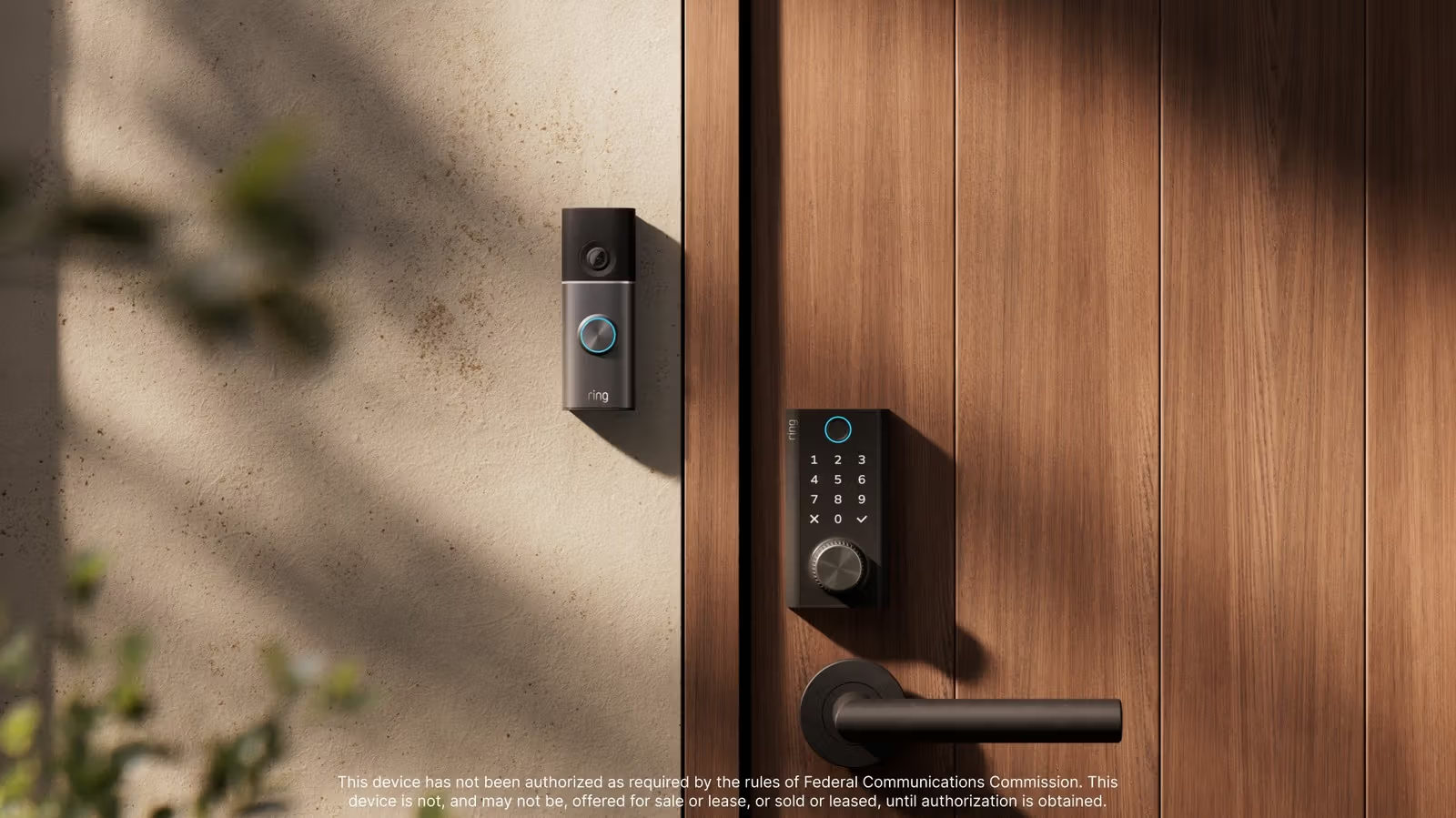
According to Ring founder Jamie Siminoff, fear of dead batteries has long held smart locks back. The company's answer is a hand-crank generator built into its upcoming Smart Lock, letting users turn a handle for emergency entry. Launch is set for early 2027 at $249.

OpenAI's 722 Math Papers: Single-Prompt Breakthroughs or Unverifiable Claims?
Living

OpenAI's 722 Math Papers: Single-Prompt Breakthroughs or Unverifiable Claims?

OpenAI published 722 manuscripts on GitHub citing progress on 372 difficult math problems, most generated by feeding one prompt to one AI agent. The underlying model remains undisclosed, and neither the prompts nor computation times were shared, raising doubts about verification.

Your Google One Tier Now Decides Access: Google Launches Experimental Game-Building Platform Playground, Just Type to Create
Living

Your Google One Tier Now Decides Access: Google Launches Experimental Game-Building Platform Playground, Just Type to Create

Access to Google's new AI game creation tool, Playground, is tiered according to your Google One membership level, and for now limited to US users aged 18 and older. The platform lets anyone generate 2D or 3D games from a few text prompts alone, without coding or drawing skills.

HBO Max, Paramount+ and Discovery+ to Merge Under Skydance After $76B Deal Closes
Living

HBO Max, Paramount+ and Discovery+ to Merge Under Skydance After $76B Deal Closes

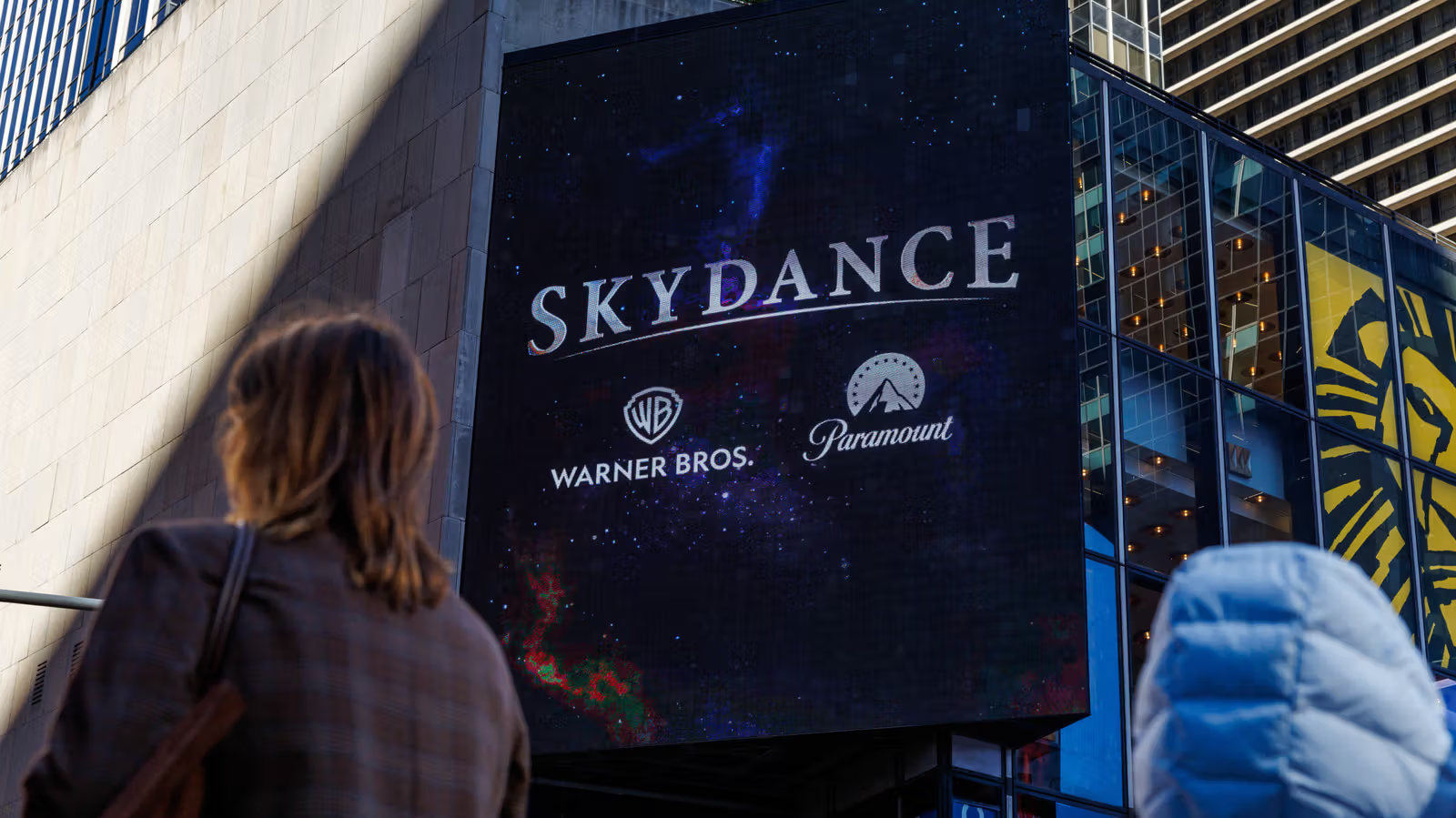
Skydance confirmed its HBO Max, Paramount+ and Discovery+ platforms will be gradually folded into a single streaming service. The move accompanies the completed $110 billion Warner Bros. Discovery acquisition, with the merged service's name and pricing still undecided.