The body sits just one meter off the ground—lower than any production Bugatti currently makes. When the Destrier was unveiled at The Quail during Monterey Car Week, what first stopped people in their tracks wasn't the color scheme, but that ground-hugging, almost oppressive sense of proportion. The 20-inch front and 21-inch rear wheels prop up such a low-slung body that visually, it reads even closer to the asphalt than the numbers suggest.

This car started life as the Bolide, Bugatti's extreme track-focused performance machine built on a carbon fiber chassis with a 1,600-horsepower W16 engine. The Destrier is the third creation under Programme Solitaire, a program that goes even further than the brand's existing Sur Mesure customization service, letting a select handful of clients build a bespoke body from the ground up alongside Bugatti's design team. The two prior works were the Brouillard and the F.K.P. Hommage.

The Bolide's body exists almost entirely in service of lap times, with exposed aero components dominating its visual presence. What the Destrier does is closer to subtraction: the chassis and powertrain carry over, but the entire outer shell has been reshaped, stripping away most of the exposed aero hardware in favor of more cohesive surfacing. The rear wing has been integrated into the body volume itself, no longer a separately mounted piece.

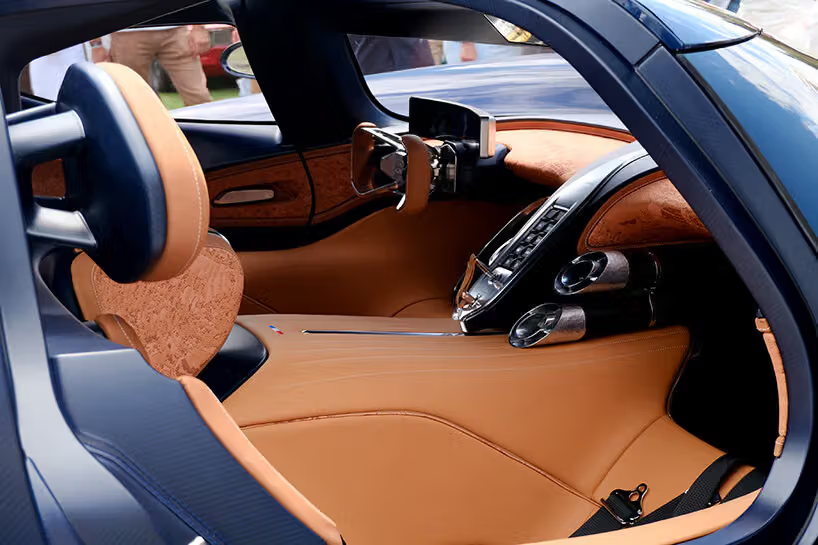
Above the windshield inside the cabin, Bugatti placed a laser-etched plaque depicting the 1930s Type 57G Tank race car alongside the Type 57SC Atlantic. That same Type 57 chassis once supported wildly different body styles back in the day—the plaque essentially explains the Destrier's relationship to the Bolide in its own words: the same mechanical skeleton can grow into entirely different shapes.