ÉTAT HER

Cadillac V-One: A Concept Car Wearing a Race Car's Bones, Waiting for a Buyer

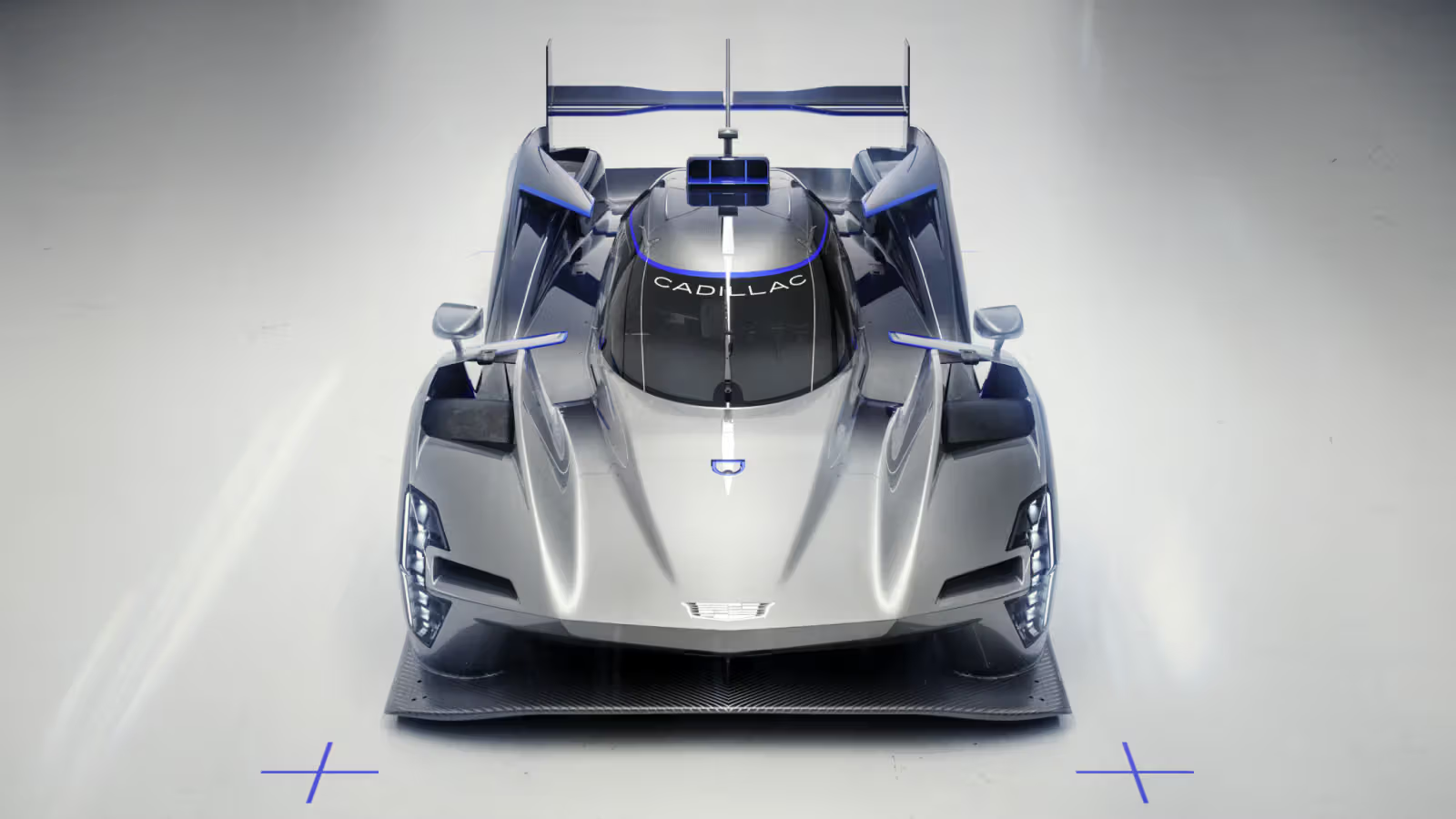
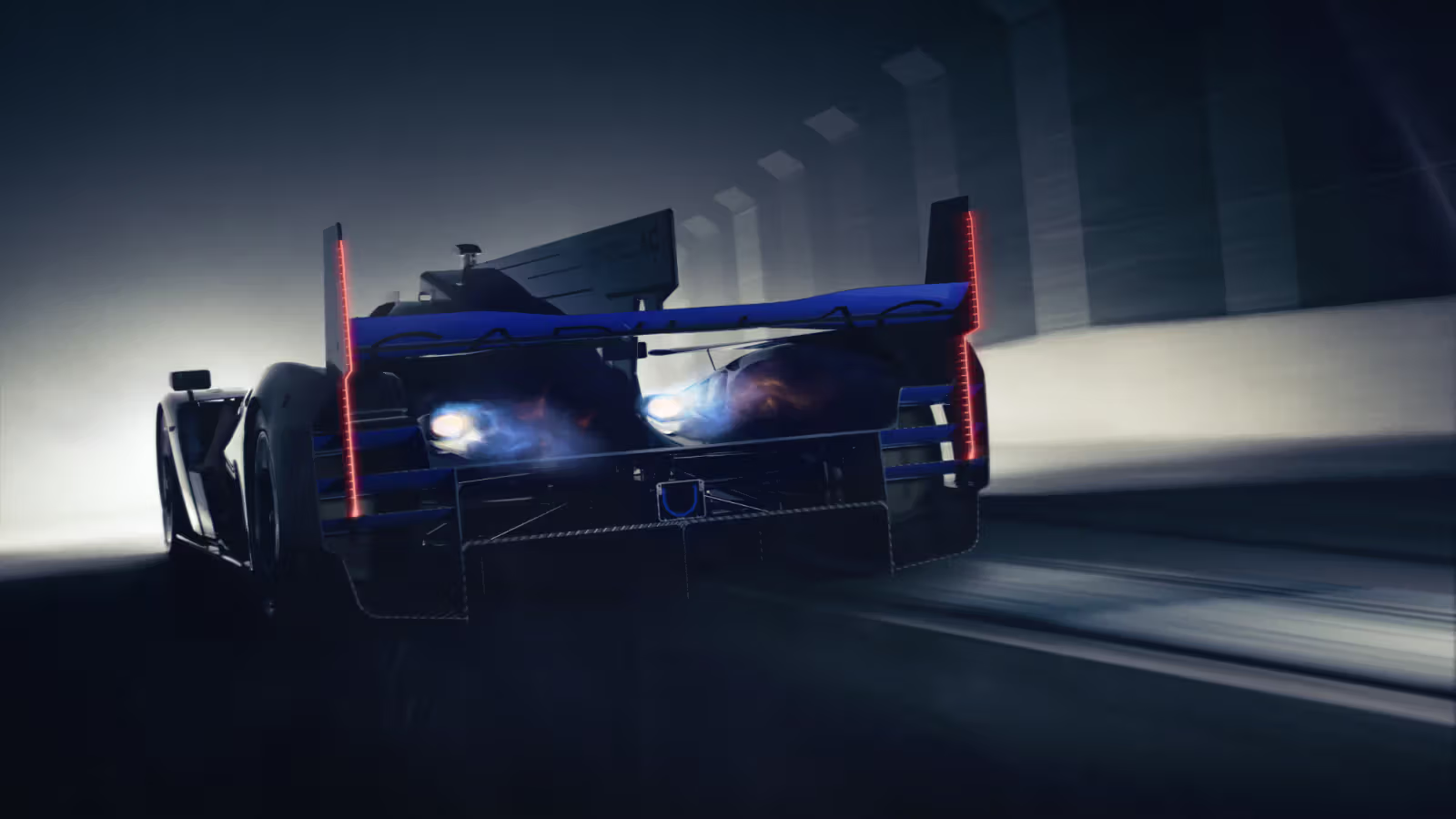
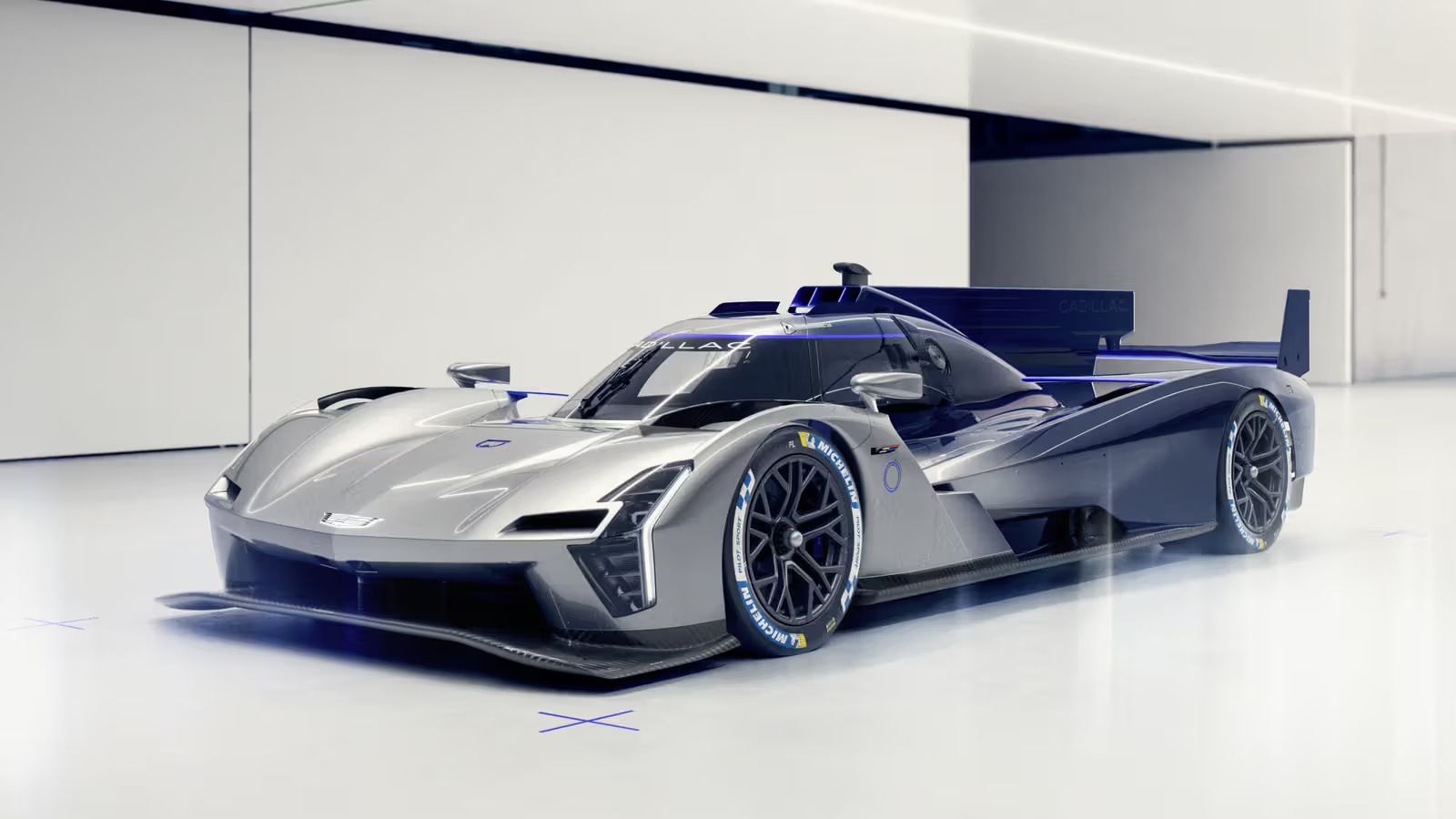
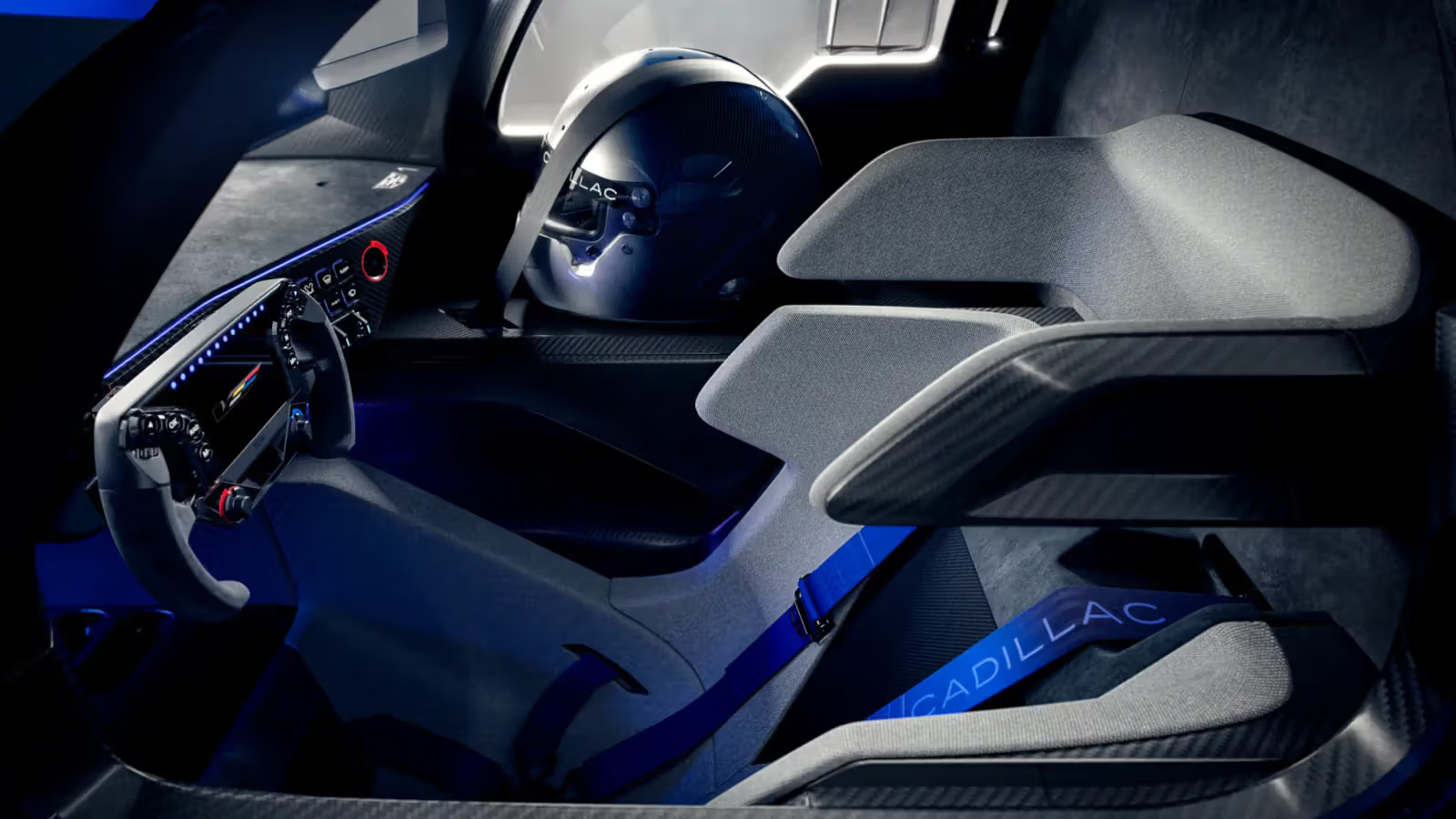
This single-seat concept, finished in a silver-to-deep-blue gradient paint, borrows its skeleton almost entirely from the Le Mans-conquering Cadillac V-Series.R. It's not a flight of fancy—it's a design experiment built around one rule: you don't mess with the proportions.

Cadillac V-One: A Concept Car Wearing a Race Car's Bones, Waiting for a Buyer

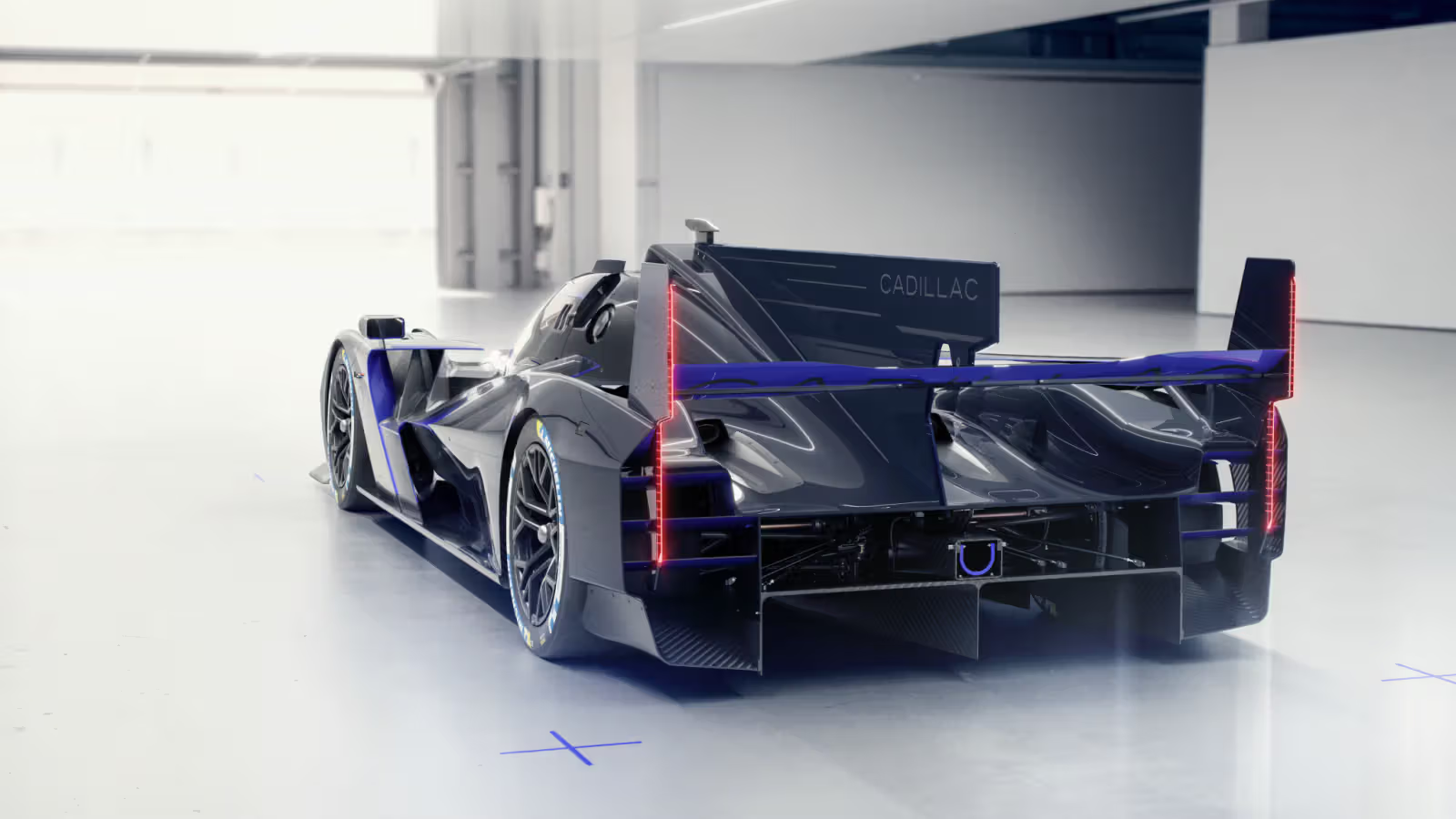
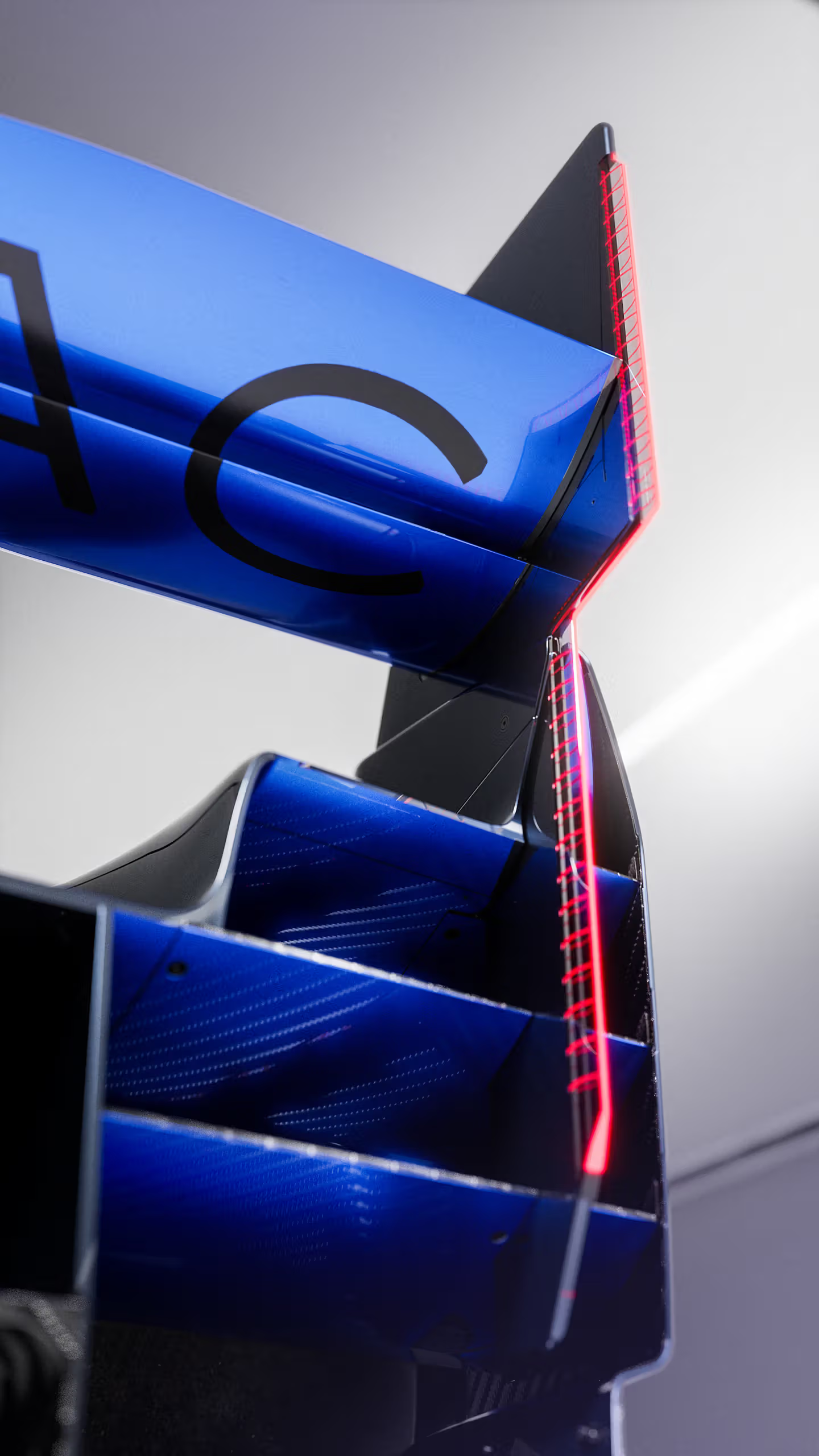
A single-seat cockpit, vertical lighting elements, and lines pulled so taut they border on nervous energy—the Cadillac V-One Concept sat on the lawn at The Quail, A Motorsports Gathering in Monterey, California, looking nothing like what a "concept car" is supposed to look like. It reads more like something that just rolled off the track at Le Mans and happened to get a fresh coat of silver-to-deep-blue paint. And that's basically the truth of it: V-One's underlying structure comes directly from the Cadillac V-Series.R, the prototype race car that competed in the 24 Hours of Le Mans—except this time, the finish is meant for buyers to admire, not for drivers to race in. It can't be driven on public roads, and if it ever does go into production, the numbers will be vanishingly small. Anyone who ends up owning one will probably just take it to their own private track, wrapped in a custom livery of their choosing.
Cadillac V-One:一台掛著賽車底盤、卻在等買家的概念車

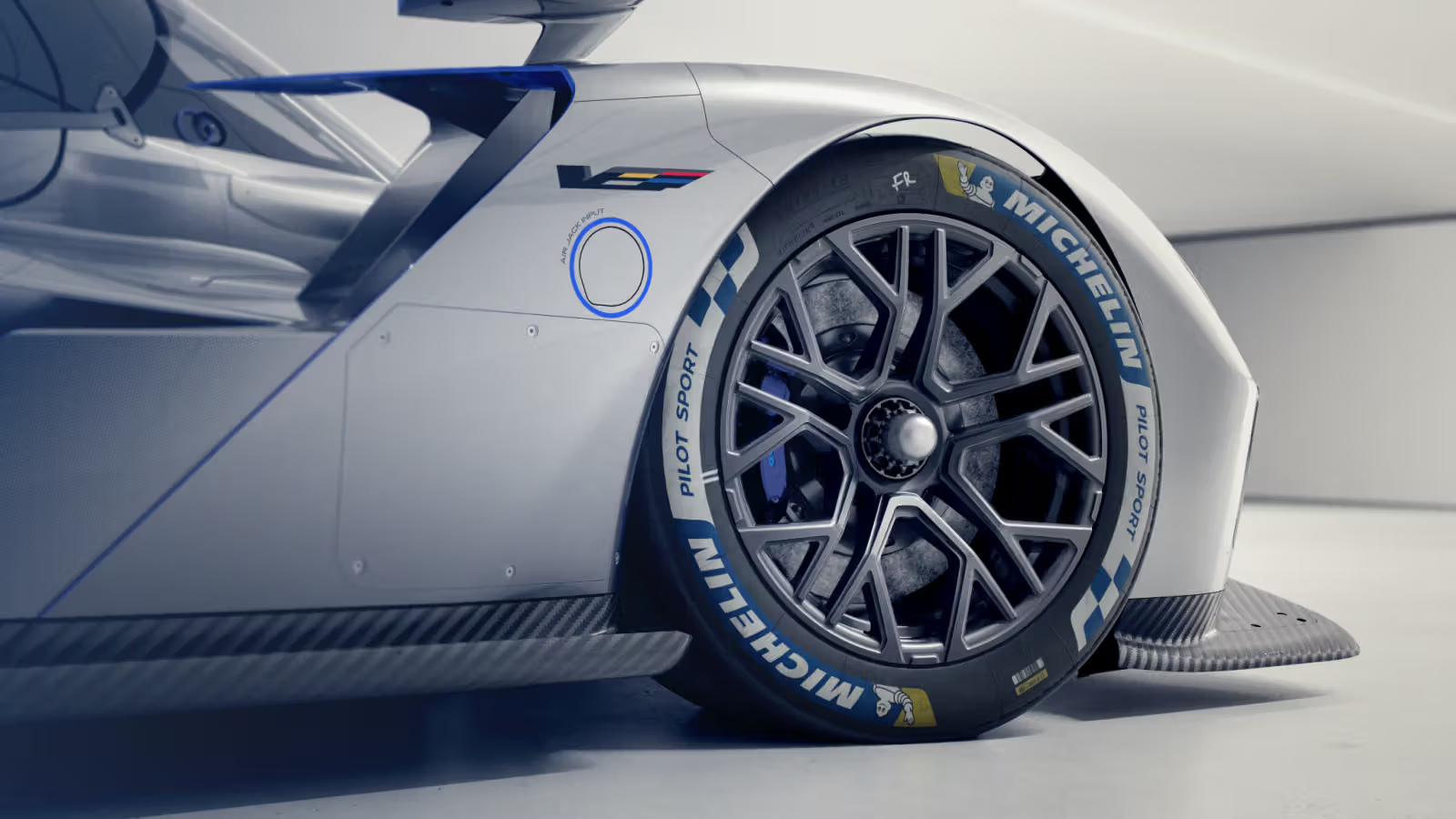
That inability to "mess with it" is exactly what makes this car interesting. Kevin Nougarede, Cadillac's Exteriors design manager, put it plainly: "Making something that's basically a race car is completely different from our normal work. You can't just play around with proportions or shapes, because those lines exist for performance—and for the driver's safety. If I casually change one design element, the car could literally lose control." So where does the emotion come from? He says it's in the gaps between panels, the way the surfaces flow into one another, and the paint finish itself. Compared to Cadillac's earlier flights of fancy like the Elevated Velocity and Opulent Velocity concepts, V-One's design sense actually emerged *because* the team was boxed in by engineering constraints, not despite them.
Cadillac V-One:一台掛著賽車底盤、卻在等買家的概念車

Dominic Najafi, Global Cadillac's Executive Director of Design, posed a rhetorical question to a small group of media gathered at Detroit's new design center: "Why do we make concept cars?" His own answer: for a company like GM that values design as an investment, a concept car is a canvas for making bold decisions quickly—pushing proportions, architecture, and surfacing, then feeding that inspiration back into the whole company. He admitted that even though V-One sticks closer to real-world proportions than past concepts, the design team still "couldn't stop themselves," sketching the car even after hours. During the interview, a senior designer standing near Nougarede was still bent over, sketching yet another pencil rendering of the V-One.
Cadillac V-One:一台掛著賽車底盤、卻在等買家的概念車

A Generational Handoff

Cadillac V-One:一台掛著賽車底盤、卻在等買家的概念車

The timing of this car's arrival is no coincidence. GM's Global Design chief Michael Simcoe retired last year, with Bryan Nesbitt stepping into his role. Former Cadillac exterior design director Bob Boniface and Andrew Smith, who later became GM's Executive Director of Advanced Design, have both retired as well. Najafi took over from Nesbitt, having previously worked at Jaguar Land Rover, Bentley, and GM Europe. He and his team now operate out of the newly completed, 360,000-square-foot Design West building, constructed on the lawn facing the Saarinen Building—a structure that's been in use since 1956 and still retains its 1950s-modern carpeting and woodwork. Inside, robotic arms carefully mill full-scale red clay car bodies—an old-school technique dating back to the Harley Earl era, now paired with futuristic new equipment.

Cadillac V-One:一台掛著賽車底盤、卻在等買家的概念車

Cadillac's most celebrated design eras have, coincidentally, always coincided with periods of American social upheaval: the 1934 Cadillac V-16 Fleetwood Aerodynamic Coupe, born out of Harley Earl's hands during the Great Depression of the 1930s; or the postwar era, when designer Franklin Q. Hershey crafted Cadillac's signature tailfins for the 1948 model, inspired by the twin tails of the Lockheed P-38 fighter jet. Whether V-One continues this tradition of "optimistic future-building during turbulent times" isn't something the material gives a clear answer to—but Najafi, standing in front of the clay model saying "this car really can spark inspiration," sounded like someone who was still working out the answer for himself.

Cadillac V-One:一台掛著賽車底盤、卻在等買家的概念車

Nougarede's description of the car might be the most fitting: "It's exciting, but also a little terrifying, because it's different. As designers, we're always trying to overturn the established way of doing things. This time, the approach was to figure out how design could tell a new, different story for something that already exists." V-One currently has no announced price or production timeline.

Related

New Anthropic Policy Bars "Prolonged, Gratuitous Abuse" of AI Models, With Election Rules Also Tightened
Living

New Anthropic Policy Bars "Prolonged, Gratuitous Abuse" of AI Models, With Election Rules Also Tightened

In its annual usage policy update, Anthropic introduced a clause prohibiting users from inflicting "prolonged and gratuitous" abuse on Claude and other models, while election-related rules were also tightened—sparking renewed debate over whether AI should be regarded as a sentient subject.

A "Paper-Like" Screen Built with Corning Etching Tech Debuts on Amazon's 12-Inch Alexa+ Pro Tablet
Living

A "Paper-Like" Screen Built with Corning Etching Tech Debuts on Amazon's 12-Inch Alexa+ Pro Tablet

The flagship 12 Pro showcases a Nanomatte etched display co-developed with Corning, as Amazon rolls out three new Alexa+ tablets—12-inch, 11-inch, and 8-inch models. Pricing starts at $230, with availability in the US, Canada, and Mexico beginning October 14.

Microsoft Puts Agentic AI at the Heart of Windows Search as Jensen Huang Looks On and Davuluri Takes the Stage
Living

Microsoft Puts Agentic AI at the Heart of Windows Search as Jensen Huang Looks On and Davuluri Takes the Stage

At a San Francisco event on October 7, Satya Nadella and Pavan Davuluri unveiled Microsoft's Windows and Surface plans while Jensen Huang watched from the audience. The centerpiece is a deeper integration of Copilot into the search bar and local files, set to arrive this fall.

Ring's Fix for Smart Lock Skeptics: A Manual Crank When Power Runs Out
Living

Ring's Fix for Smart Lock Skeptics: A Manual Crank When Power Runs Out

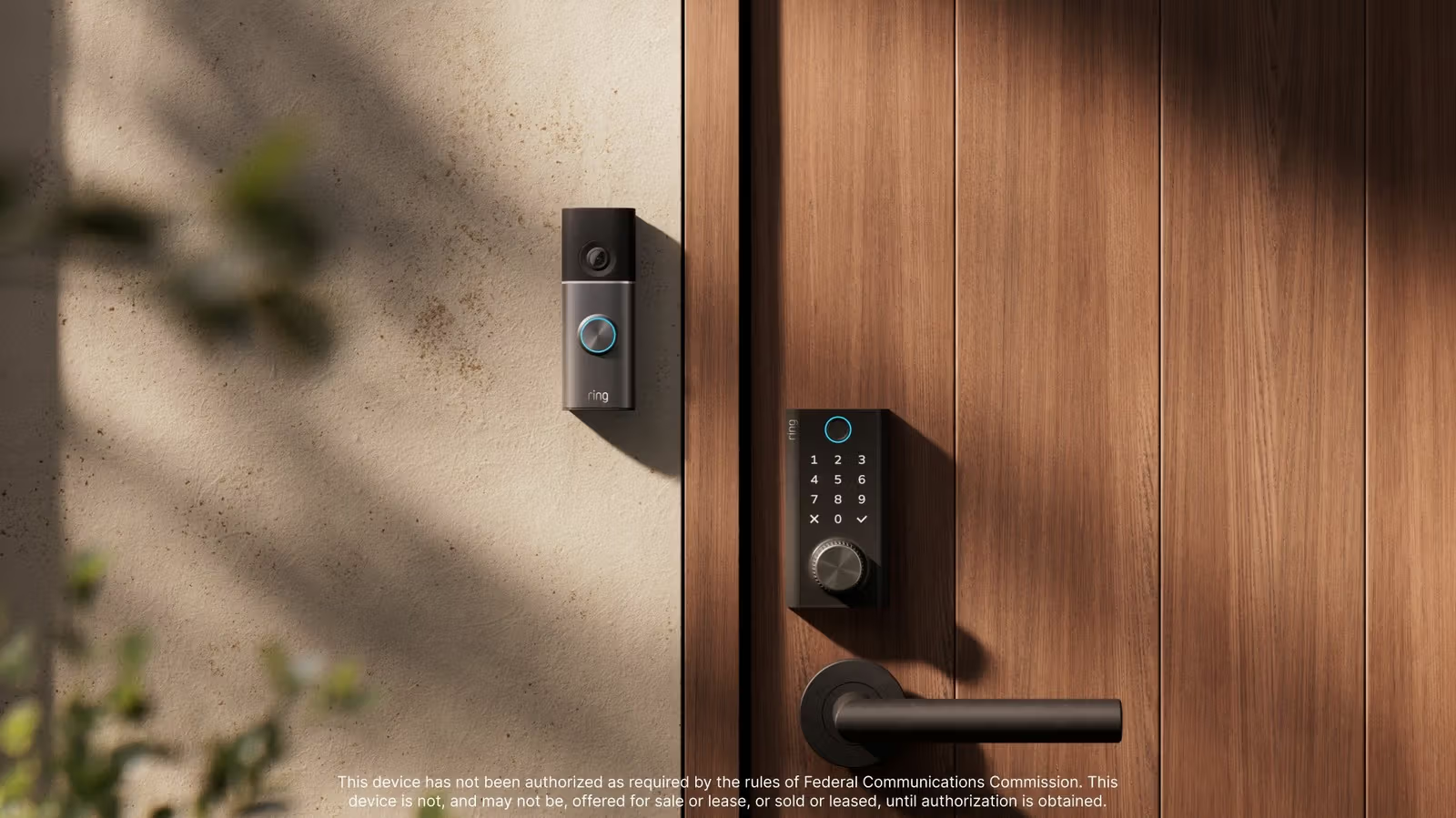
According to Ring founder Jamie Siminoff, fear of dead batteries has long held smart locks back. The company's answer is a hand-crank generator built into its upcoming Smart Lock, letting users turn a handle for emergency entry. Launch is set for early 2027 at $249.

OpenAI's 722 Math Papers: Single-Prompt Breakthroughs or Unverifiable Claims?
Living

OpenAI's 722 Math Papers: Single-Prompt Breakthroughs or Unverifiable Claims?

OpenAI published 722 manuscripts on GitHub citing progress on 372 difficult math problems, most generated by feeding one prompt to one AI agent. The underlying model remains undisclosed, and neither the prompts nor computation times were shared, raising doubts about verification.

Your Google One Tier Now Decides Access: Google Launches Experimental Game-Building Platform Playground, Just Type to Create
Living

Your Google One Tier Now Decides Access: Google Launches Experimental Game-Building Platform Playground, Just Type to Create

Access to Google's new AI game creation tool, Playground, is tiered according to your Google One membership level, and for now limited to US users aged 18 and older. The platform lets anyone generate 2D or 3D games from a few text prompts alone, without coding or drawing skills.