ÉTAT HER

When Earth Stops Being Habitable: This NYC Group Show Swaps Escape Bags for Myth and Memory

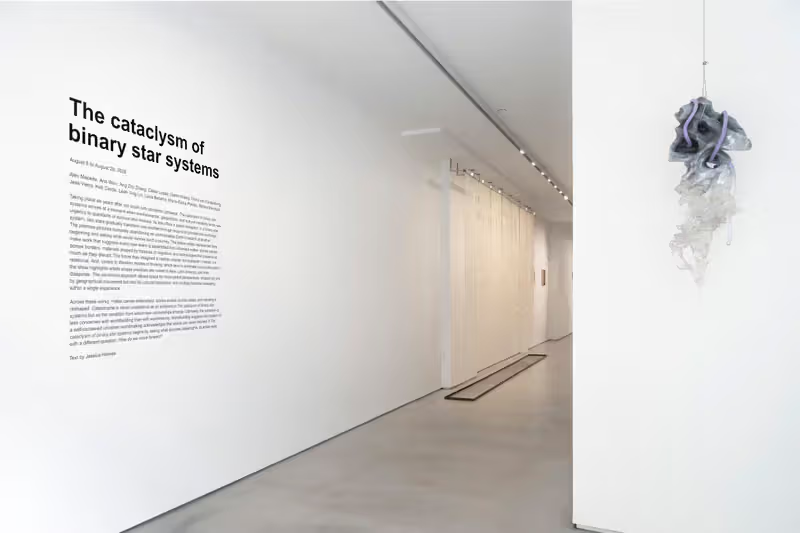
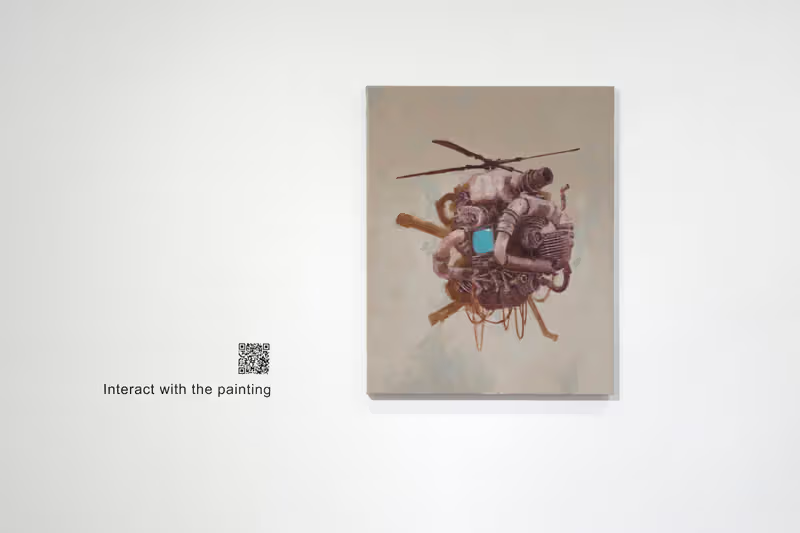
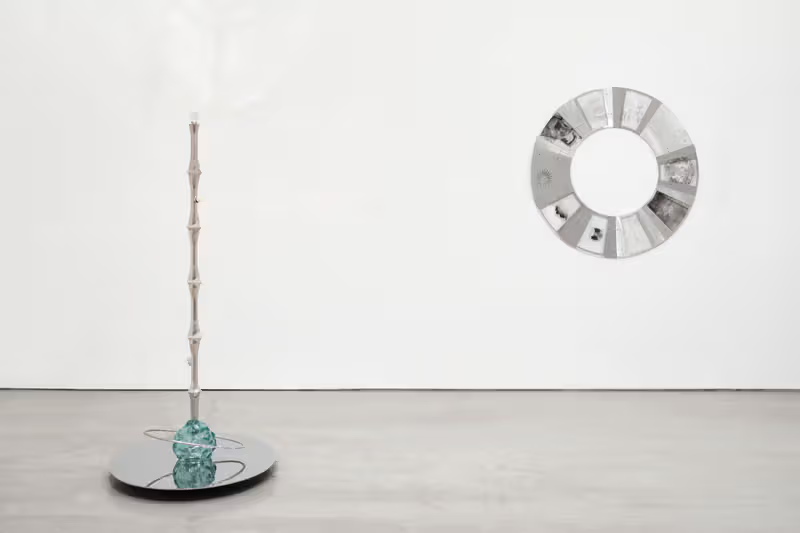
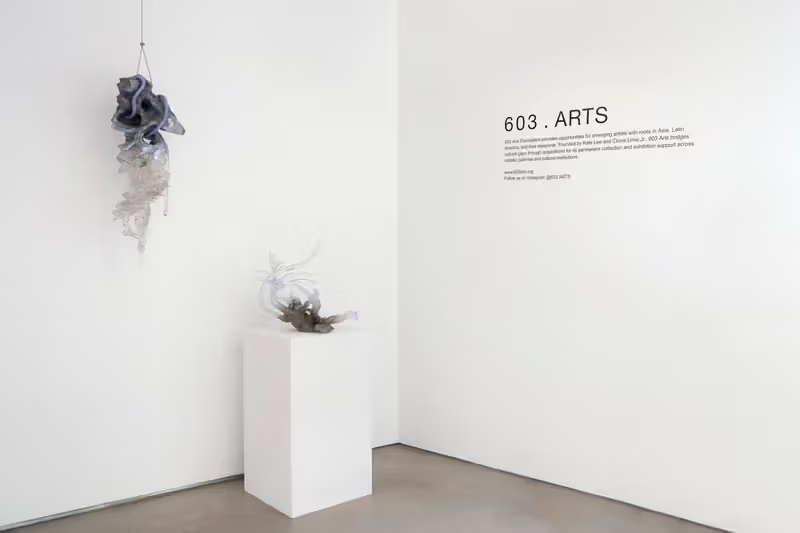
603 Arts Foundation's inaugural exhibition "The Cataclysm of Binary Star Systems" runs through August 29 at Nunu Fine Art in New York, bringing together artists from Asia, Latin America and their diasporas to explore one question through astronomical mythology: what would humanity carry if forced to start over.

When Earth Stops Being Habitable: This NYC Group Show Swaps Escape Bags for Myth and Memory

The premise sounds like science fiction: a smaller star slowly siphons away the sun's atmosphere, Earth gradually loses its habitability, and survivors are forced to leave for unknown regions of space. But "The Cataclysm of Binary Star Systems" isn't interested in telling a story about spaceships — what it's really asking is about things happening in the world right now: migration, uncertainty, and being forced to start over.

When Earth Stops Being Habitable: This NYC Group Show Swaps Escape Bags for Myth and Memory

This is 603 Arts Foundation's inaugural exhibition, held at Nunu Fine Art in New York and running through August 29. The participating artists come from Asia, Latin America, and their diaspora communities, and their works share a common starting point: two systems of astronomical mythology — traditional Chinese celestial observation and pre-Columbian Latin American cosmology. The curatorial logic isn't about juxtaposing two exoticisms side by side — it treats technology, myth, and collective memory as the same thing: what you need to carry with you in order to survive.

When Earth Stops Being Habitable: This NYC Group Show Swaps Escape Bags for Myth and Memory

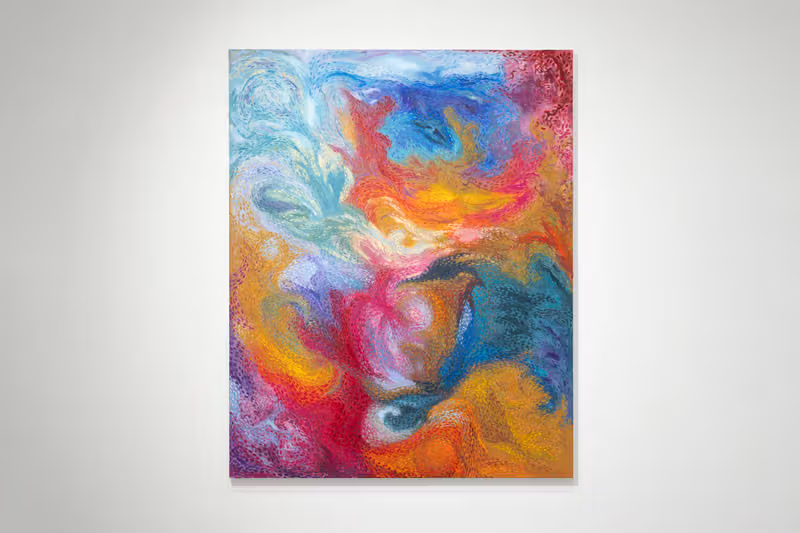
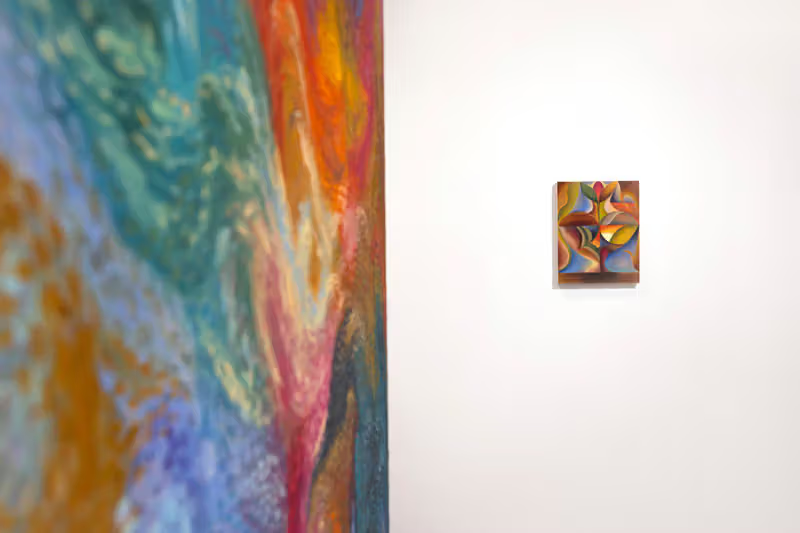
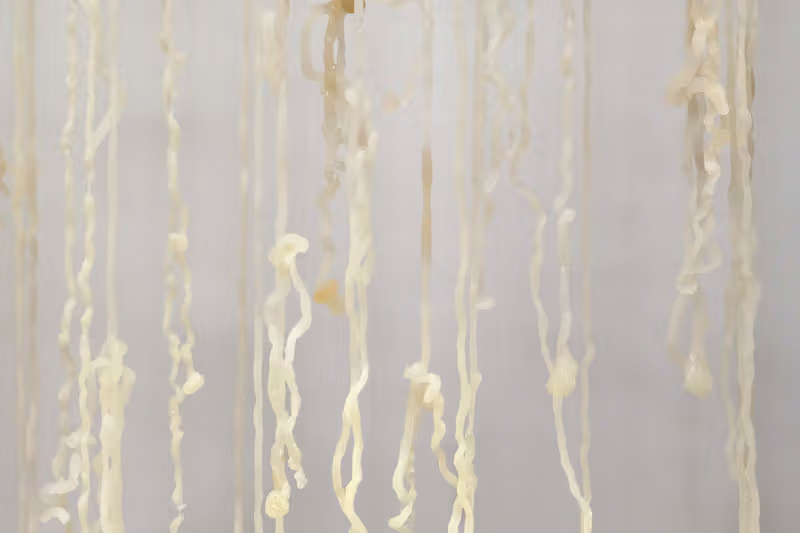
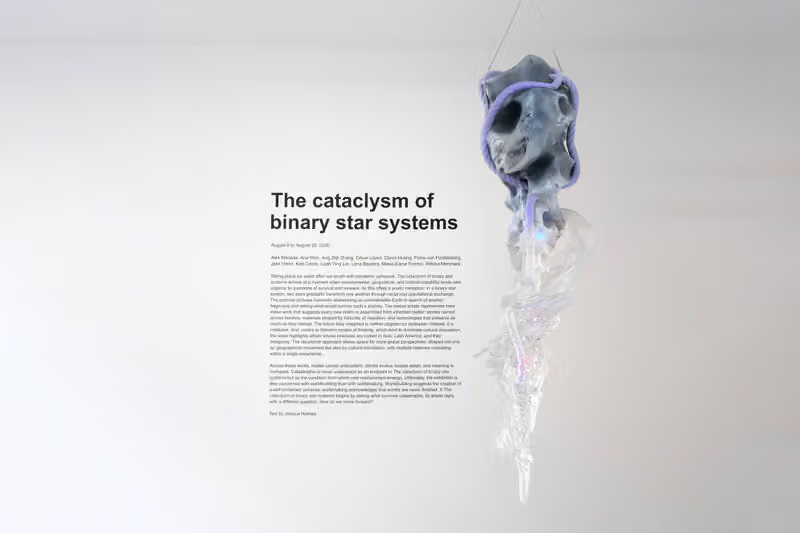
The objects on view drift somewhere between "obviously ancient" and "possibly from the future," making it hard to pin down their era at a glance. Danni Huang's "Bonsai root" and "Tail stone" combine natural materials with resin sculpture, resulting in pieces that look like freshly unearthed fossils — or alien objects just newly shaped. María-Elena Pombo's "Unweaving the Starches of Abya Yala (Starches of Anya Yala)" uses cassava starch, corn, potato, and brown algae extract to form thread-like structures suspended on a metal armature, the material itself carrying memories of food and land. Rithika Merchant's embroidery depicts a surreal tree growing out from two human torsos, its canopy enveloped beneath a watchful field of stars.

When Earth Stops Being Habitable: This NYC Group Show Swaps Escape Bags for Myth and Memory

The gallery describes the show in its statement as "a portal to humanity's fate, built on curiosity and the promise of life in the unknown, even in the face of fear toward unexplored territory." It's a poetic line, but the exhibition itself offers a more concrete answer — rather than imagining weapons or technological salvation, the artists treat myth, handcrafted materials, and family memory as a packing list you can actually carry with you.

When Earth Stops Being Habitable: This NYC Group Show Swaps Escape Bags for Myth and Memory

"The Cataclysm of Binary Star Systems" is on view at Nunu Fine Art in New York through August 29.
Related

New Anthropic Policy Bars "Prolonged, Gratuitous Abuse" of AI Models, With Election Rules Also Tightened
Living

New Anthropic Policy Bars "Prolonged, Gratuitous Abuse" of AI Models, With Election Rules Also Tightened

In its annual usage policy update, Anthropic introduced a clause prohibiting users from inflicting "prolonged and gratuitous" abuse on Claude and other models, while election-related rules were also tightened—sparking renewed debate over whether AI should be regarded as a sentient subject.

A "Paper-Like" Screen Built with Corning Etching Tech Debuts on Amazon's 12-Inch Alexa+ Pro Tablet
Living

A "Paper-Like" Screen Built with Corning Etching Tech Debuts on Amazon's 12-Inch Alexa+ Pro Tablet

The flagship 12 Pro showcases a Nanomatte etched display co-developed with Corning, as Amazon rolls out three new Alexa+ tablets—12-inch, 11-inch, and 8-inch models. Pricing starts at $230, with availability in the US, Canada, and Mexico beginning October 14.

Microsoft Puts Agentic AI at the Heart of Windows Search as Jensen Huang Looks On and Davuluri Takes the Stage
Living

Microsoft Puts Agentic AI at the Heart of Windows Search as Jensen Huang Looks On and Davuluri Takes the Stage

At a San Francisco event on October 7, Satya Nadella and Pavan Davuluri unveiled Microsoft's Windows and Surface plans while Jensen Huang watched from the audience. The centerpiece is a deeper integration of Copilot into the search bar and local files, set to arrive this fall.

Ring's Fix for Smart Lock Skeptics: A Manual Crank When Power Runs Out
Living

Ring's Fix for Smart Lock Skeptics: A Manual Crank When Power Runs Out

According to Ring founder Jamie Siminoff, fear of dead batteries has long held smart locks back. The company's answer is a hand-crank generator built into its upcoming Smart Lock, letting users turn a handle for emergency entry. Launch is set for early 2027 at $249.

OpenAI's 722 Math Papers: Single-Prompt Breakthroughs or Unverifiable Claims?
Living

OpenAI's 722 Math Papers: Single-Prompt Breakthroughs or Unverifiable Claims?

OpenAI published 722 manuscripts on GitHub citing progress on 372 difficult math problems, most generated by feeding one prompt to one AI agent. The underlying model remains undisclosed, and neither the prompts nor computation times were shared, raising doubts about verification.

Your Google One Tier Now Decides Access: Google Launches Experimental Game-Building Platform Playground, Just Type to Create
Living

Your Google One Tier Now Decides Access: Google Launches Experimental Game-Building Platform Playground, Just Type to Create

Access to Google's new AI game creation tool, Playground, is tiered according to your Google One membership level, and for now limited to US users aged 18 and older. The platform lets anyone generate 2D or 3D games from a few text prompts alone, without coding or drawing skills.