She Doesn't Stand in a Kitchen: How Chisato Maruyama Redefined "Chef" with One Bowl of Matcha Ramen
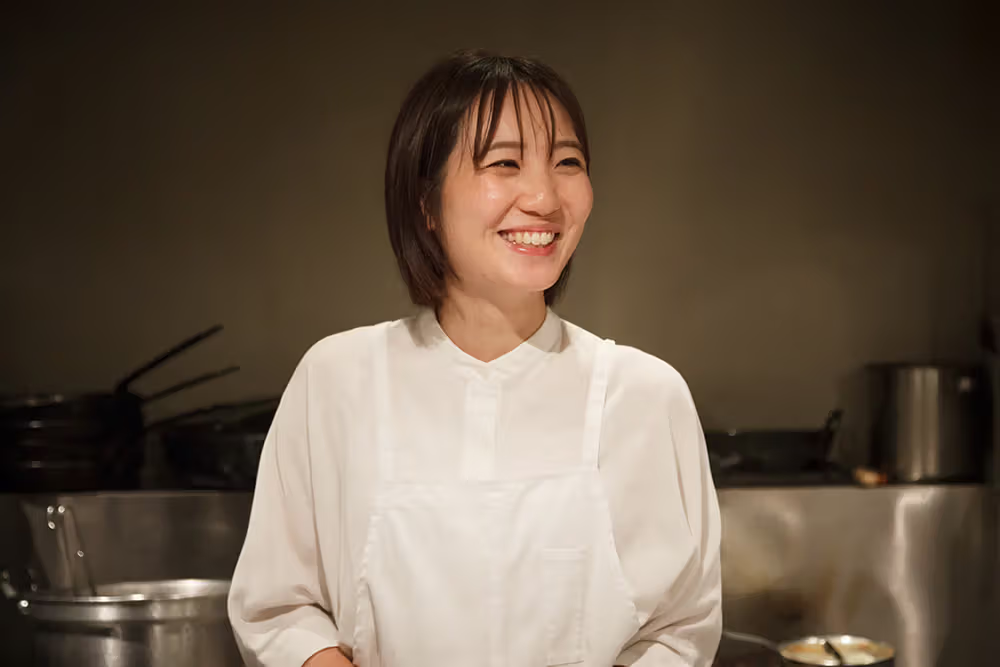
Chisato Maruyama, winner of the RED U-35 2025 runner-up prize, is the first-ever laureate with no restaurant background. Her weapon: a crab and citrus matcha ramen. Her answer to critics: "My background isn't a mentor—it's the ingredients themselves."
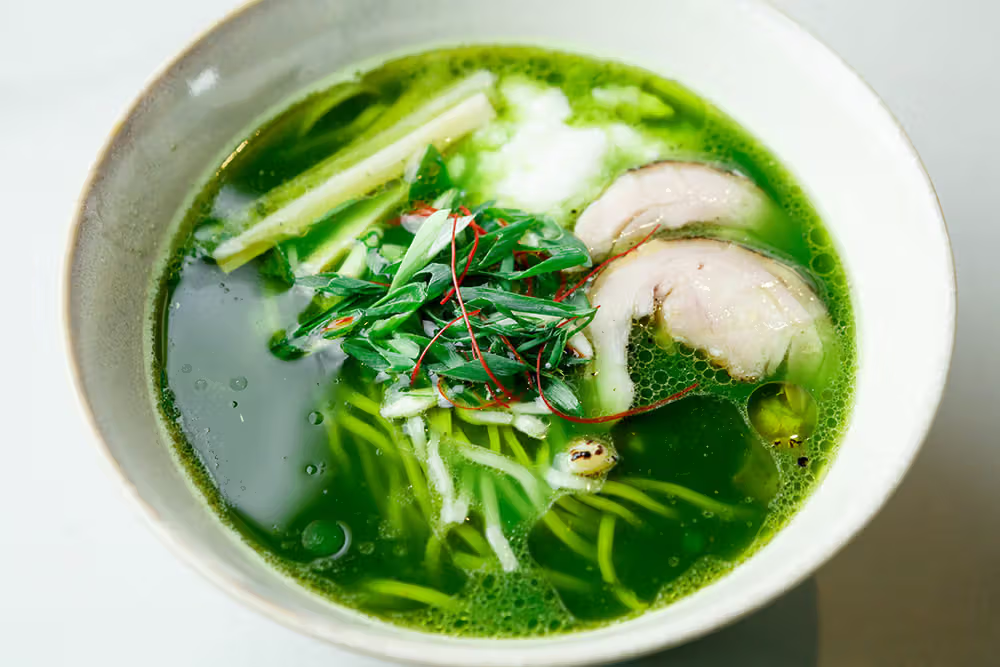
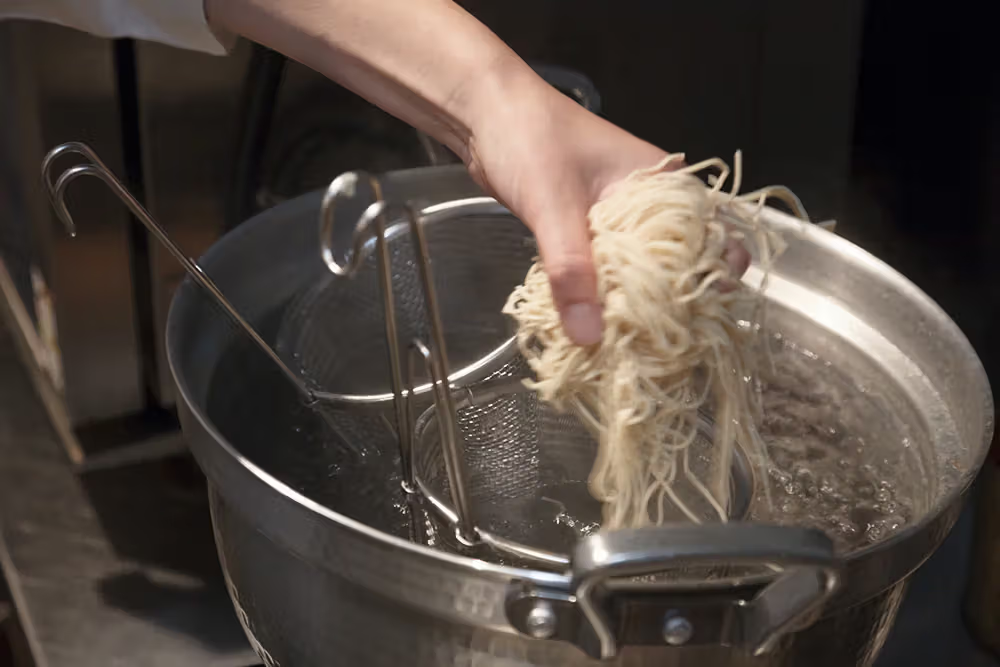
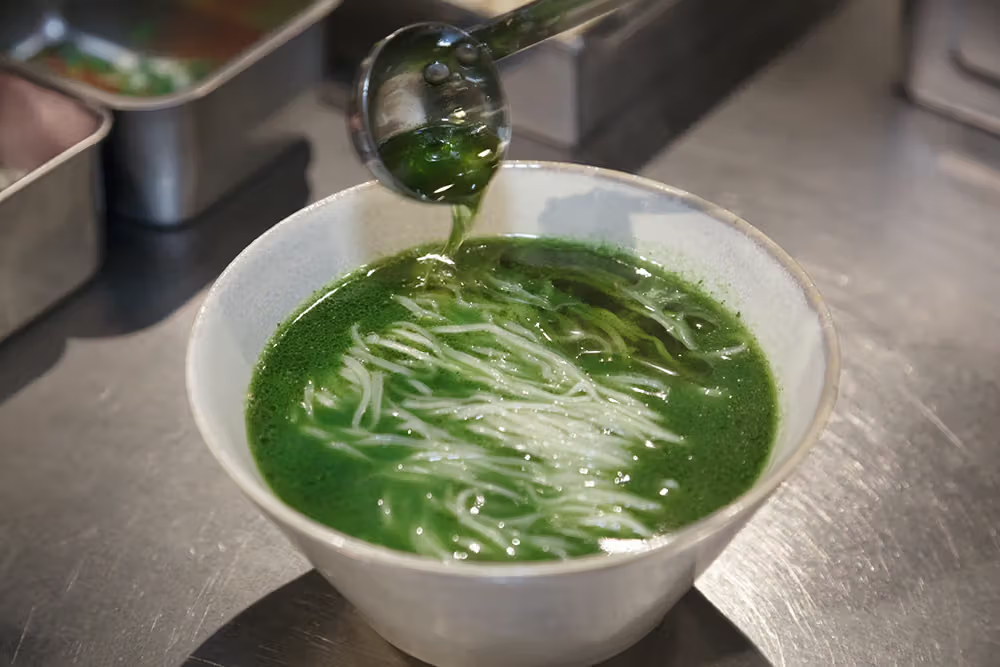
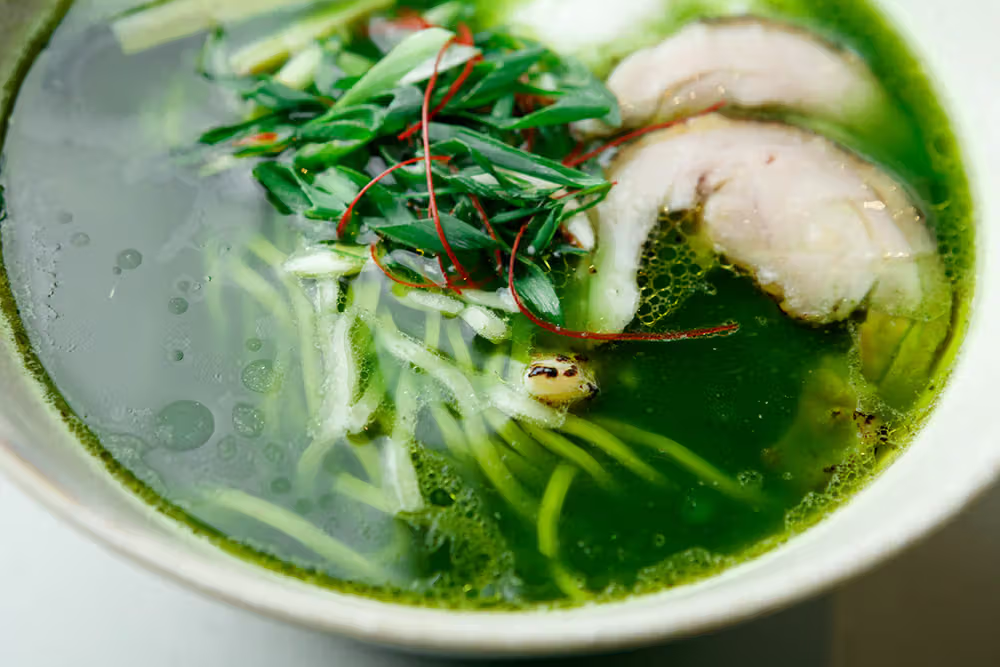
Can a bowl of ramen serve as a self-introduction? Chisato Maruyama's answer was "Crab and Citrus Matcha Ramen"—a broth infused with crab, citrus, and matcha. She entered this dish in Japan's competition for chefs under 35, "RED U-35 2025," and walked away with the runner-up prize (Jun-Grand Prix). The result itself was something of an anomaly: she isn't the head chef of any restaurant, and doesn't even have a fixed kitchen. In the history of RED U-35, this marks the first time someone without a restaurant background has placed runner-up or higher.
Her title is "Food Creator"—covering product development, menu design, catering, and event cooking, which sounds like she does everything and yet nothing in particular. Maruyama herself admits she's often asked, "What exactly does a Food Creator do?" and even hesitated at one point over whether to use the title at all.
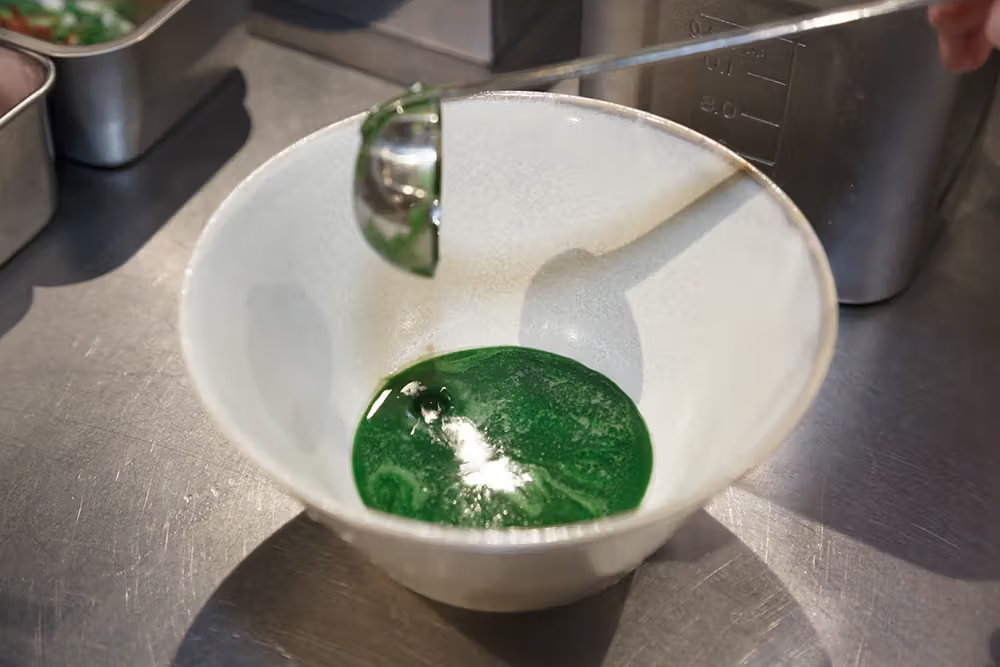
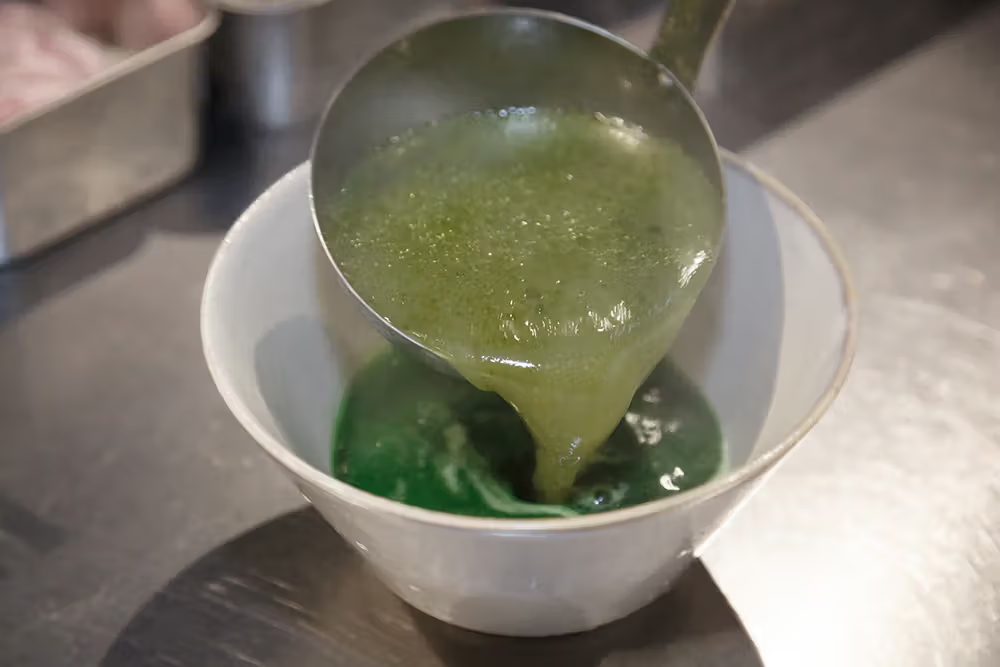
The logic behind that bowl of ramen is actually quite scientific. Green tea contains up to 20 amino acids and is rich in umami compounds—most people use it for desserts, but Maruyama's reasoning was: if umami is green tea's true character, it makes more sense to use it in savory cooking. Her method: chicken bone broth mixed with sencha, then dissolved with matcha—the inosinic acid from the chicken bones creates a synergistic effect with the theanine and glutamic acid in the tea, resulting in a rich, deep broth. The idea originated in 2023, when she tasted a gyokuro so concentrated it tasted like dashi at a tea farmer's home in Kagoshima, and also witnessed the harsh realities tea farmers face—a lack of successors, abandoned farmland. After winning the runner-up prize, she kept refining the dish through pop-up stalls, experimenting with variations like "Kyoto Bancha Soy Sauce Ramen," exploring the distinct characters of first-flush, second-flush, roasted, and fermented teas.
A Year in Daikanyama, and the Stumble That Led to Her Path
Maruyama was born in Kagoshima in 1993 and graduated from Kyushu University's Faculty of Agriculture. She worked two years at Kokuyo Co., Ltd. before "I couldn't hold back any longer—this was the only path left," and knocked on the door of Ata, a French bistro in Tokyo's Daikanyama. Head chef Tetsuji Kakegawa took a chance on the inexperienced newcomer: "If you've got the drive, why not give it a try?" But the culture shock in the kitchen exceeded her expectations—when she asked a senior colleague the reason behind a certain technique, the answer was simply, "Don't ask why." About a year later, exhausted and depleted, she left. "The setback was so severe I felt I could never call myself a chef again"—yet she couldn't quite let it go, either.
She later realized something crucial: her fatal flaw at Ata was that once focused, she couldn't hear anyone else—making her unsuited to coordinated teamwork in a kitchen. Product development is the opposite: work done alone, head down. That, it seemed, was where she truly belonged. Her science-trained mind, shaped by her agricultural studies, led her to naturally break cooking down into logic—which part of an ingredient deserves emphasis, how its value gets drawn out. To her, it resembles running a scientific experiment: making minute adjustments repeatedly, tracking numbers—work she never finds tedious.
Applying Bacon Logic to a Nearly Vanishing Bonito Product
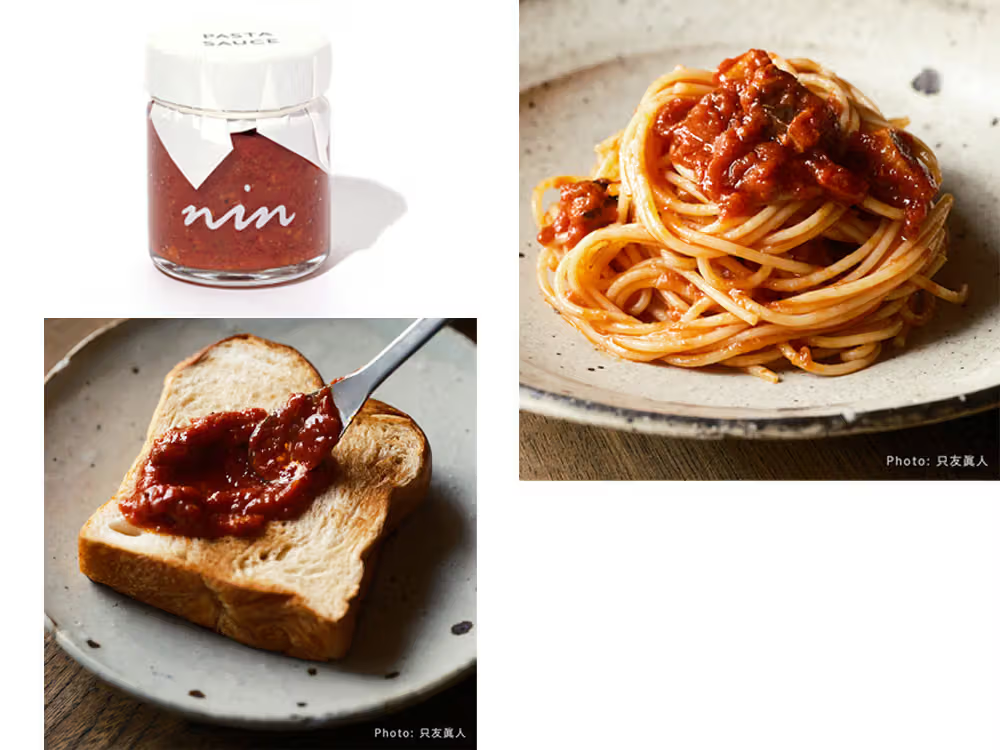
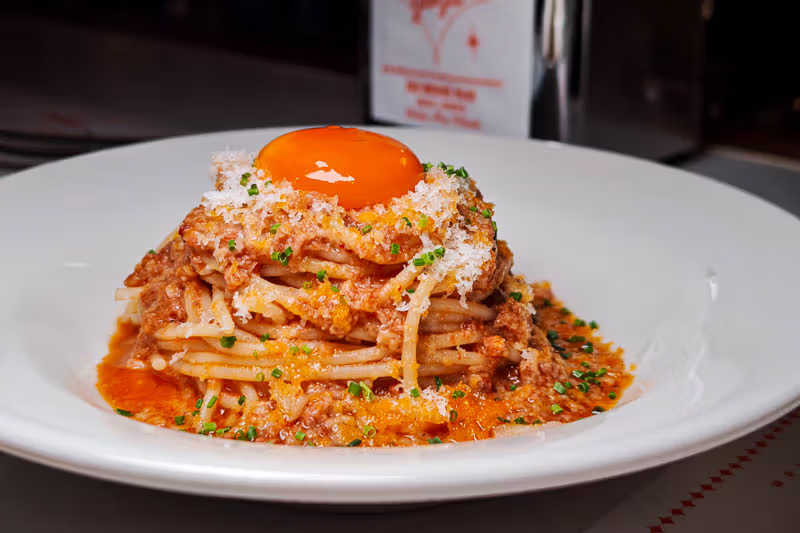
From 2021 to 2024, she worked at TETOTETO Inc., a food creative production company, during which she took on a product development project for the Yamakawa Suisan Processing Cooperative in Ibusuki, Kagoshima, developing products from namari-bushi (semi-dried bonito). The brief was straightforward: "We want young people to actually eat this." It's a traditional ingredient that's nearly vanished from dining tables. She initially tried making "Namari-bushi Curry," but after testing, found that bonito and curry together produced less than the sum of their parts. Her real breakthrough came through smoke: she realized that while namari-bushi is fish and bacon is meat, both are smoked animal proteins—the underlying logic aligns. Since bacon pairs naturally with tomato sauce, namari-bushi should theoretically work too—and that's how "Namari-bushi Bolognese" was born. She says this approach—"using namari-bushi the way you'd use bacon"—can extend to salads, gratins, pan-searing, and more. This methodology traces back to a phrase Kakegawa often repeated: "Cooking has fundamental pairings"—beef with red wine, lamb with herbs, pork with potatoes. She took this combinatory logic, accumulated in the kitchen, and applied it directly to her product development thinking.
At the RED U-35 finals, judge Yoshiki Tsuji asked her directly, "Where's your technical background?" It wasn't an unfamiliar question—essentially the same doubt as "What does a Food Creator even do?", just phrased differently. Her answer made every judge in the room nod: "I've always doubted myself for not having a chef's background—I never completed formal training, so I couldn't fully accept myself. But I eventually realized: if someone tells me 'do whatever you want,' I freeze up. But if someone says 'make a dish that highlights this ingredient,' ideas just keep flowing. My background is the ingredients themselves."
Winning the runner-up prize didn't make the uncertainty disappear. "That's not how it works—I realized this problem can't be resolved unless I accept myself." The hesitation Maruyama wrote about in her competition entry motivation may be another way of expressing this same struggle: outside the "conventional path" of working at a restaurant, becoming a head chef, and earning stars, she wanted confirmation that the path she chose counts too. As for whether that path should be called "Food Creator"—she herself still hasn't fully decided.