ÉTAT HER

Isetan Mitsukoshi Raises Full-Year Forecast, But It's the Ultra-Rich Shoppers Doing the Heavy Lifting, Not Foot Traffic

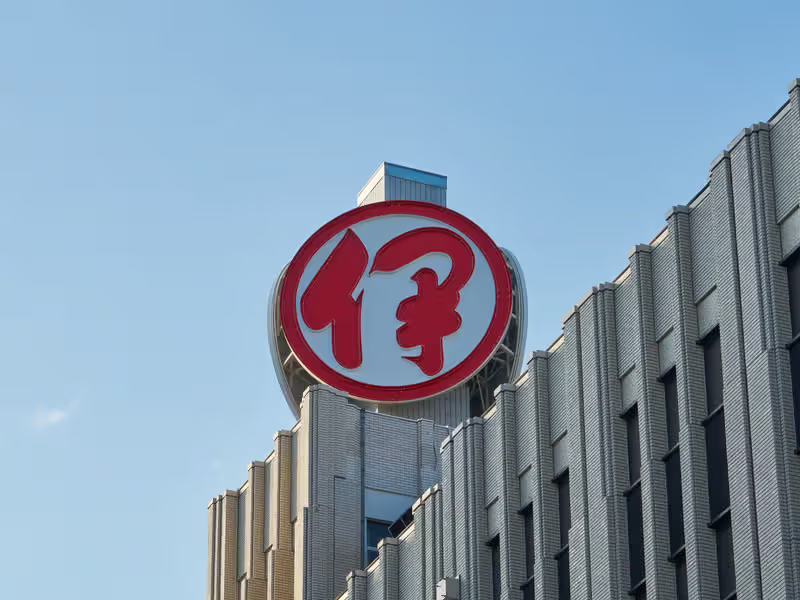
Isetan Mitsukoshi has raised its projected total sales for the fiscal year ending March 2027 to ¥1.36 trillion, but a 17.2% drop in net profit hides a different story. The real driver behind the numbers: customers spending upwards of ¥3 million.

Hsin-Yi Ho, Food Editor
Isetan Mitsukoshi Raises Full-Year Forecast, But It's the Ultra-Rich Shoppers Doing the Heavy Lifting, Not Foot Traffic

Net profit up ¥1.5 billion, a 17.2% year-on-year increase—sounds like good news, except it's actually a decline. Buried in Isetan Mitsukoshi Holdings' revised earnings forecast announced August 13 is a figure that's easy to misread: projected net profit of ¥63 billion looks like an upward revision, but it's actually lower than the previous forecast period. The reason? Last year's numbers were inflated by a one-time gain from selling shares in an affiliated company. What actually matters here is how much total sales and operating profit got revised upward—and the spending habits of the group driving that growth.

For the consolidated forecast covering the fiscal year ending March 2027, total sales have been revised up ¥10 billion from the initial plan to ¥1.36 trillion, a 4.7% year-on-year increase; operating profit was raised ¥2.5 billion to ¥84 billion, up 5.0%. Backing up this revision is the just-released performance for April through June 2026: total sales of ¥320.7 billion, up 6.5% year-on-year, with both operating profit and net profit hitting record highs for the quarter—up 20.6% and 18.5% respectively.

But average spend per customer is the real story this quarter. Within the Isetan Mitsukoshi group, sales from customers spending ¥3 million or more in a single transaction rose 16% year-on-year; those spending ¥10 million or more rose 17%—both far outpacing the overall 6.5% growth rate. In other words, this growth isn't coming from more people walking through the doors—it's the existing big spenders buying even more. July's preliminary figures show domestic customer sales up 3.6% year-on-year, while overseas customer sales surged 32.1%. Even Chinese shoppers' spending power, which had been sluggish last year, has been picking back up since June.

On the store level, Isetan Shinjuku Main Store led the pack with ¥106.9 billion in sales, up 10.0% year-on-year, followed closely by Iwataya Mitsukoshi at ¥32.6 billion, up 8.0%. On the flip side, Nagoya Mitsukoshi, currently undergoing renovations, saw sales drop 2.2%, while Isetan Tachikawa, Isetan Urawa, and Sapporo Maruimitsukoshi all posted slight declines as well.

On the cost side, the company continues to trim the fat: despite rising prices, selling and administrative expenses were actually cut by ¥1 billion from the initial plan to ¥262 billion, thanks to restructuring efforts. The group's credit card arm, MI Card, is set to roll out a new premium card tier this fiscal year—clearly aimed at courting the same high-spending customers who've been carrying this quarter's growth.
Related

New Anthropic Policy Bars "Prolonged, Gratuitous Abuse" of AI Models, With Election Rules Also Tightened
Living

New Anthropic Policy Bars "Prolonged, Gratuitous Abuse" of AI Models, With Election Rules Also Tightened

In its annual usage policy update, Anthropic introduced a clause prohibiting users from inflicting "prolonged and gratuitous" abuse on Claude and other models, while election-related rules were also tightened—sparking renewed debate over whether AI should be regarded as a sentient subject.

A "Paper-Like" Screen Built with Corning Etching Tech Debuts on Amazon's 12-Inch Alexa+ Pro Tablet
Living

A "Paper-Like" Screen Built with Corning Etching Tech Debuts on Amazon's 12-Inch Alexa+ Pro Tablet

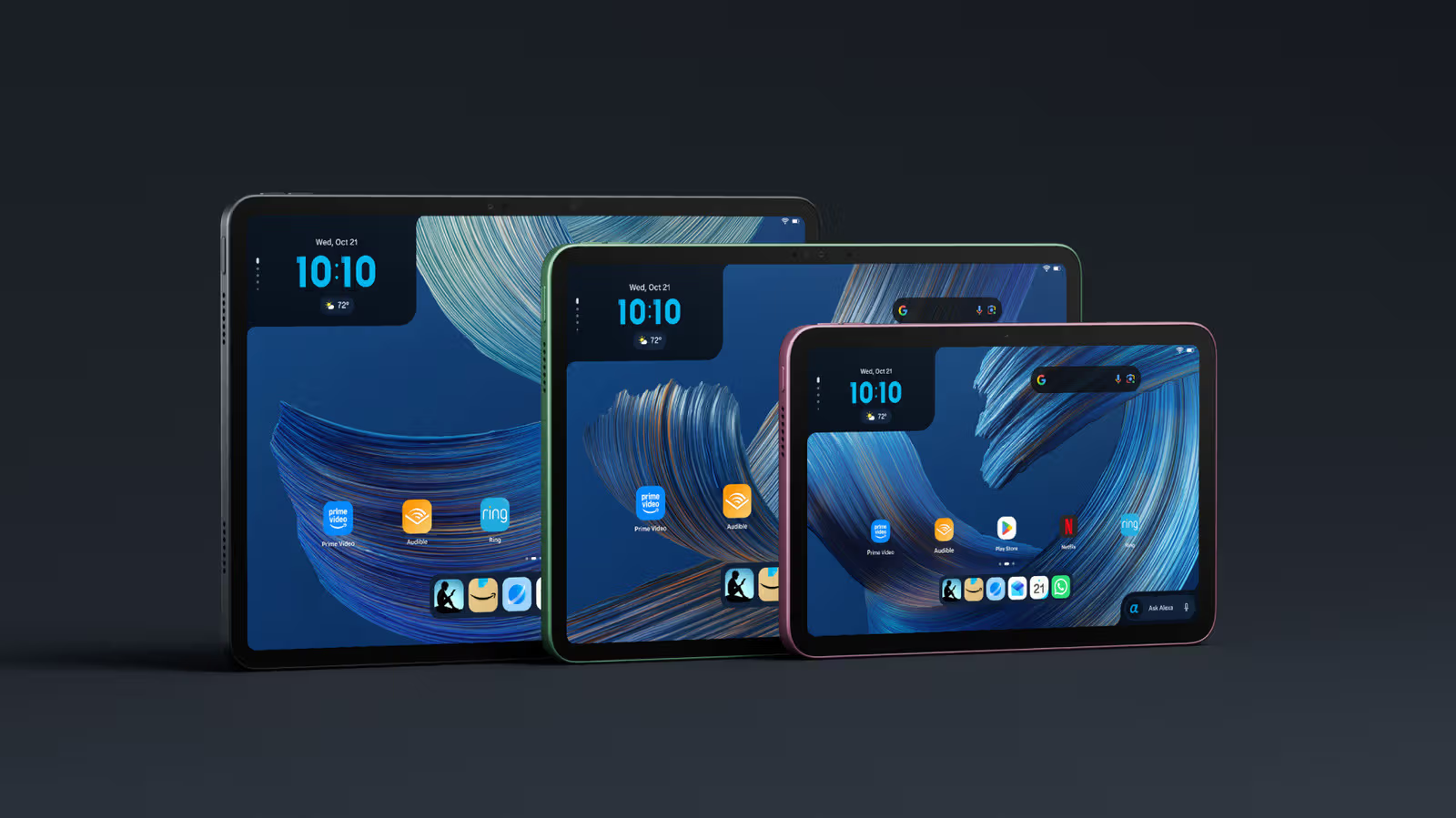
The flagship 12 Pro showcases a Nanomatte etched display co-developed with Corning, as Amazon rolls out three new Alexa+ tablets—12-inch, 11-inch, and 8-inch models. Pricing starts at $230, with availability in the US, Canada, and Mexico beginning October 14.

Microsoft Puts Agentic AI at the Heart of Windows Search as Jensen Huang Looks On and Davuluri Takes the Stage
Living

Microsoft Puts Agentic AI at the Heart of Windows Search as Jensen Huang Looks On and Davuluri Takes the Stage

At a San Francisco event on October 7, Satya Nadella and Pavan Davuluri unveiled Microsoft's Windows and Surface plans while Jensen Huang watched from the audience. The centerpiece is a deeper integration of Copilot into the search bar and local files, set to arrive this fall.

Ring's Fix for Smart Lock Skeptics: A Manual Crank When Power Runs Out
Living

Ring's Fix for Smart Lock Skeptics: A Manual Crank When Power Runs Out

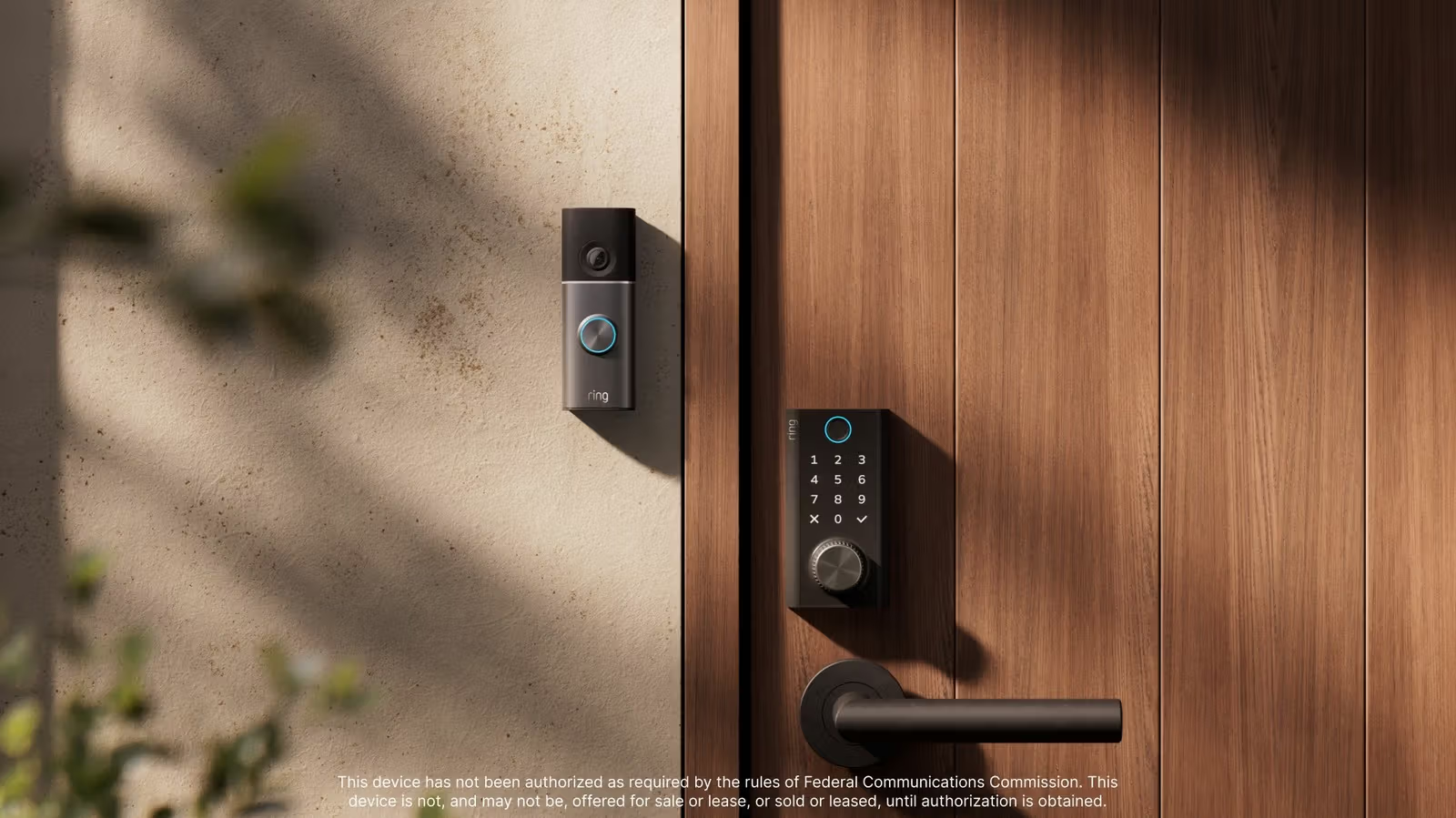
According to Ring founder Jamie Siminoff, fear of dead batteries has long held smart locks back. The company's answer is a hand-crank generator built into its upcoming Smart Lock, letting users turn a handle for emergency entry. Launch is set for early 2027 at $249.

OpenAI's 722 Math Papers: Single-Prompt Breakthroughs or Unverifiable Claims?
Living

OpenAI's 722 Math Papers: Single-Prompt Breakthroughs or Unverifiable Claims?

OpenAI published 722 manuscripts on GitHub citing progress on 372 difficult math problems, most generated by feeding one prompt to one AI agent. The underlying model remains undisclosed, and neither the prompts nor computation times were shared, raising doubts about verification.

Your Google One Tier Now Decides Access: Google Launches Experimental Game-Building Platform Playground, Just Type to Create
Living

Your Google One Tier Now Decides Access: Google Launches Experimental Game-Building Platform Playground, Just Type to Create

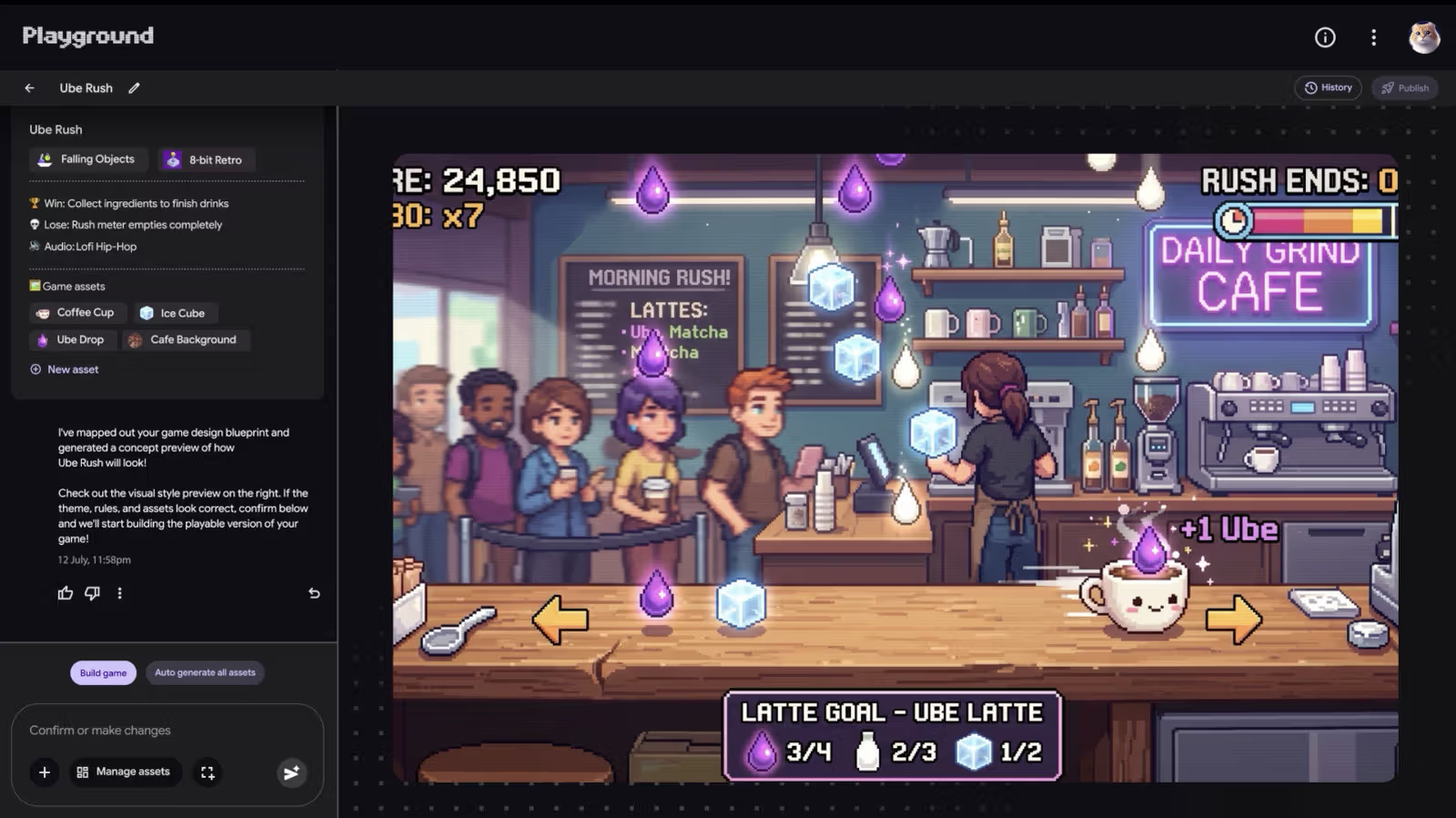
Access to Google's new AI game creation tool, Playground, is tiered according to your Google One membership level, and for now limited to US users aged 18 and older. The platform lets anyone generate 2D or 3D games from a few text prompts alone, without coding or drawing skills.