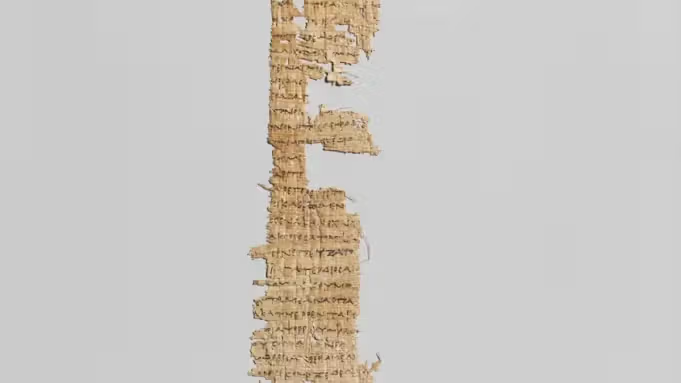
A piece of papyrus, inked 2,300 years ago with a mixture of carbon and water, now rests in a display case in Gallery 162 at The Metropolitan Museum of Art in New York. This is the section of the museum dedicated to Greek and Roman art, and the artifact has just returned to public view after a long absence.
According to the related description on the Met's official website, this is currently known as the earliest surviving Ptolemaic-era fragment of the Odyssey, dating to around 285–250 BCE and produced in Egypt. It was written with a reed pen dipped in ink made from carbon and water, on papyrus—one of the most common writing materials of the ancient world. The museum specifically notes that the fragment contains three lines of verse that do not appear in the standard text of the Odyssey used today.