We Slept a Full Night in the Pebble Flow Electric RV—Here's What It's Like to Park 6,000 Pounds Using Just an iPad
After spending an entire night living inside it, our reporter put the auto-hitch system, electrochromic glass, and 45kWh battery to the test, asking whether this $159,000 electric trailer truly delivers on the futuristic promise it made at CES.
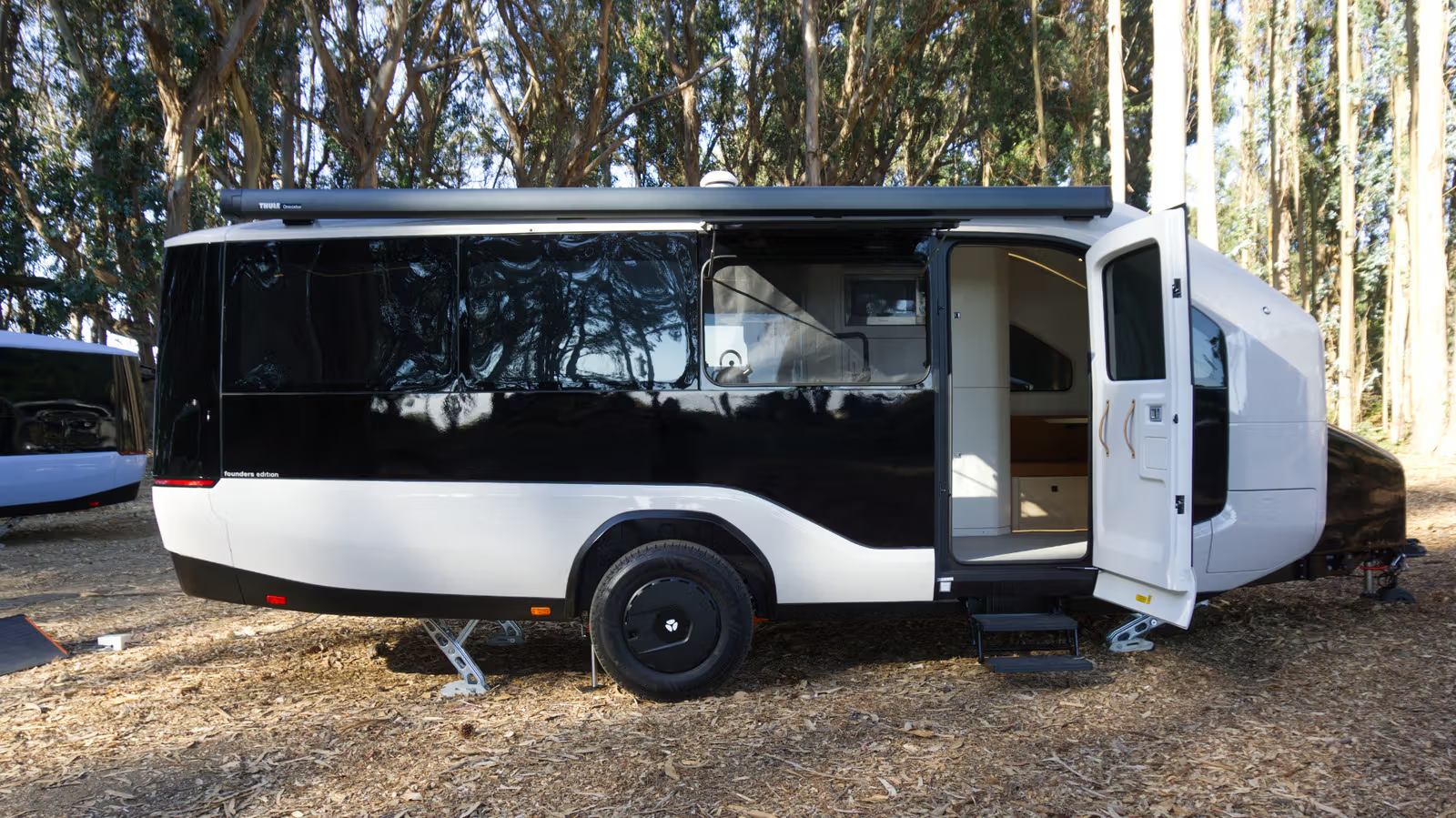
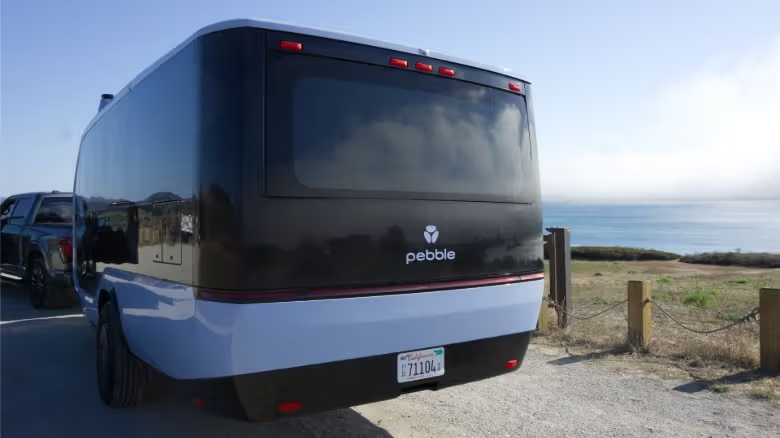
Backing a 6,000-pound trailer into a parking spot with an iPad Mini—that's probably the most counterintuitive thing about the Pebble Flow electric RV. After spending a full day and night living in it, Engadget's Karissa Bell came away with this takeaway: the trailer really is as comfortable as the buzz suggested, but what actually impressed her most was just how much tech they managed to cram into it.
The Pebble Flow first turned heads at CES 2024, but a carefully staged showfloor setup is a different beast from an actual camping trip. This time, Bell spent a night at a real campsite, personally testing everything from the auto-hitch system to the electrochromic privacy glass, trying to figure out whether this $159,000 RV can actually back up the futuristic look it's got going for it.
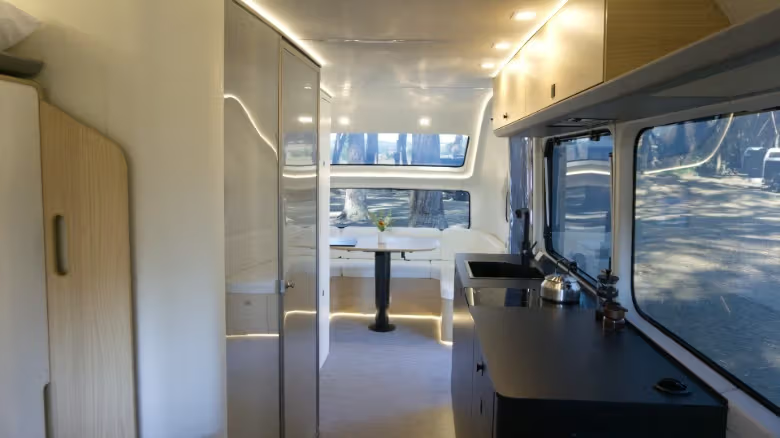
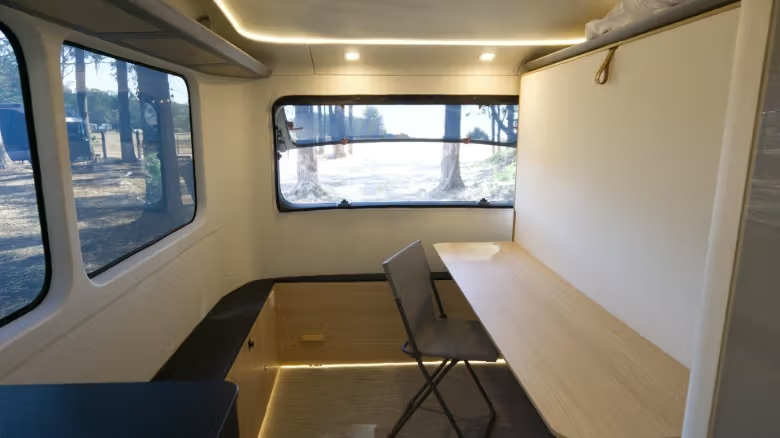
The interior layout sticks to Pebble's usual setup: a dining area up front that converts into a bed, and a queen-size Murphy bed in the back that doubles as a desk. Bell and her husband both worked inside at the same time, and the space turned out roomier than she expected—she preferred working on her laptop from the cushioned bench in the kitchen area, since the dining table wobbled a bit and made it hard to focus. The desk surface in back wasn't quite big enough for an external monitor, but it comfortably fit a laptop, phone, camera, and chargers, and it sits right next to a rear window that opens all the way.
The standout feature is the electrochromic "smart glass" used on all the exterior windows—press a button and they switch from clear to frosted, which turns out to be genuinely useful for privacy at shared campsites. But Bell noted that the combination of interior LED lighting and frosted windows made it a little easy to lose track of time—not uncomfortable exactly, but it does give off a bit of a spaceship vibe.
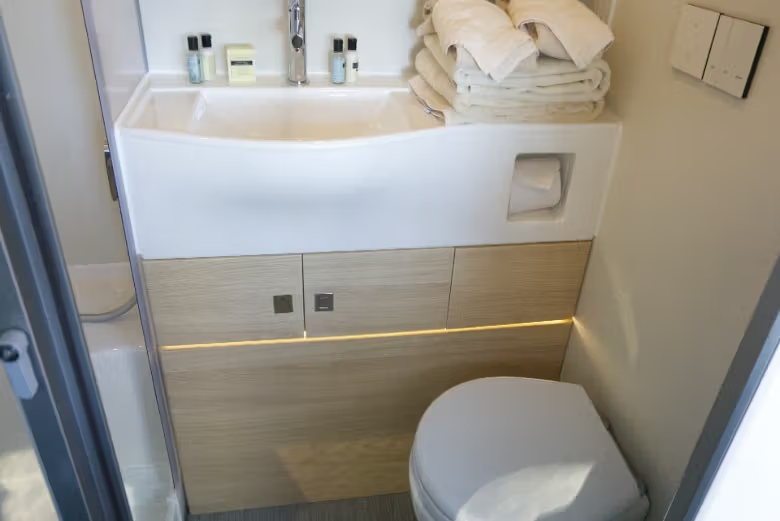
The bathroom setup caught her off guard: a separate shower stall plus a flush toilet, the nicest camping bathroom she's used. The shower is small but has solid water pressure and heats up fast. The one downside is that the water pump is pretty loud—if you get up to use water in the middle of the night, that thumping sound will probably wake up whoever's sleeping next to you. Even so, she said she slept better than expected, and the outlets on both sides of the Murphy bed were a nice touch.
Auto-hitch in 45 seconds, with powered assist for smoother towing
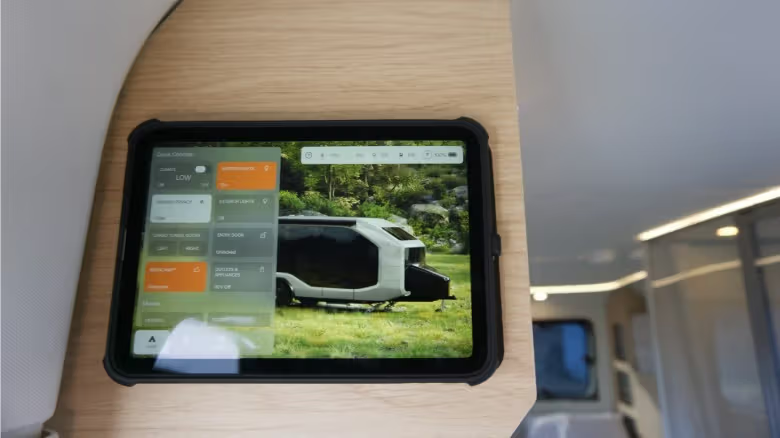
Every Pebble Flow comes with a dedicated iPad Mini as its main control interface, handling everything from climate control and lighting to auto-hitching and remote movement. A camera near the hitch detects the position of the tow vehicle's ball mount, and as long as the tow vehicle is parked within four feet in front of the trailer, it can kick off something close to an auto-hitch mode—working even if the two vehicles aren't perfectly aligned. Bell watched a few demos on site, and the whole process took about 45 seconds. She herself used the same iPad to nudge the unhitched trailer about a foot within a parking spot, while Pebble staff demonstrated parallel parking the trailer by remote and maneuvering it across mulch-covered campsite ground.
The trailer also has a feature called "InstaCamp," which automatically deploys hydraulic jacks to level and stabilize the trailer once you arrive at your destination. The in-wheel motors, besides enabling remote-controlled movement, also provide powered assist while towing, helping save on fuel or EV range. Bell actually experienced being towed onto Highway 1—she described the whole process as "surprisingly foolproof," with the trailer staying stable throughout, while another person stayed inside holding the iPad controller, toggling the motor assist on and off per the manufacturer's recommended method.
Also on display was the 2027 model year version, which swaps in a fixed double-bed layout in place of the Murphy bed—the beds don't fold away, but that trade-off buys more under-bed storage, and the two twin beds can also be combined into a king size. Another upgrade comes from a partnership with solar company Jackery: the current model's rooftop solar capacity sits at 1.1 kW, but the 2027 model year, with an optional "self-powered" package, can add up to four 500-watt solar panels, bringing total input capacity to 3.1 kW. Pebble says that's enough to cover "a typical day's" power needs and keep the onboard 45 kWh battery charged. If you're mostly staying at campsites with shore power, that extra solar capacity may not see much use, but it'll help extend off-grid range.
The Pebble Flow starts at $159,000, while the "Founder's Edition" upgrade with the self-powered package runs $193,000. Bell admits this trailer doesn't fit into either her budget or her garage, but after actually living in it and testing every feature, her conclusion is this: the trailer really does deliver on the sense of innovation everyone was hyped about at CES two years ago.