ÉTAT HER

The Artist Who Sells Neither Art Nor Produce: Inside Dan Colen's Zero-Revenue Farm Experiment

Visual artist Dan Colen made a career pivot into farming, giving away every harvest for free and funding the operation through his own apparel company. Located in New York's Hudson Valley, this nonprofit farm gave away nine tons of produce and over four thousand dozen eggs last year.

Yu-Ting Lin, Managing Editor
The Artist Who Sells Neither Art Nor Produce: Inside Dan Colen's Zero-Revenue Farm Experiment

How does a farm survive if it decides, from day one, never to sell anything? Sky High Farm's (SHF) answer: start an entirely separate apparel company to fund it.
藝術家不賣藝術也不賣菜:Dan Colen的零營收農場實驗

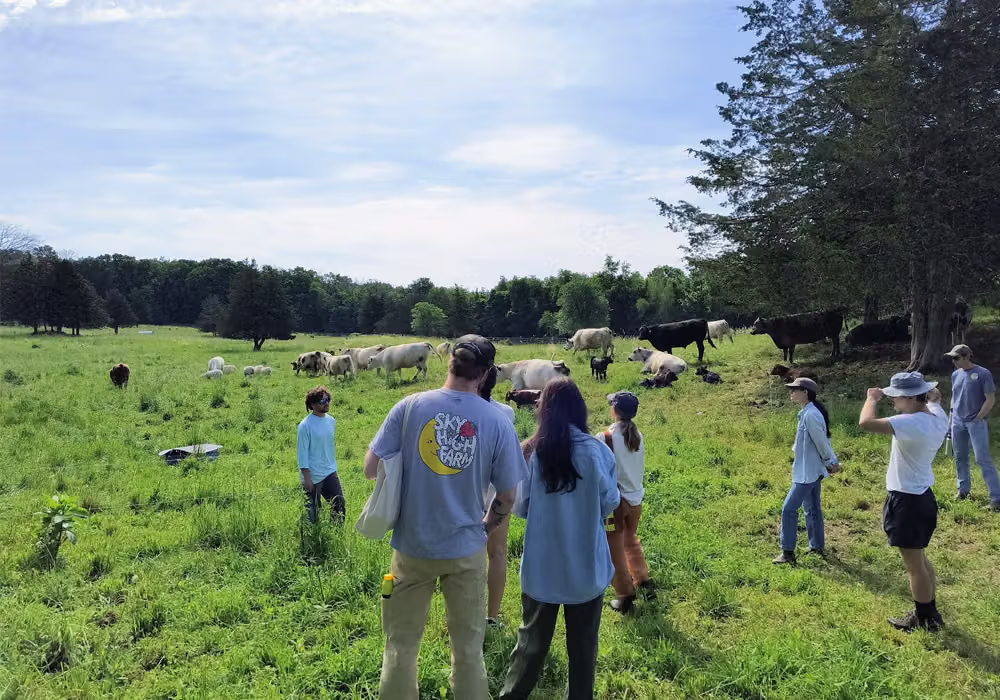
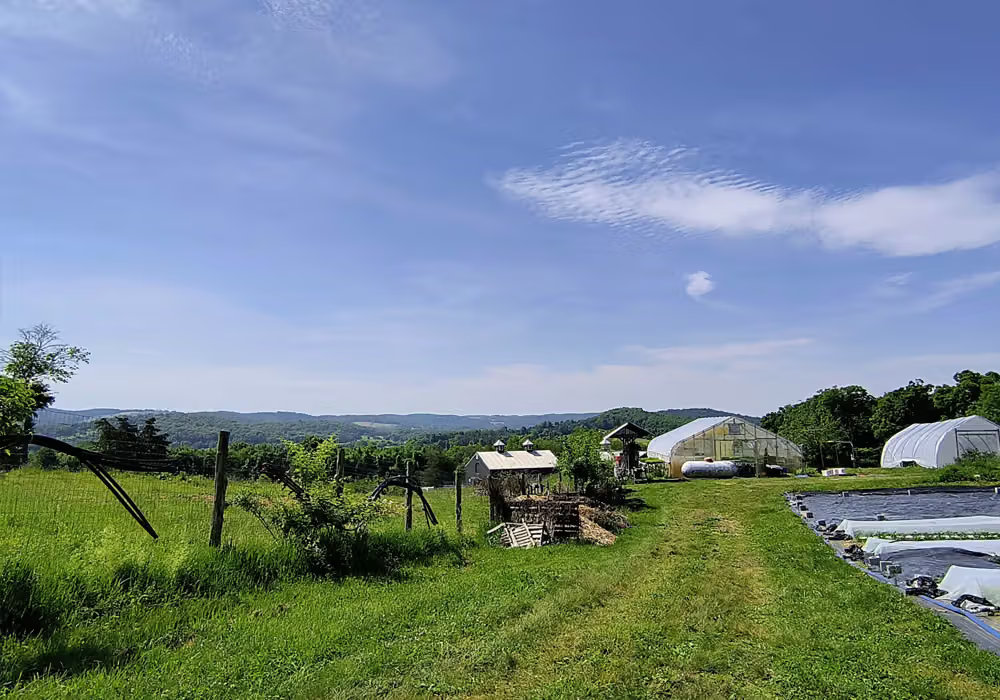
Located in New York's Hudson Valley, about a two-hour drive north of the city, SHF began as a grassroots project in 2011 before transitioning into a nonprofit five years later. By 2023, the farmland had expanded to 560 acres—roughly twice the size of the Tokyo Imperial Palace grounds. Its operating logic is simple yet radical: every crop grown and every animal raised is given away 100%, with nothing entering the market and no revenue in sight. Last season alone, SHF donated about nine tons of fruits and vegetables, 2.7 tons of chicken and beef, and 4,180 dozen eggs, all delivered directly to local food-relief organizations.
藝術家不賣藝術也不賣菜:Dan Colen的零營收農場實驗

Founder Dan Colen was a highly successful visual artist in the mid-2000s. He later came to realize that while art could raise social questions, it couldn't actually solve them—so he turned to farming instead. Beyond SHF, he founded a separate apparel-focused company, using its profits to sustain the farm's operations. This "fashion funding agriculture" financial structure is far rarer than a simple charitable-donation model. Describing how his creative practice has evolved alongside SHF, Colen says it no longer "belongs to any existing category of art."

藝術家不賣藝術也不賣菜:Dan Colen的零營收農場實驗

More Than Just Giving Away Vegetables: It's About "Food Sovereignty"

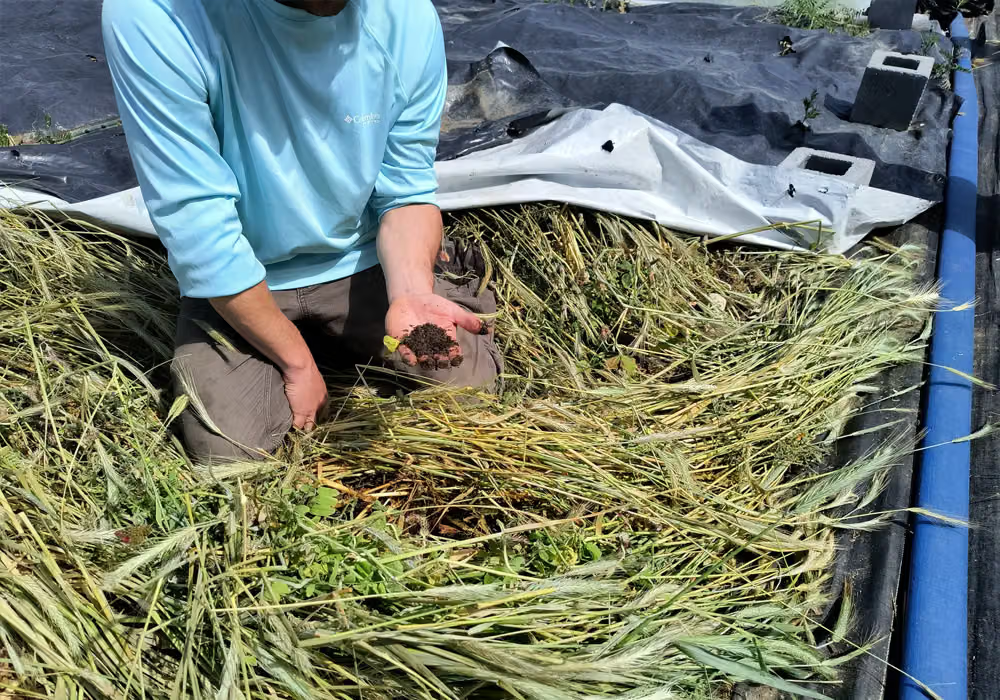
SHF's ambitions go beyond simply donating surplus produce. Its goal is "food sovereignty"—empowering people to decide for themselves how food is grown, distributed, and consumed, rather than passively accepting whatever the existing food supply system offers. The farm practices regenerative agriculture, which prioritizes soil health and nutritional value over yield efficiency, and has built its own cold-chain logistics to deliver certified organic produce and livestock products directly to suburban and urban low-income communities that typically can't afford such food.
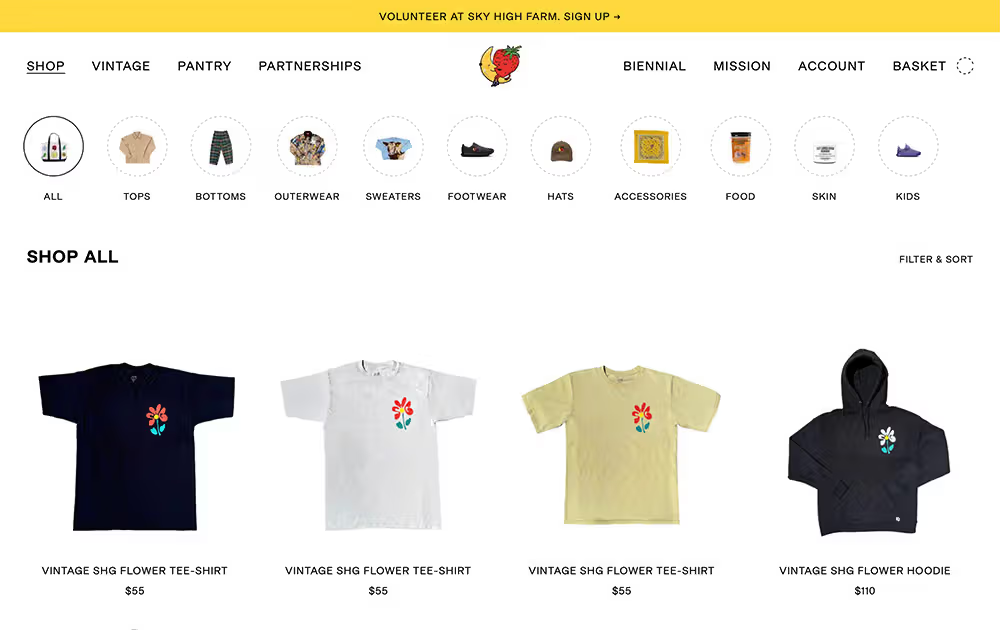
Even what gets planted is carefully considered: SHF grows crops tailored to the culinary traditions of the communities it serves, favoring open-pollinated and heirloom varieties that can be seed-saved, rather than relying on supply from large seed companies. Cattle, sheep, and semi-free-range chickens on the pasture provide meat and eggs, but they also play a role in soil regeneration and pest management—functioning as an integral part of the farm's ecosystem.

In recent years, SHF has also expanded into supporting new farmers—offering an incubator program that includes housing, land, and equipment—while providing roughly 82 million yen in grants to organizations promoting "access to quality food for all," alongside environmental art and food education initiatives. From spring through fall, the farm opens its doors once a month for volunteer days, where participants can help out in the fields and join farm tours to learn how the whole system works.

Current information about SHF's operations is centralized on its official website, skyhighfarm.org. Details such as the specific breakdown of donation allocations and the actual scale of the apparel company were not covered in the available materials.

藝術家不賣藝術也不賣菜:Dan Colen的零營收農場實驗

Related

New Anthropic Policy Bars "Prolonged, Gratuitous Abuse" of AI Models, With Election Rules Also Tightened
Living

New Anthropic Policy Bars "Prolonged, Gratuitous Abuse" of AI Models, With Election Rules Also Tightened

In its annual usage policy update, Anthropic introduced a clause prohibiting users from inflicting "prolonged and gratuitous" abuse on Claude and other models, while election-related rules were also tightened—sparking renewed debate over whether AI should be regarded as a sentient subject.

A "Paper-Like" Screen Built with Corning Etching Tech Debuts on Amazon's 12-Inch Alexa+ Pro Tablet
Living

A "Paper-Like" Screen Built with Corning Etching Tech Debuts on Amazon's 12-Inch Alexa+ Pro Tablet

The flagship 12 Pro showcases a Nanomatte etched display co-developed with Corning, as Amazon rolls out three new Alexa+ tablets—12-inch, 11-inch, and 8-inch models. Pricing starts at $230, with availability in the US, Canada, and Mexico beginning October 14.

Microsoft Puts Agentic AI at the Heart of Windows Search as Jensen Huang Looks On and Davuluri Takes the Stage
Living

Microsoft Puts Agentic AI at the Heart of Windows Search as Jensen Huang Looks On and Davuluri Takes the Stage

At a San Francisco event on October 7, Satya Nadella and Pavan Davuluri unveiled Microsoft's Windows and Surface plans while Jensen Huang watched from the audience. The centerpiece is a deeper integration of Copilot into the search bar and local files, set to arrive this fall.

Ring's Fix for Smart Lock Skeptics: A Manual Crank When Power Runs Out
Living

Ring's Fix for Smart Lock Skeptics: A Manual Crank When Power Runs Out

According to Ring founder Jamie Siminoff, fear of dead batteries has long held smart locks back. The company's answer is a hand-crank generator built into its upcoming Smart Lock, letting users turn a handle for emergency entry. Launch is set for early 2027 at $249.

OpenAI's 722 Math Papers: Single-Prompt Breakthroughs or Unverifiable Claims?
Living

OpenAI's 722 Math Papers: Single-Prompt Breakthroughs or Unverifiable Claims?

OpenAI published 722 manuscripts on GitHub citing progress on 372 difficult math problems, most generated by feeding one prompt to one AI agent. The underlying model remains undisclosed, and neither the prompts nor computation times were shared, raising doubts about verification.

Your Google One Tier Now Decides Access: Google Launches Experimental Game-Building Platform Playground, Just Type to Create
Living

Your Google One Tier Now Decides Access: Google Launches Experimental Game-Building Platform Playground, Just Type to Create

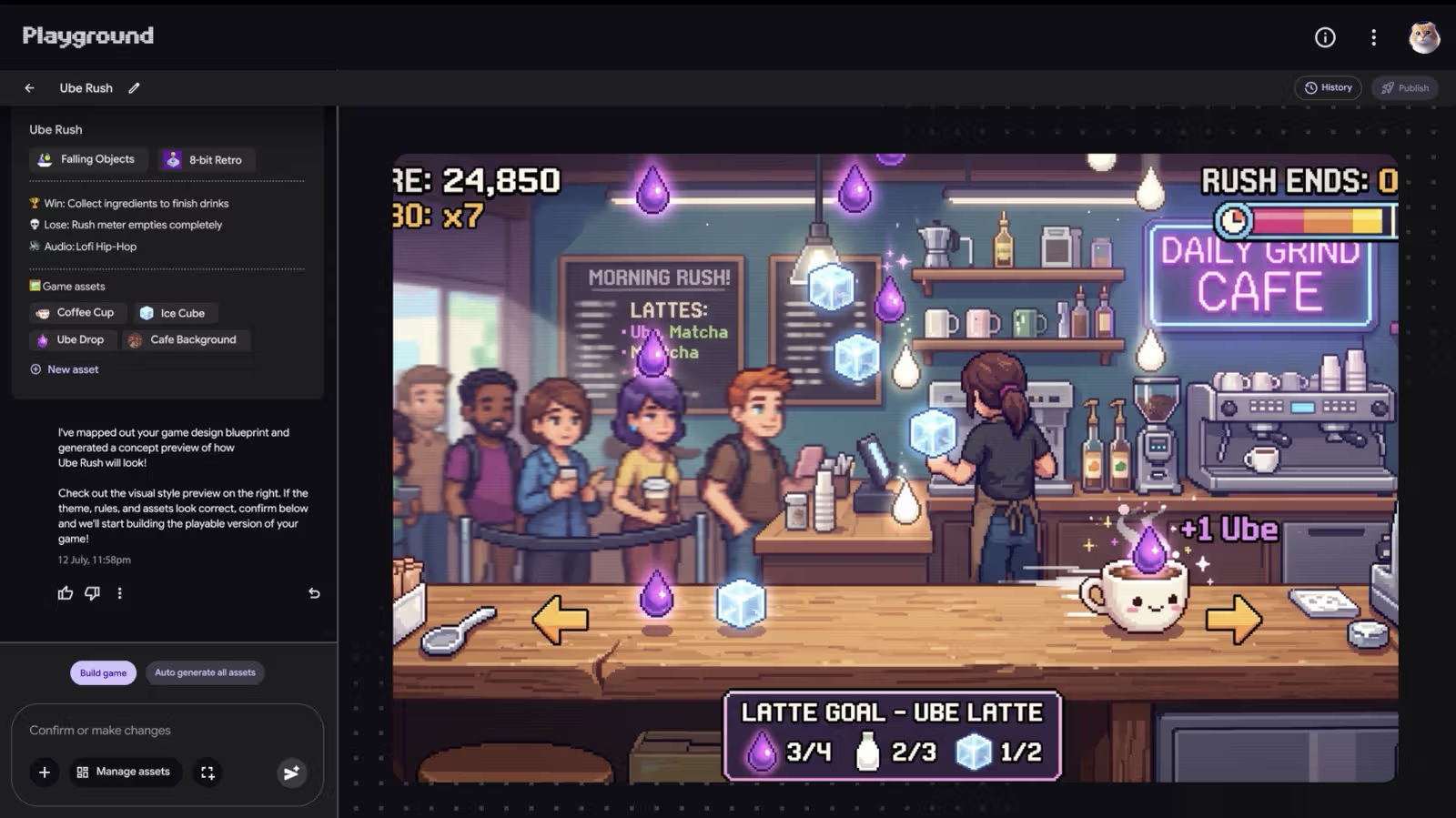
Access to Google's new AI game creation tool, Playground, is tiered according to your Google One membership level, and for now limited to US users aged 18 and older. The platform lets anyone generate 2D or 3D games from a few text prompts alone, without coding or drawing skills.