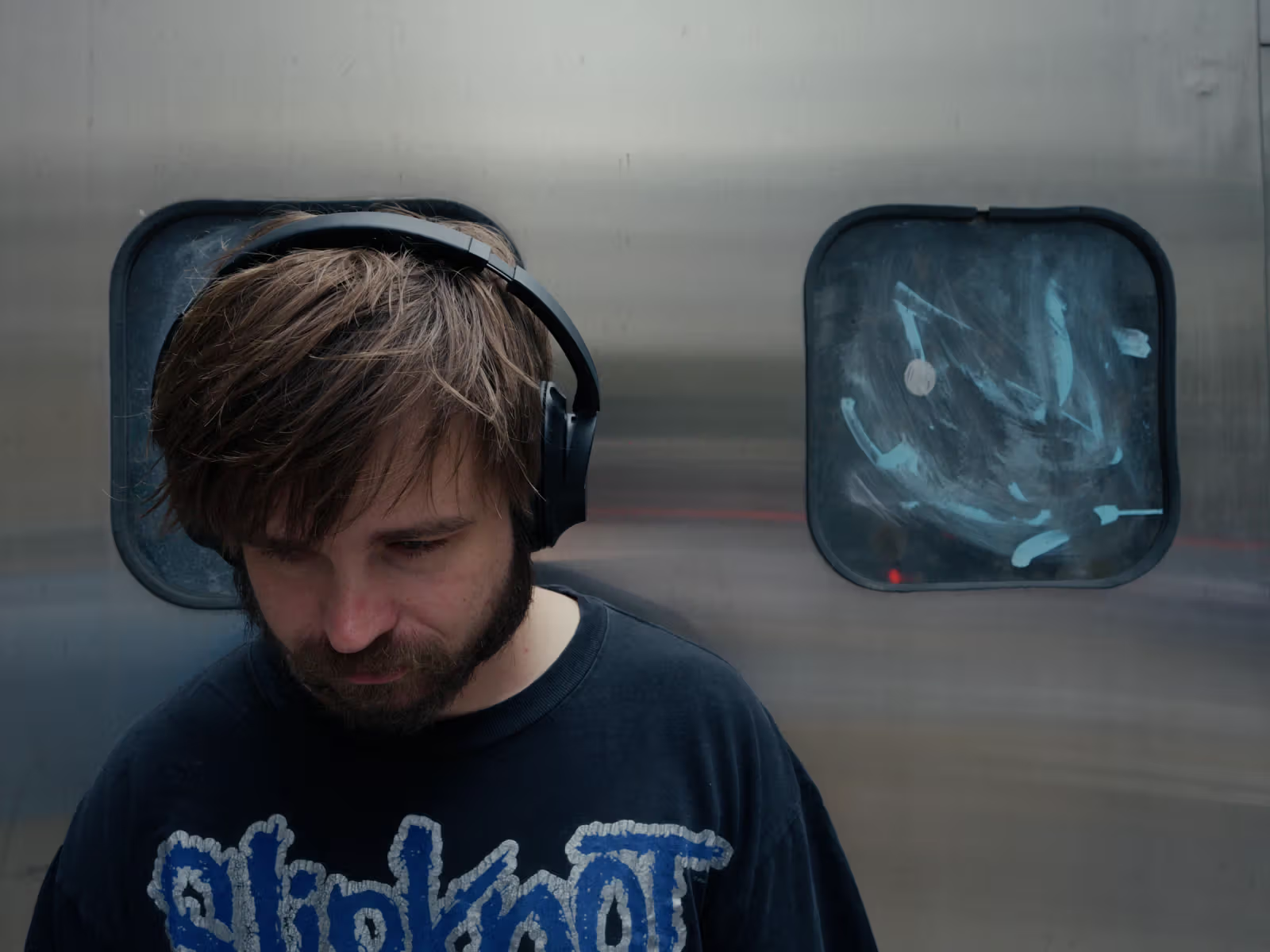
On the Road, a Confession Took Shape: This Is Lorelei Unveils 'The Singer in My Band'
Nate Amos, working as This Is Lorelei, will drop "The Singer in My Band" through Matador on September 11. Written entirely while touring—a first for him—the record shifts his approach from autobiographical confession toward character-driven storytelling, and features his own father playing banjo.
Over a solid month of touring across Europe, Nate Amos took the stage with a pinched nerve and a sprained knee. Before that, he even performed while food poisoned, with a vomit bucket parked at the edge of the stage—that show happened to be the only one on the whole tour paying more than $150. "You just have to push through it," he told The FADER. "It's kind of like being a pirate. The show must go on."
That grind-it-out life on the road is exactly what birthed his new album, "The Singer in My Band." Released via Matador on September 11, it's the latest work under the This Is Lorelei name, and the first from what Amos calls his "new era"—months of the year spent away from home, far from the days when he could always retreat to his own studio to write.
Amos's musical path has never followed the rulebook. Over the past decade he's dropped dozens of projects on Bandcamp, dabbling in drone, noise, electronic collage—basically everything—until, in his own words, he backed into the identity of "songwriter" in "a completely ass-backwards way," applying instincts built from years of experimentation to the most basic song forms. He's also a member of Water From Your Eyes.
2024's "Box for Buddy, Box for Star" was his breakout, tackling addiction and isolation with a candor laced with humor, written almost like a diary. The deluxe edition featured covers of his songs by Hayley Williams, MJ Lenderman, and Waxahatchee, among others. "That's the dream of songwriting—you want these songs to leave you and go live their own lives," Amos said, adding: "If that album hadn't gotten even a little bit of attention, those songs would just be another ten in the pile of stuff I've written and don't really think about anymore."
So "The Singer in My Band" was written in a completely different way. The fast, dense pace of writing from before is basically absent here—instead, it was built up slowly, in the gaps between tour stops. Amos calls the new songs "short stories," populated with characters like Joey, Bobby, Billy, Genevieve, Sarah, and Buddy, replacing the raw autobiography of the previous record. He explains that using specific names or places is a way to "force the listener to start filling in the narrative themselves," though he keeps his own thoughts about these characters out of the lyrics: "Saying too much ruins the fun."
The bluegrass touches on the album didn't come out of nowhere, either. Amos's father is a bluegrass musician who joined in on this recording. "I'd be working on a song and think, this needs banjo here, so I'd send it to my dad and tell him this part needs a solo," Amos recalls. "He's the best banjo player I know, and I don't have to direct him at all—he just knows what I want." He admits he's not a bluegrass musician himself and doesn't have the patience to master an instrument to that level of technical skill, but the way bluegrass parts lock together, each voice doing its own job within a tight structure, has long shaped how he thinks about melody and arrangement.
The slower writing pace also made Amos more discerning about what counts as a good song. He says he used to let every idea come out regardless of quality, but now he has to judge in advance which ideas are "doomed to fail" and bury them right away. He describes it as an instinctive call: "Sometimes you just know that even if you push an idea all the way through, the best it's gonna end up is 'fine.'"
Asked about the sobriety journey he confronted head-on on the previous album, Amos says that period was actually one of his most prolific stretches of writing and recording, but he admits that getting sober completely changed how he spends his time. He didn't go further into the details of that shift.