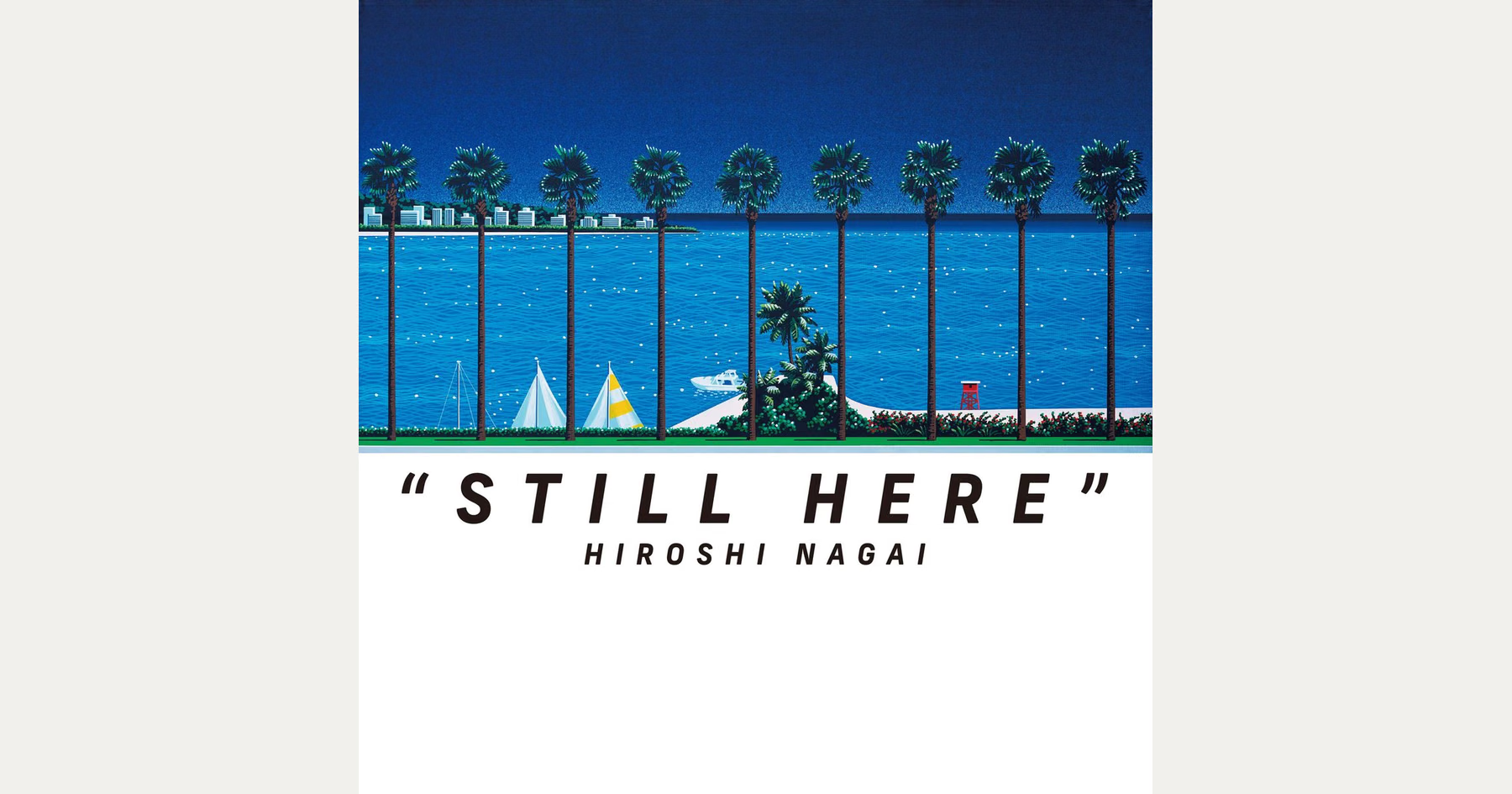
Hiroshi Nagai’s STILL HERE in Tokyo: pools, palms and coastlines across about 20 originals
GALLERY TARGET presents new and earlier originals through November 13, including the original Kimi wa Tennen Shoku cover artwork. Open noon–7 p.m.; closed Mondays, including October 26.
For anyone who discovered Hiroshi Nagai through City Pop record covers, STILL HERE in Tokyo’s Jingumae offers another viewing distance. GALLERY TARGET places new and earlier works together, presenting about 20 originals and a special display of the original artwork used for Eiichi Ohtaki’s Kimi wa Tennen Shoku cover. Familiar musical memories return to the painting itself.
The exhibition runs October 22–November 13, opening noon–7 p.m. and closing on Mondays. Travellers should note that today, October 26, is Monday and the gallery is closed. Remove closing days from an itinerary before arranging the surrounding neighbourhood walk, rather than remembering only the exhibition’s final date.
Notice light and water before identifying familiar scenery
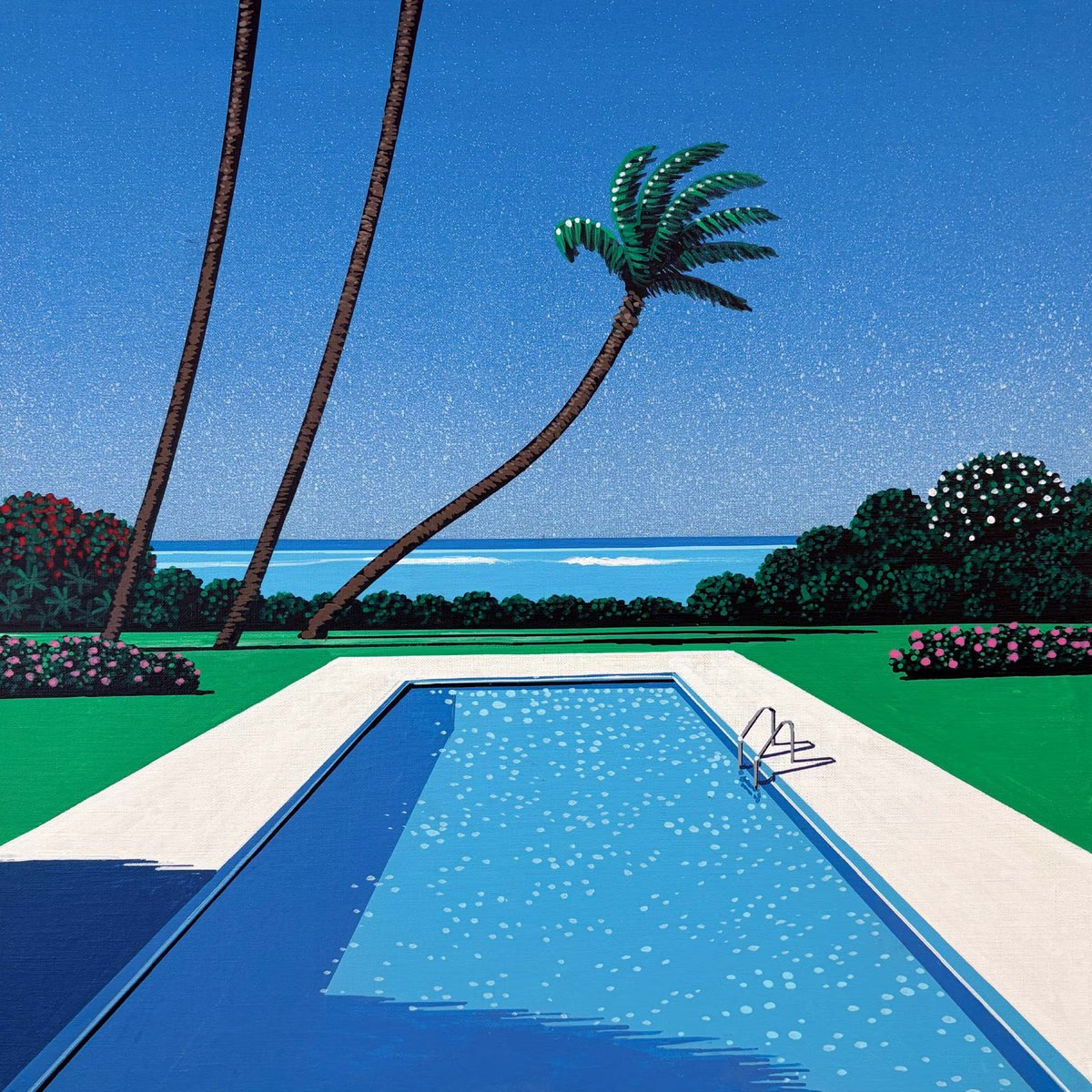
Pools, coasts, palms and architecture recur in the supplied images. Blue is not one undifferentiated background: sky, sea and pool use different tones, separated by white pool edges or points of light. Beyond clear outlines, these details give a sense of air and moving water. Begin with what is visible without needing to memorise art-historical terminology.
Nagai artwork reproduction with a rectangular pool, palms and sea, not an installation photo
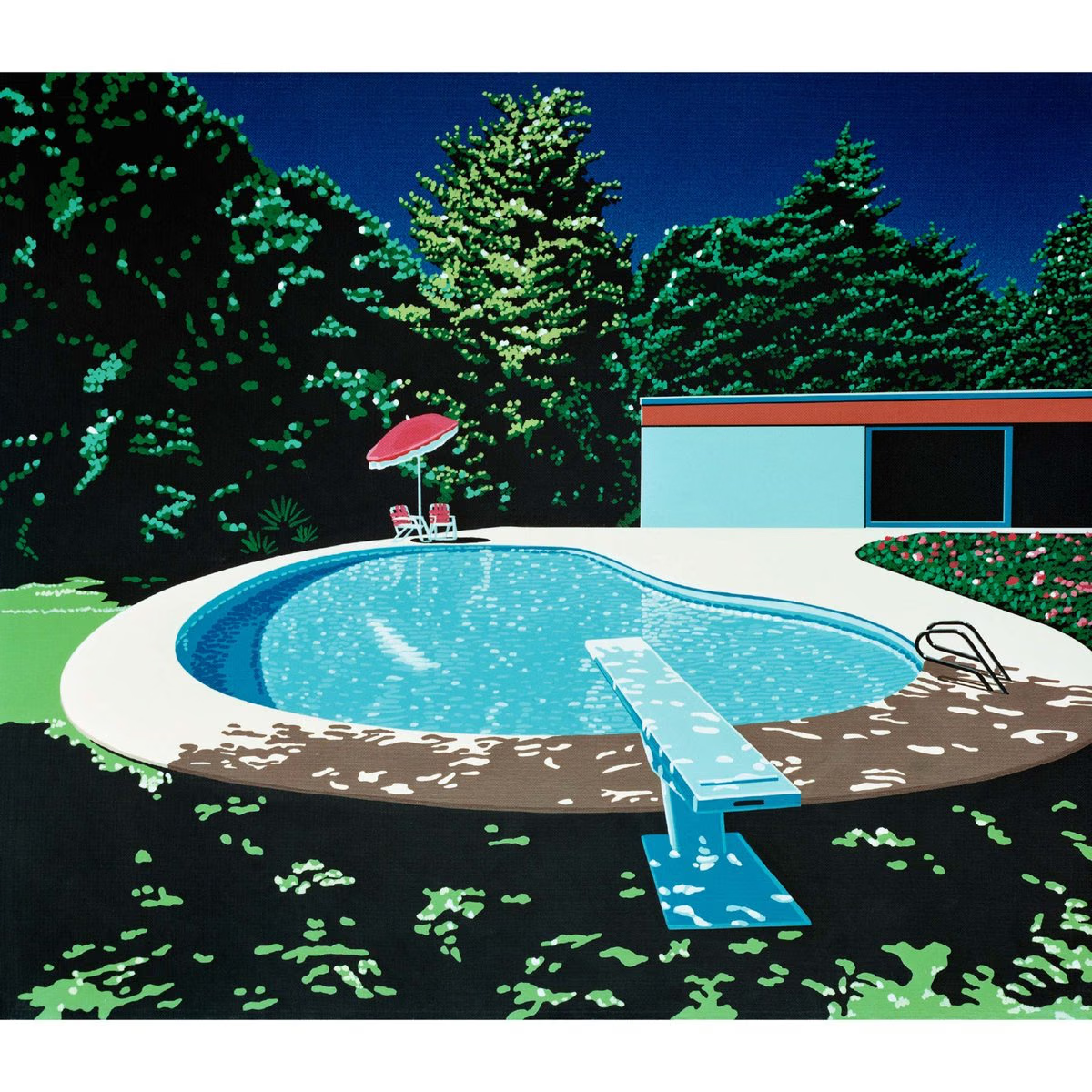
A rectangular pool’s perspective lines can direct the eye into the distance, while a curved pool lets edges, a diving board and tree shadows establish another direction. Neither needs a crowd of people, yet they are different landscapes. Choose one detail to compare across works and notice how composition distinguishes similar elements.
Nagai artwork reproduction with a curved pool, diving board, red parasol and tree shadows
Record-cover familiarity and the actual scale of an original
Nagai created artwork for Ohtaki’s 1981 album A LONG VACATION, a connection closely associated with City Pop imagery. The special original on display here, however, is the cover artwork for Kimi wa Tennen Shoku. Keep the two titles distinct rather than reducing the exhibition to one familiar album cover.
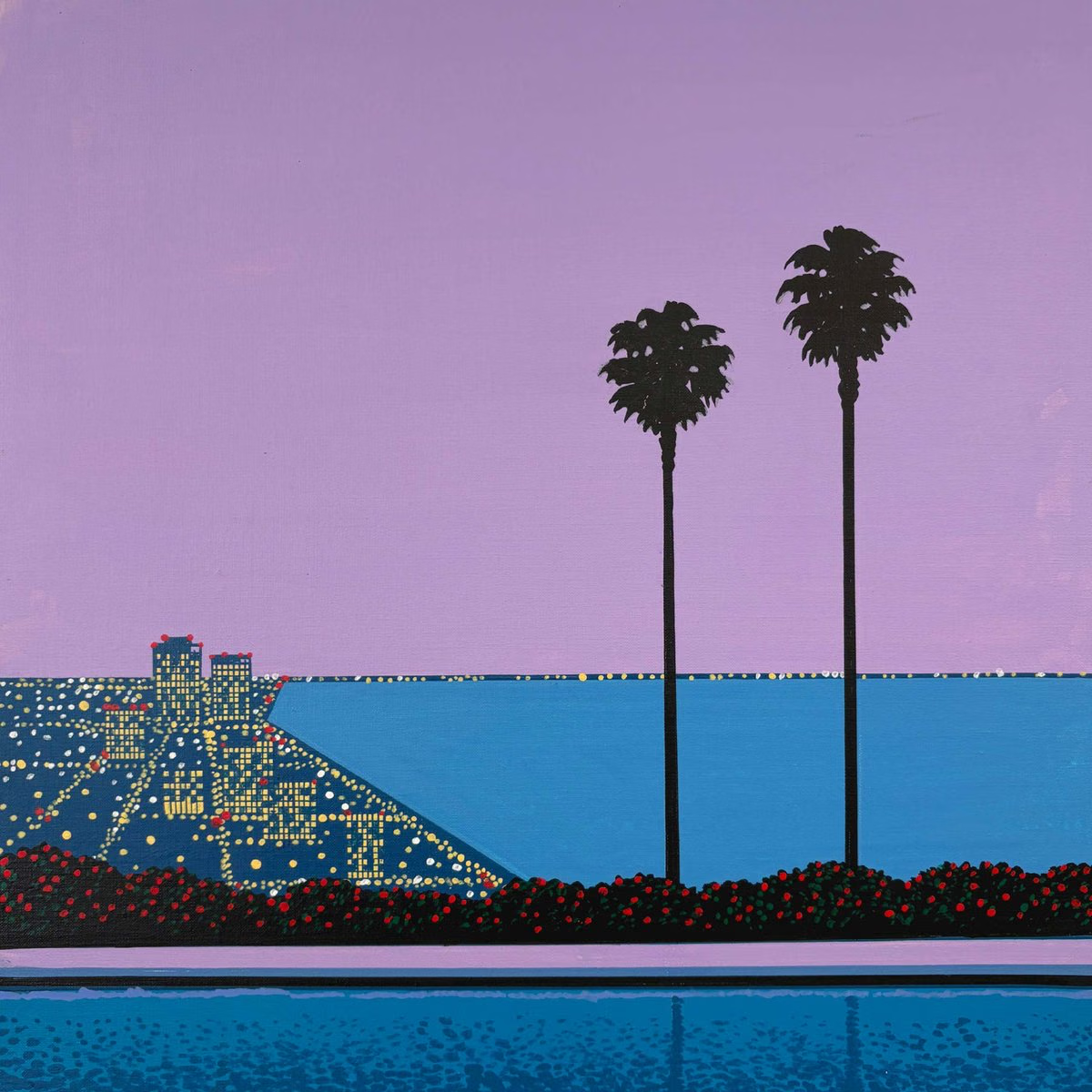
Screens and record sleeves fix the dimensions at which an image is usually seen; an exhibition offers a chance to reconsider line, surface and viewing distance. The images accompanying this article are reproductions, not installation photographs. They do not establish each work’s physical size, and a supplied illustration should not automatically be identified as the special cover original.
Nagai artwork reproduction with a violet sky, two palms and coastal lights
Compare new and earlier works at your own pace
Bringing different periods together invites attention to elements that persist through time: horizons, plants, buildings and water. Look at the broad colour field, move closer to details, then step back to compare works. This is one optional way of looking, without forcing a landscape to match a particular real-world destination.
The venue is at 5-9-25 Jingumae, Shibuya-ku, Tokyo. Check current gallery notices when planning, especially around Mondays and the final days. Ask the gallery about photography, sales or reservations rather than deriving conditions from promotional images. The exhibition can be one stop on a walk, with time to look beyond taking a quick picture.
Questions and answers
What are the dates and hours?
October 22–November 13, noon–7 p.m., closed Mondays. October 26 is Monday and the gallery is closed that day.
Which original cover artwork is featured?
The original for Eiichi Ohtaki’s Kimi wa Tennen Shoku is specially displayed alongside about 20 new and earlier originals.
Do the illustrations prove installation or work dimensions?
No. They are a key visual and artwork reproductions, not installation photographs. Confirm physical scale, photography and visiting conditions with the gallery.