Cartier’s high jewellery in Kyoto: stones, museum architecture and the second chapter
Le Chœur des Pierres met the Kyoto National Museum, with guests including JISOO and Haruka Ayase. A closer look at the stones, display setting and styling of an event that has ended.
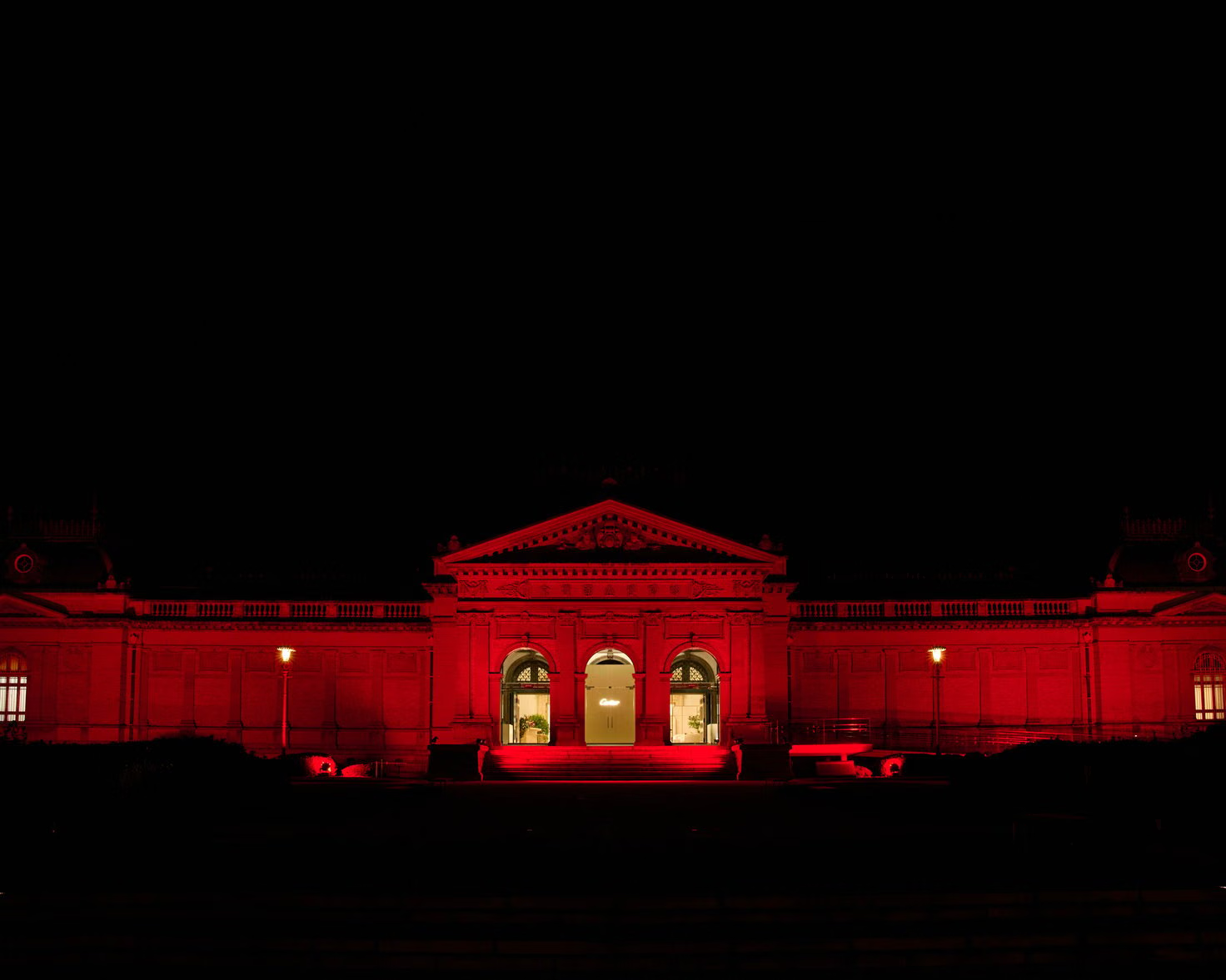
Cartier presented the second chapter of its Le Chœur des Pierres high jewellery collection at Kyoto National Museum on October 13. Red light covered the Meiji Kotokan after dark, while gold-toned display cases and the historic building’s columns offered another scale for viewing jewellery indoors.
The presentation and evening dinner have ended. These photographs are not an invitation to buy tickets to a continuing public exhibition. For readers interested in jewellery and design, the useful observation is how stones, display space and wearers relate to one another, beyond remembering the guests’ names.
A chorus in which each stone keeps its voice
Le Chœur des Pierres can be understood as a chorus of stones. The French chœur sounds like cœur, or heart, giving the name an association with both collective voices and emotion. The first chapter appeared in Saint-Tropez in May; Kyoto hosted the second, two settings within the same creative direction.
Meiji Kotokan at Kyoto National Museum illuminated red at night
One way to look at high jewellery is to begin with the central stone, then notice how metal, surrounding settings and the necklace’s drape respond to it. The main gem is more than an enlarged decorative point: colour, shape and position establish the composition’s rhythm. This is a way to appreciate design, not an assessment of value or future resale performance.
Red façades and gold display cases offer different viewing distances
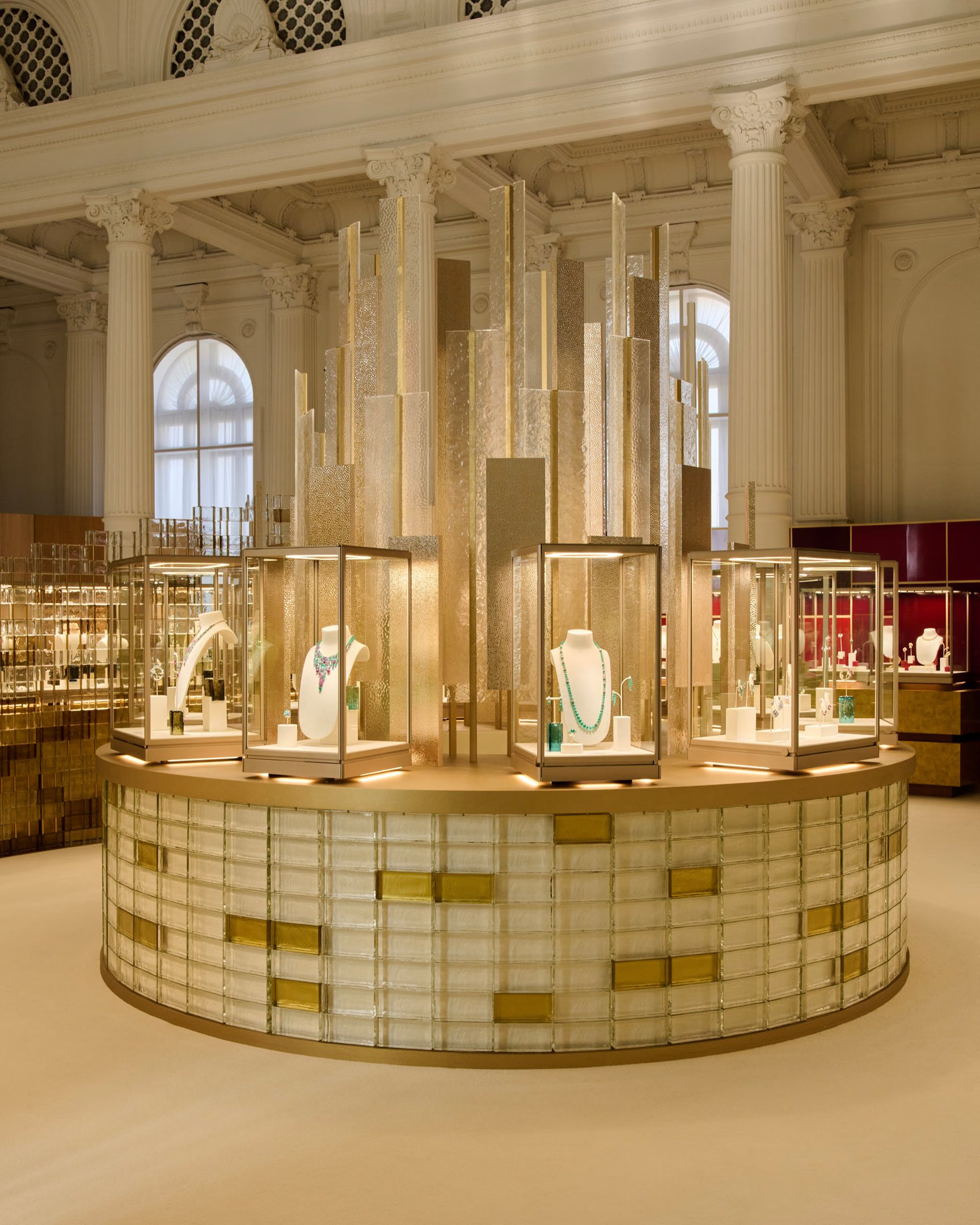
In the night photographs, red light outlines the Meiji Kotokan’s symmetrical façade and central entrance. Inside, glass cases and golden structures bring the pieces into closer view. The display proportions also enter into a dialogue with columns and arched windows.
Jewellery in gold-toned glass display cases inside the historic building
The setting is a reminder that one enlarged product photograph cannot explain a jewel completely. From a distance, read the outline; closer up, look at colour transitions and setting details. Public event photographs document the display, but cannot establish the dimensions, prices or bespoke-order conditions of every piece.
In guest portraits, look first at the space between neckline and necklace
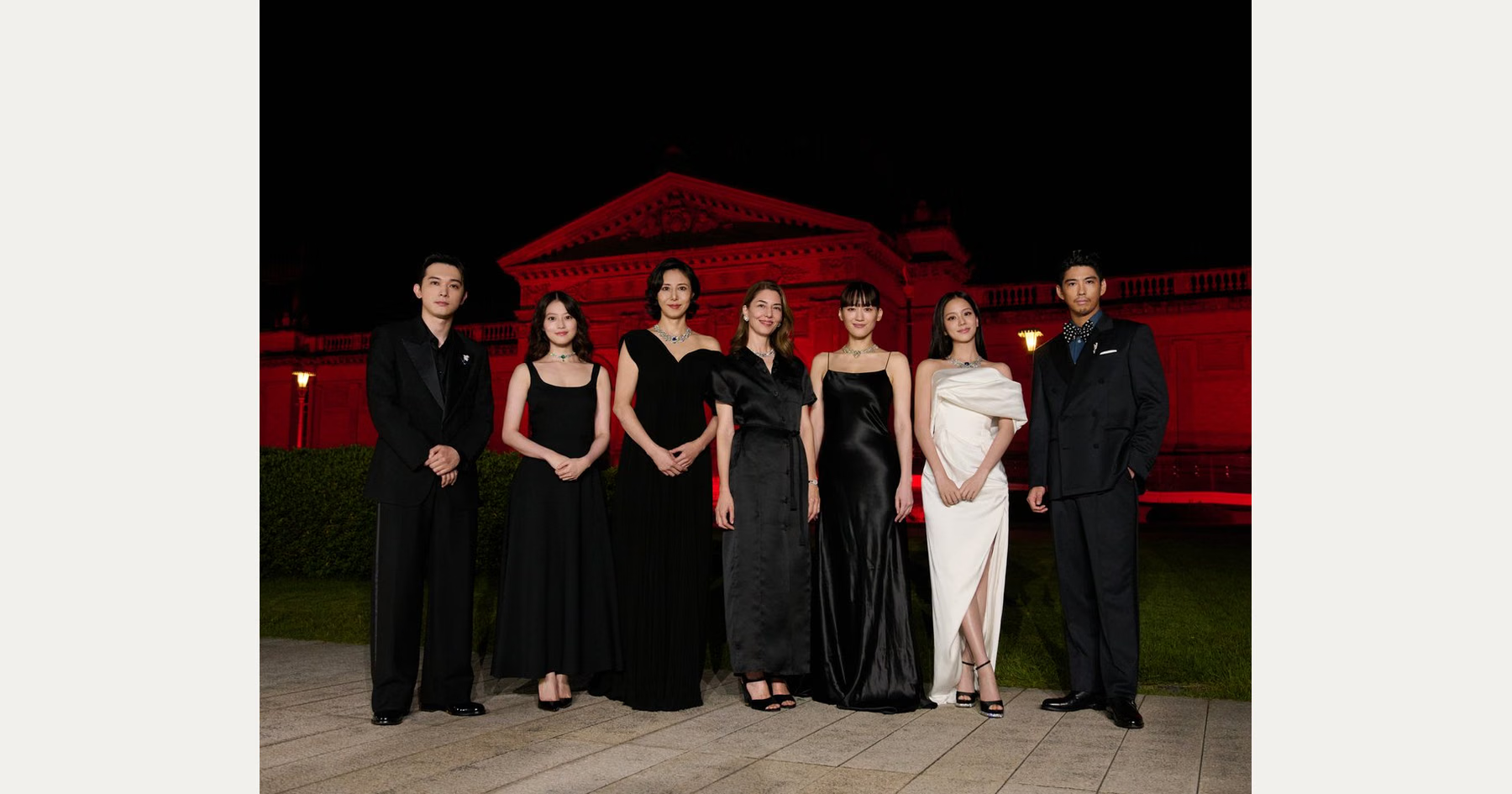
Guests included JISOO, Haruka Ayase, Mio Imada, Nanako Matsushima, Ryo Yoshizawa, Kento Kaku and Sofia Coppola. Several wore black evening dresses in the group photograph, alongside a white off-the-shoulder look. Relatively simple fabric surfaces allow jewellery around the neck and ears to become more visible.
Applying the idea to everyday dressing does not require the scale of high jewellery. Decide how much space to leave at the neckline, then choose necklace length. If earrings already draw attention, other accessories can recede. Confirm individual prices, availability and bespoke services with Cartier; dinner portraits are neither an inventory catalogue nor a public exhibition schedule.
Questions and answers
Can visitors still attend the Kyoto presentation?
The October 13 presentation and dinner have ended. These are event photographs, not ticket information for an ongoing public exhibition.
Where was the second chapter presented?
At Kyoto National Museum, with the Meiji Kotokan as the main display venue. The first chapter appeared in Saint-Tropez in May.
Can prices be established from the event photographs?
No. The images show relationships among jewellery, clothing and space. Ask the brand about individual prices, availability and bespoke conditions.