ÉTAT HER

Do Ho Suh Doesn't Sew Houses — He Stitches the Paths Your Hands Remember

From Seoul to London, he stitches light switches, radiators, and stair railings into translucent polyester fabric at exact scale. For Do Ho Suh, architectural memory was never about the size of a whole house — it's about the one motion your body repeats every single day.

Do Ho Suh Doesn't Sew Houses — He Stitches the Paths Your Hands Remember

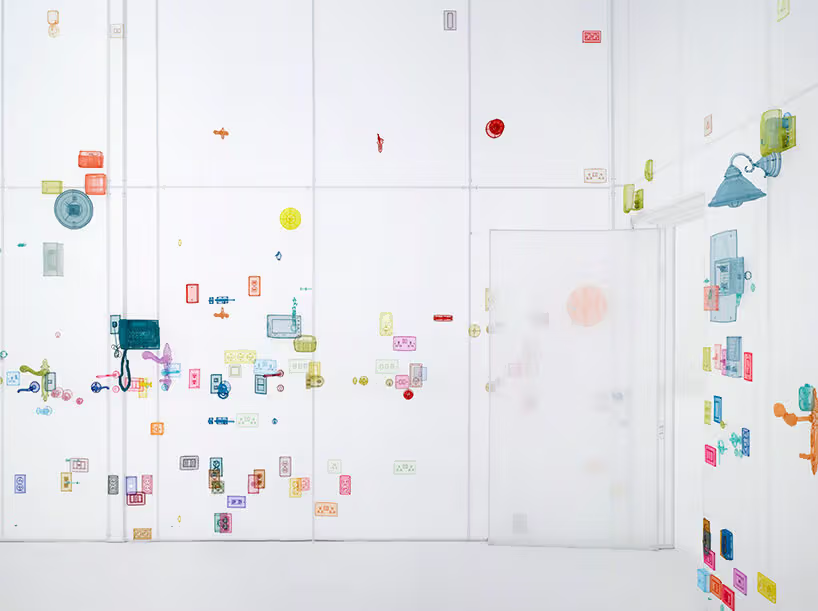
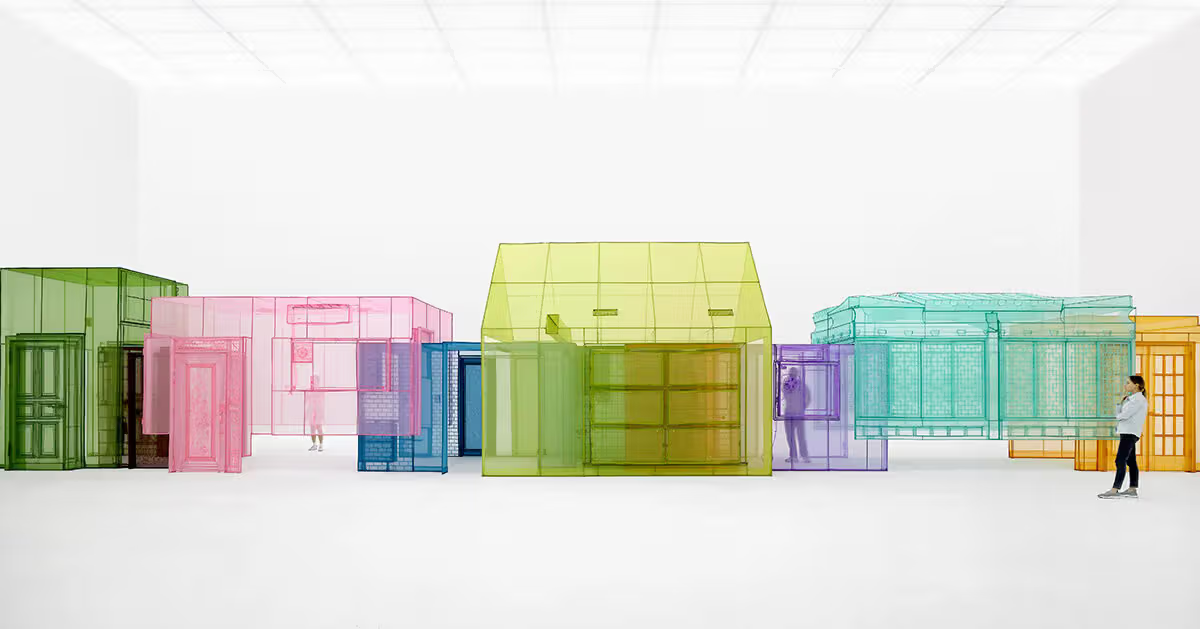
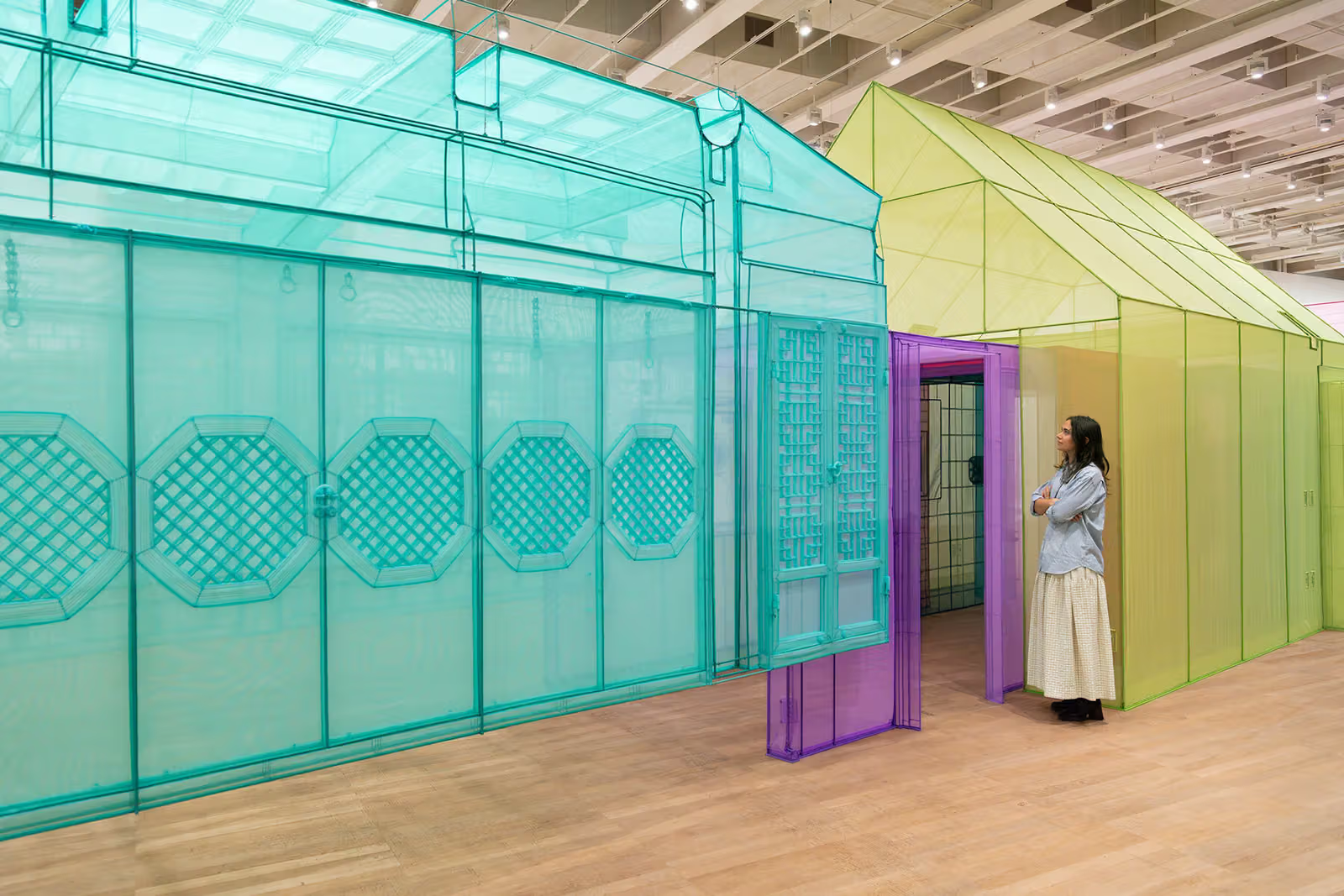
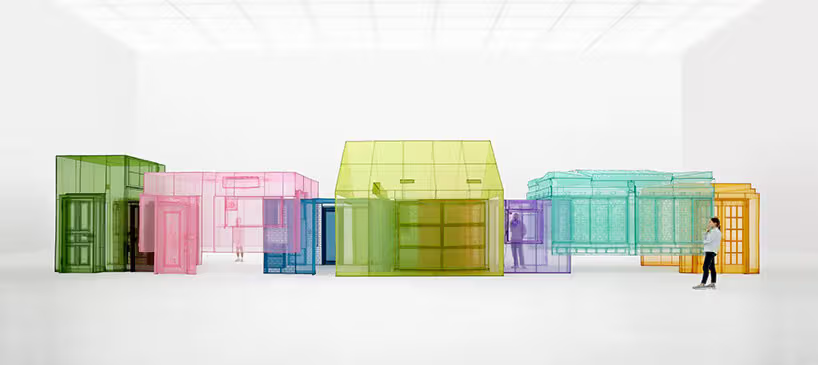
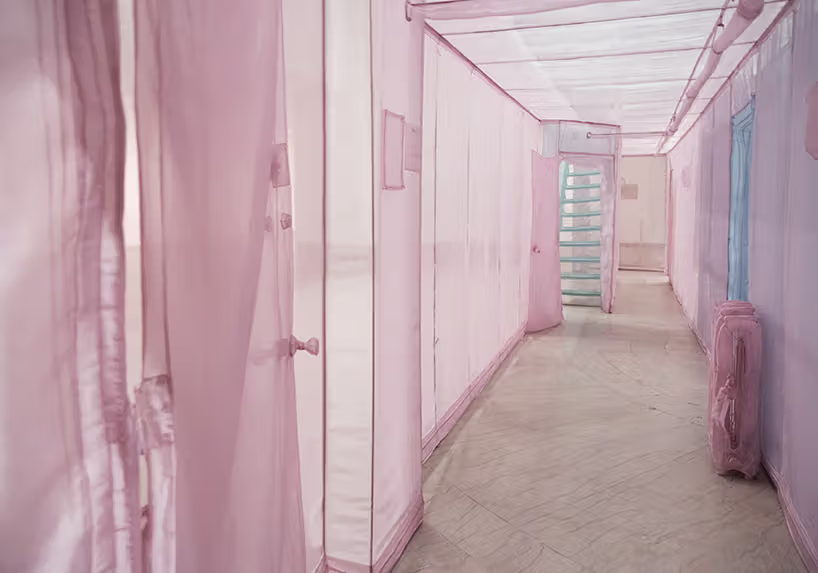
The title of the piece, Perfect Home: London, Horsham, New York, Berlin, Providence, Seoul, reads like an address book of every move he's made. This 2024 installation, measuring 455 x 575 x 1237 cm, uses polyester fabric and stainless steel armatures to layer six different places he's lived into a single space. Walk through it, and you find yourself standing inside several different eras of "home" at once.
Do Ho Suh Doesn't Sew Houses — He Stitches the Paths Your Hands Remember

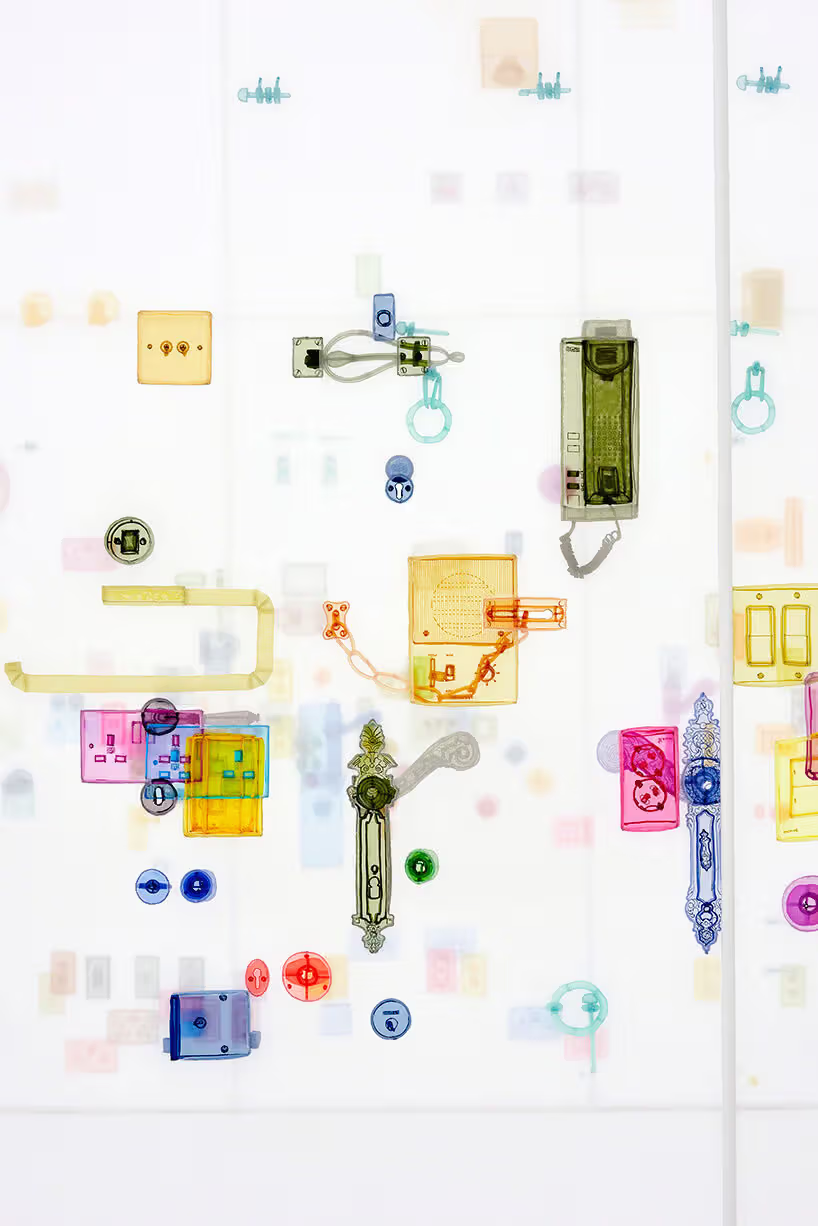
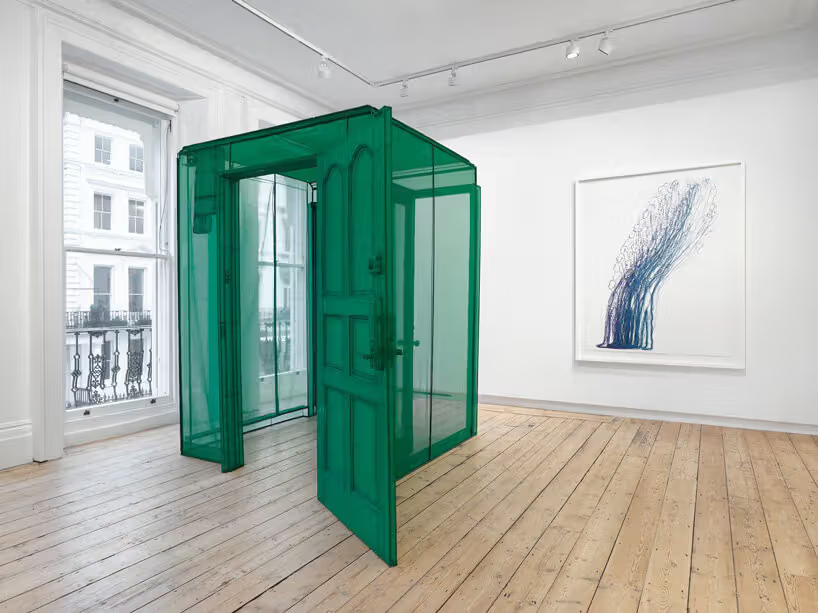
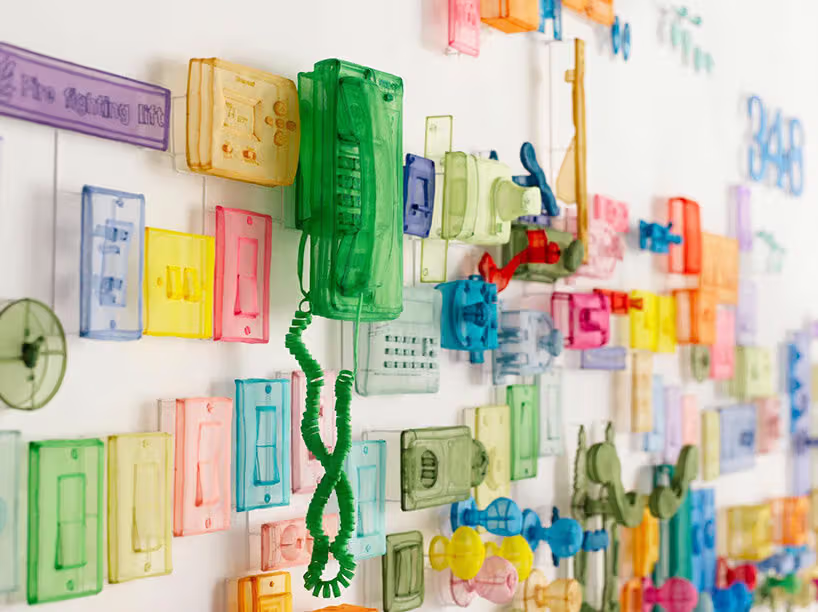
Do Ho Suh has been making these "fabric houses" for over two decades now, and his method has never changed: precisely measure apartments, hallways, kitchens, and staircases he's actually lived in, then stretch translucent polyester over steel frames, stitching every door handle, light switch, radiator, and window frame in exact scale. His 2013 piece specimen series: 348 West 22nd Street, apt. New York, NY 10011, USA radiator, measuring just 93.5 x 74.7 x 18.3 cm, is nothing more than a single radiator — but it's the one corner of an entire apartment he chose to rebuild.
Do Ho Suh Doesn't Sew Houses — He Stitches the Paths Your Hands Remember

And that's the detail most worth sitting with — what he takes the trouble to measure is never a room's length, width, or height. It's the things hands touch every single day. Most of us can't recall the exact dimensions of our childhood bedroom, but we remember which stair tread had worn into a dip, the exact angle light fell through a certain window, the door we opened and closed thousands of times without ever really noticing it. Philosopher Gaston Bachelard wrote about how a house slowly accumulates into memory through daily life — Do Ho Suh's practice is almost a three-dimensional version of the same idea: what he's rebuilding isn't the space itself, but the path that space carved into the body.
Do Ho Suh Doesn't Sew Houses — He Stitches the Paths Your Hands Remember

Architectural theorist Gottfried Semper once argued that architecture's earliest origin was textile — the first thing that ever separated "here" from "there" was a woven cloth, not stone. Do Ho Suh's fabric walls make that theory something you can physically walk into: the wall looks solid enough to define a room, yet it's thin enough that light and the silhouette of the next room bleed through together. The boundary is still there — it just no longer blocks the view.

Do Ho Suh Doesn't Sew Houses — He Stitches the Paths Your Hands Remember

Having relocated from Seoul to New York to London, Do Ho Suh no longer treats "home" as tied to a single address. Both Jet Lag (2022) and Nest/s (2024) — the latter measuring 410.1 x 375.4 x 2148.7 cm — splice together hallways from apartments he lived in at different points in his life, letting a single continuous path carry you through multiple time zones at once. This isn't about settling on an alternative answer to "home" — it's closer to turning the act of moving itself into something architectural you can walk through.

Do Ho Suh Doesn't Sew Houses — He Stitches the Paths Your Hands Remember

Do Ho Suh's first major UK solo exhibition, Walk the House, opened at Tate Modern on February 25, 2025 — his largest solo show in the UK in two decades. The exhibition features multiple works from his fabric house series, on loan from Lehmann Maupin and Victoria Miro galleries.

Related

Freddie Mercury's Yamaha C3 Piano Heading to Auction, Estimated at $528,000
Art

Freddie Mercury's Yamaha C3 Piano Heading to Auction, Estimated at $528,000

The Yamaha grand piano that recorded "The Game" and "Hot Space" at Munich's Musicland Studios will go under the hammer at Propstore, alongside Mercury's studio microphone and handwritten manuscripts.

Kenny Schachter on the Art World's Mess: Stop Complaining, Go Make Something
Art

Kenny Schachter on the Art World's Mess: Stop Complaining, Go Make Something

In a Hypebeast "State of Art" interview, artist, critic, and curator Kenny Schachter uses his three-decade obsession with Paul Thek to make the case for his own signature advice: instead of griping about the art world, just get to work.

Justin Bieber Puts Out Call on X: Wants to Make a SKYLRK Phone
Art

Justin Bieber Puts Out Call on X: Wants to Make a SKYLRK Phone

Justin Bieber took to social media to publicly announce he wants to build a SKYLRK phone, leaving behind a dedicated email address to recruit potential collaborators. The idea surfaced the same week SKYLRK has been rolling out a flurry of footwear and audio products.

Ben Quilty's NYC Debut "Devil/God": Turning Cars Into Phallic Idols, Stitching the Virgin Mary Into Corporal Punishment Leather
Art

Ben Quilty's NYC Debut "Devil/God": Turning Cars Into Phallic Idols, Stitching the Virgin Mary Into Corporal Punishment Leather

Australian painter Ben Quilty will present his solo exhibition "Devil/God" at albertz benda in New York, using thickly layered oil paintings and sculpture to confront masculine idolatry, religious power, and ecological collapse. The show opens October 15, 2026.

Yohei Ogawa Enters Trading Cards for the First Time, "Green Cow Garden" Pop-Up Lands at Hong Kong's BELOWGROUND
Art

Yohei Ogawa Enters Trading Cards for the First Time, "Green Cow Garden" Pop-Up Lands at Hong Kong's BELOWGROUND

Japanese illustrator Yohei Ogawa launches a debut trading card project with 137 designs at Hong Kong's BELOWGROUND, anchored by a 1.4-meter BG Bear statue on site. He also opened up about his own struggles trying to score Pokémon card packs.

Met Museum Displays Oldest Surviving Fragment of the Odyssey, Papyrus Reveals Three Lost Lines
Art

Met Museum Displays Oldest Surviving Fragment of the Odyssey, Papyrus Reveals Three Lost Lines

The Metropolitan Museum of Art has put the oldest surviving Ptolemaic-era papyrus fragment of the Odyssey back on display in Gallery 162. Dating to roughly 285–250 BCE Egypt, the ancient artifact contains three lines of verse not found in today's standard text.