Hong Kong’s LV Central Station: reading Monogram through Side Trunk, Speedy and Neverfull
The travel-themed installation at LANDMARK brings trunk design into the cityscape. Trace Monogram’s origins in 1896, then compare three very different bag shapes.
Louis Vuitton Central Station at LANDMARK in Hong Kong connects trunks, station imagery and the cityscape. This is a travel-themed brand installation, presented officially in the context ahead of the Louis Vuitton Maison’s grand opening at LANDMARK. Station does not mean a new railway stop, nor does the installation establish that the new Maison has already opened.
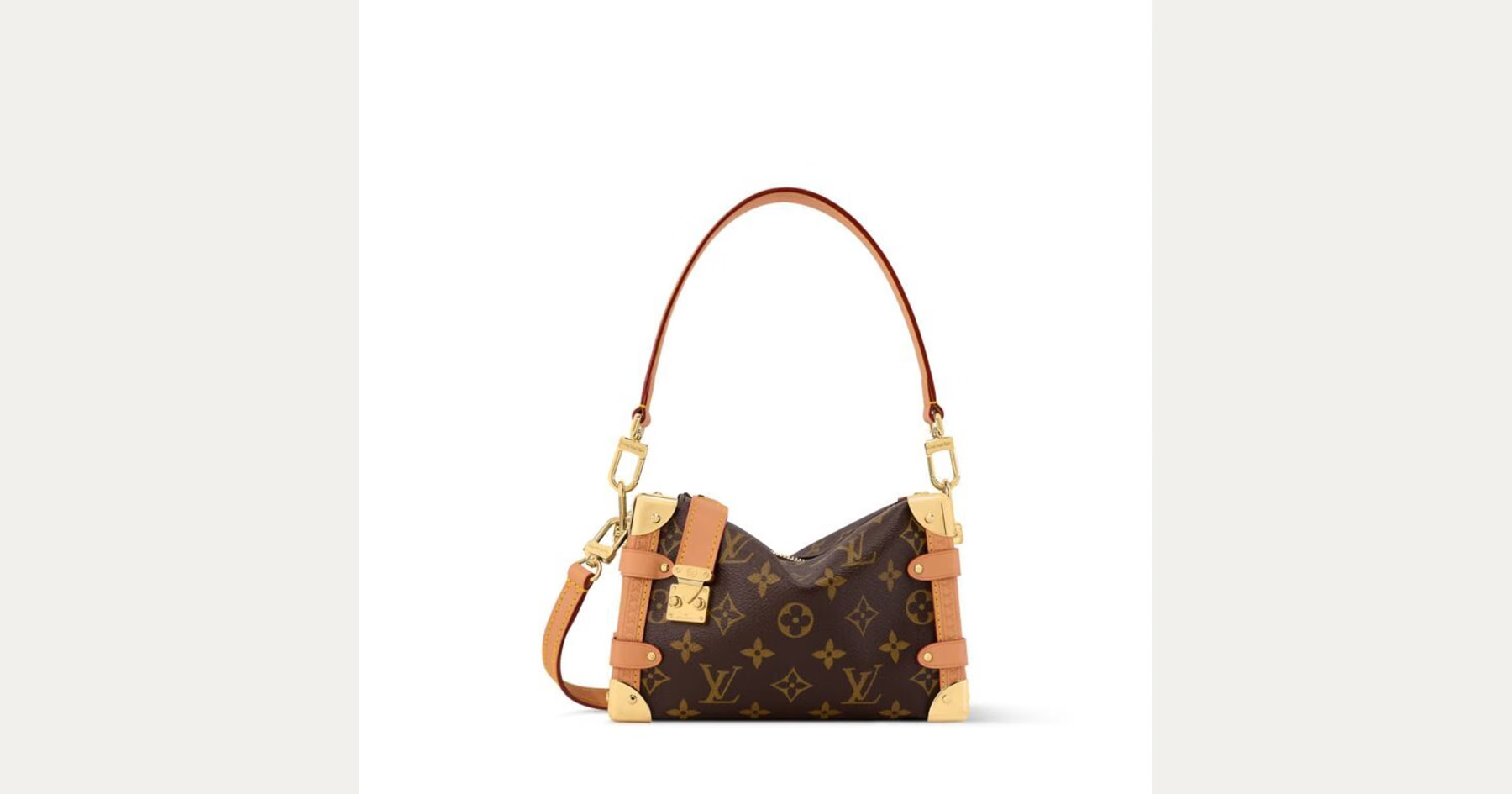
If the enlarged pattern and trunk details catch your eye, bring that attention back to the bags. Side Trunk, Speedy and Neverfull all carry Monogram but use different shapes and modes of carrying. Reading structure alongside pattern helps explain why one recognisable surface can have a different visual rhythm on each silhouette.
The 1896 pattern is more than two initials
Georges Vuitton created Monogram in 1896, combining his father Louis’s initials with floral and geometric motifs as both tribute and brand identification. In 2026 it has a 130-year history. That background makes a continuing visual language between travel goods and contemporary dress easier to recognise.
Start by locating the interlocking LV, then compare the flowers and spaces between them. The effect comes from repeated units organising a surface, not one isolated logo. A small bag carries fewer units, while a broad panel allows them to continue. Shape and viewing distance change the pattern’s presence even when the colours are similar.
Side Trunk and Speedy: trunk details versus rounded volume
Side Trunk evokes rigid luggage through metal corners, a clasp and leather trim, while the photographed body shows soft folds. Its interest lies in combining trunk symbols with a flexible bag. If you enjoy accessories with an object-like quality, notice the joints between hardware, handles and leather as well as the front pattern.
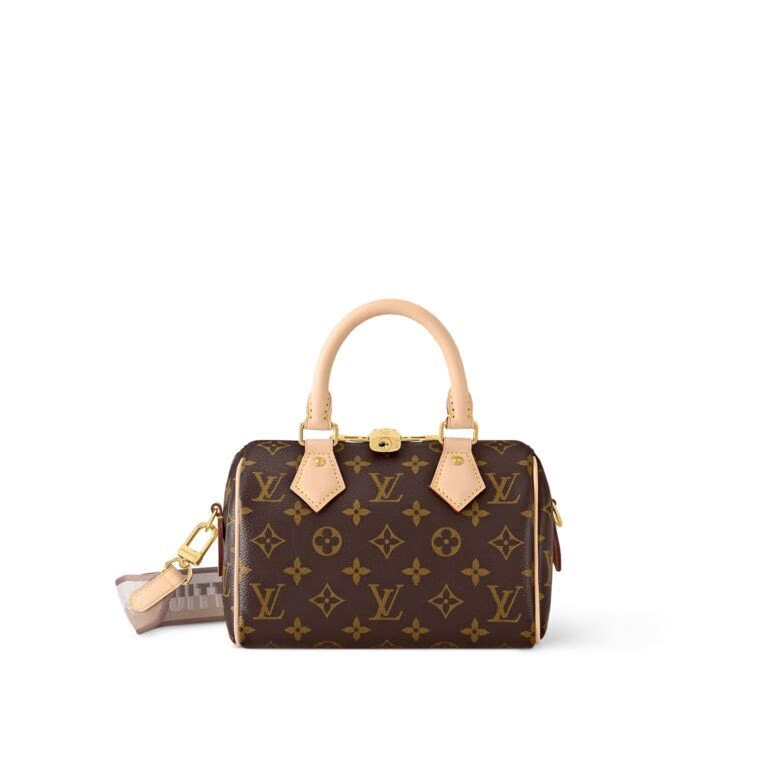
Speedy offers another proportion through its rounded body and twin handles. The same motif moves over a curved surface and sides, concentrating attention on overall volume. When considering this shape, try your usual belongings and observe the opening, access and strap placement rather than judging everyday convenience only from a photograph.
Monogram Speedy with a rounded body, twin handles and a shoulder strap
Neverfull’s broad surface, measured against your own list
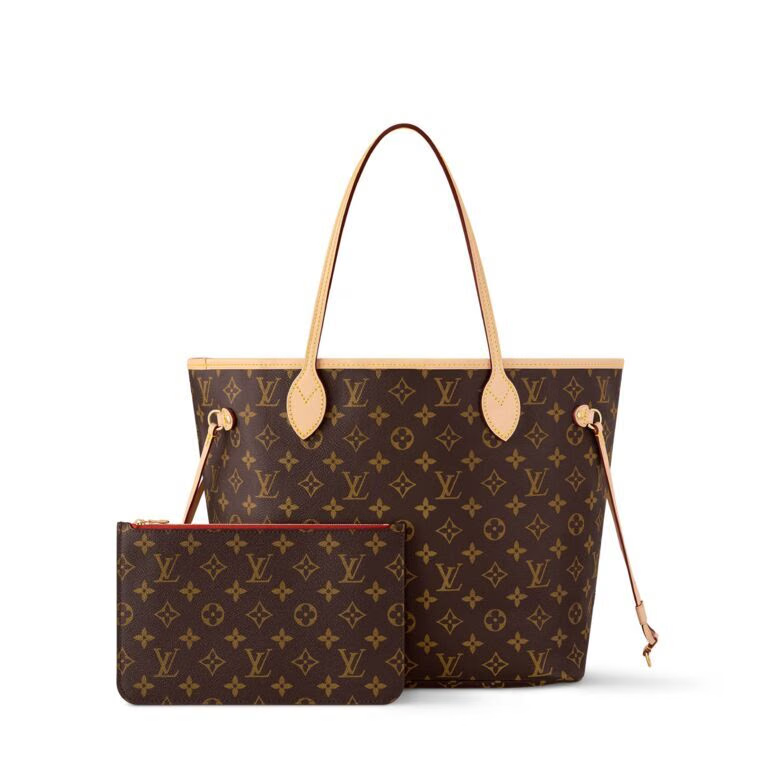
Neverfull’s tote form spreads the pattern over a larger panel. Slender straps and side-cinching details keep its lines relatively light. The accompanying pouch in the product photograph also suggests that organisation is more than total capacity: finding a phone, documents or small objects depends on compartments and the smaller pouches you use.
Monogram Neverfull tote and accompanying pouch with broad patterned panels
Compare the three against what you carry for commuting, weekends or travel, then consider weight, carrying method and access. A long-established motif does not establish appreciation in a particular product’s value, and appearance cannot demonstrate properties such as fire resistance. The Central installation provides an entry to design; a purchase still depends on product information, an actual item and your budget.
Questions and answers
Is Central Station a new railway station?
No. It refers to the Louis Vuitton travel-themed installation at LANDMARK, presented ahead of the Maison’s grand opening, not the inauguration of a transport stop.
Who created Monogram, and when?
Georges Vuitton created it in 1896, combining LV initials with floral and geometric motifs in tribute to his father Louis.
How do the three bags differ despite sharing a pattern?
Side Trunk combines trunk hardware with a flexible body; Speedy emphasises rounded volume and twin handles; Neverfull uses a broad tote panel. Compare weight, access and your actual belongings in person.