What to know | Who paints the Nobel Prize portraits? Niklas Elmehed’s black lines and metallic gold
The key details: A practical solution to missing photographs became a recognizable visual system. Bold outlines, metallic foil and small-format clarity connect individual laureates with the annual awards.
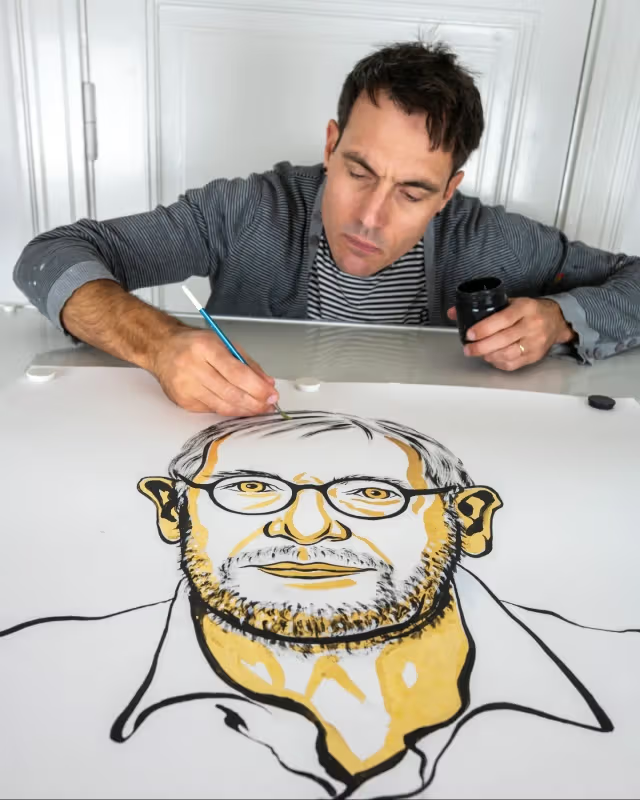
When the Nobel Prize winner is announced every year, the portrait with a black outline and a golden block often appears on the news page together with the name. The creator is visual artist Niklas Elmehed. He has been involved in official portrait work since 2012, allowing different people in different fields to be quickly recognized in the same visual language.
Cover image: Niklas Elmehed/Instagram
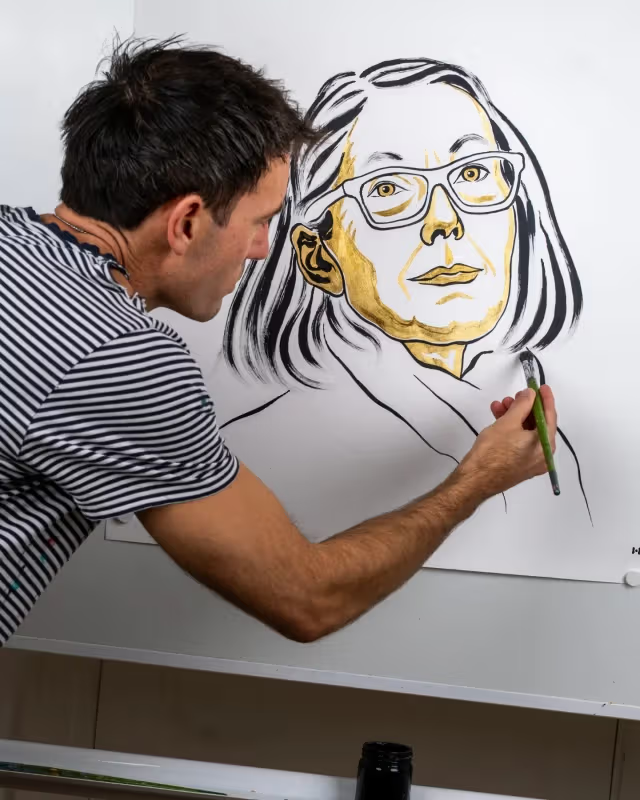
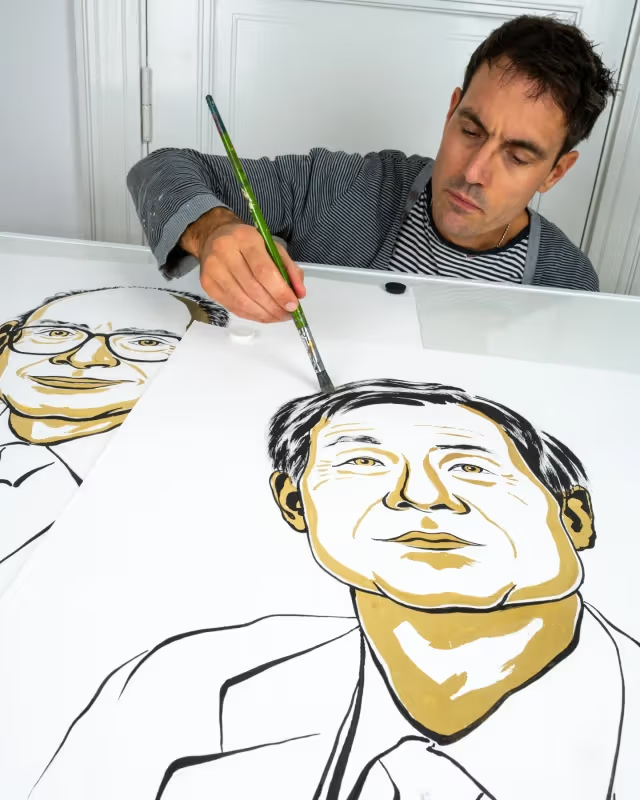
Portraits of the artist and various winners. Image: Niklas Elmehed/Instagram
The starting point was a photo problem, and later it became a complete visual system
Elmehed explains in his public talk that a shortage of usable photographs initially led him to draw quick portraits with a black marker. News outlets used the images, and the Nobel organization subsequently developed the idea into a distinctive system for announcing laureates.
This process allows the design to develop from solving immediate needs to a method that can be used repeatedly. When the same event occurs every year, stable language allows the audience to first recognize the background and then understand this year's new characters and achievements.
Black thick lines allow the outline of the character to be preserved even in small sizes
The portrait uses clearer lines to organize the head, facial features and clothing, so that the character still has a recognizable structure when reduced to a mobile phone news card. It does not need to preserve all the details of the photo, but selects which features are most worth retaining, so that the visual information has a clear priority.
When looking at the work, you can first compare the outer contours, and then see how the glasses, hairstyle and facial turning are simplified. Simplification is not about painting everyone with the same face, but about finding the most easily visible differences among limited materials.
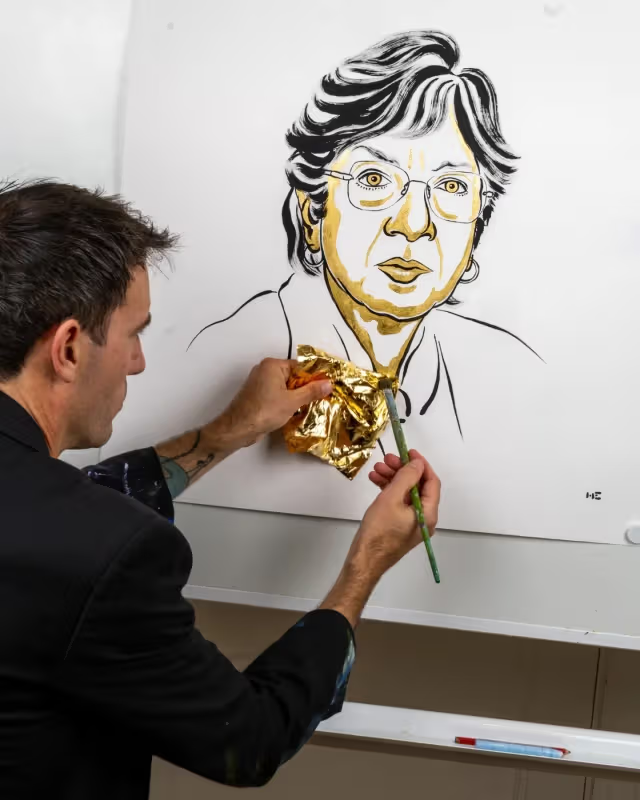
Golden materials and lines in portrait painting. Image: Niklas Elmehed/Instagram
From blue and yellow to gold, colors also carry institutional memory
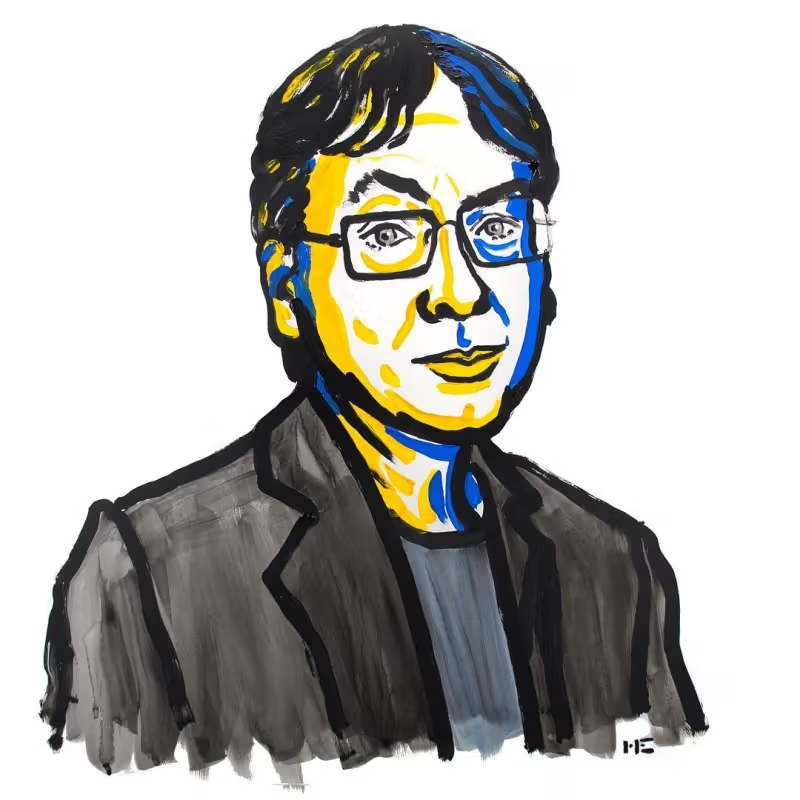
Early portraits used blue, yellow and black lines, and later shifted to gold as the main tone. Elmehed uses thin metal foil with an adhesive treatment, so that gold is not just a flat pigment name, but also an actual surface reflection, creating a clear difference from the black lines on a white background.
Early blue and yellow portrait of Niklas Elmehed. Image: Niklas Elmehed/Instagram
In the same set of images, lines serve for character identification, while gold allows different portraits to share the award background. This reminds us that the visual system can handle both individual differences and overall consistency at the same time, and does not need to regard the two as only one or the other.
The immediacy of hand-drawing is connected with the speed of news release
After the winner is announced, the image will quickly appear on different websites, languages and sizes, so the portrait needs to remain recognizable in various ways of use. Thick lines, white space and a small amount of main colors allow the image to still have its own place in the information-dense news environment.
This is also a practical question when viewing illustrations: Which parts of a picture can be retained on exhibition walls, mobile phones and social thumbnails? When the communication environment is put into creation, the work not only serves for close appreciation, but also needs to respond to actual reading.
The production timeline remains confidential
Regarding when the winner’s information will be handed over to the artist, the public statement did not disclose the complete details, and external speculation cannot be written as a fixed number of days in advance. Creation is linked to award announcements, which does not mean that all production processes will be open to the public.
Niklas Elmehed's work is noteworthy for developing a temporary hand drawing into a sustained use of news images. Looking at it one by one, from the lines of the characters, to the golden surfaces, to the cross-size recognition, you can understand that there are still specific artistic choices behind the familiar portraits every year.
Niklas Elmehed and portraiture. Image: Niklas Elmehed/Instagram