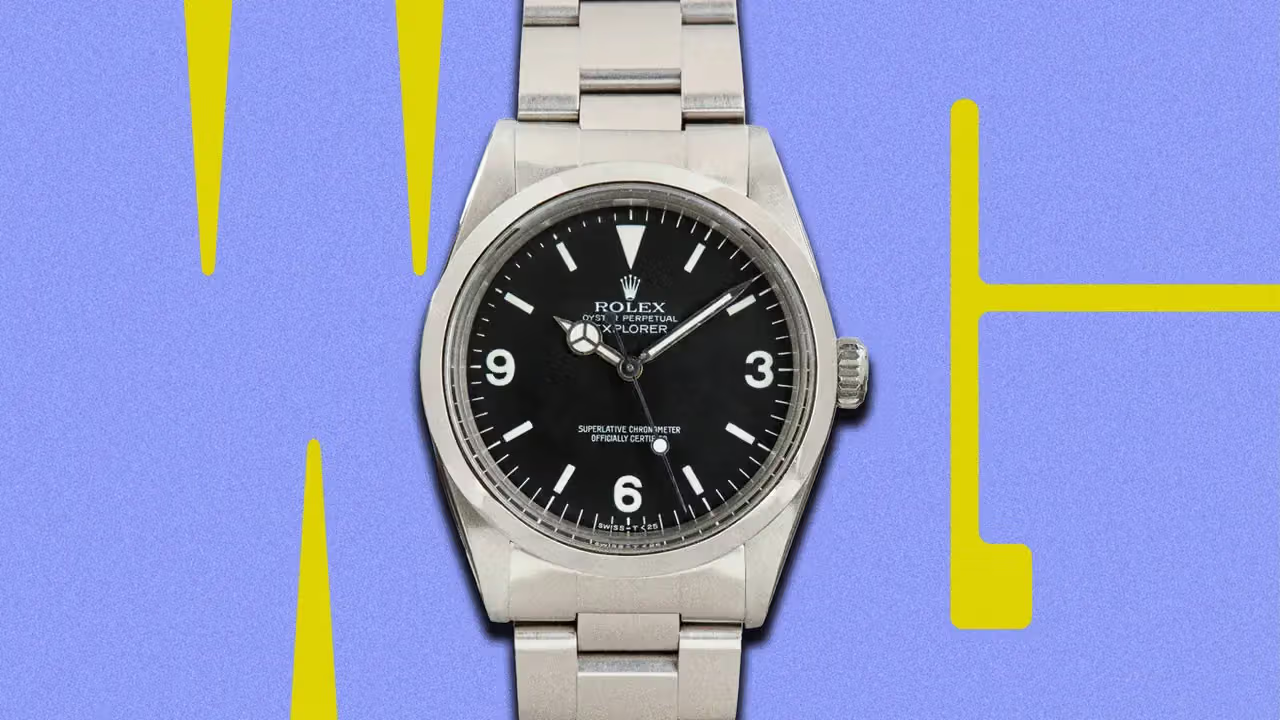
If someone told you that for the rest of your life you could only wear one watch—one that works for a suit in a London boardroom, holds up in the Nepalese mountains, and still doesn't look out of place at a dinner party in New York—most watch nerds would freeze up at the hypothetical. But plenty of collectors already have an answer, and it goes by the reference number 1016.
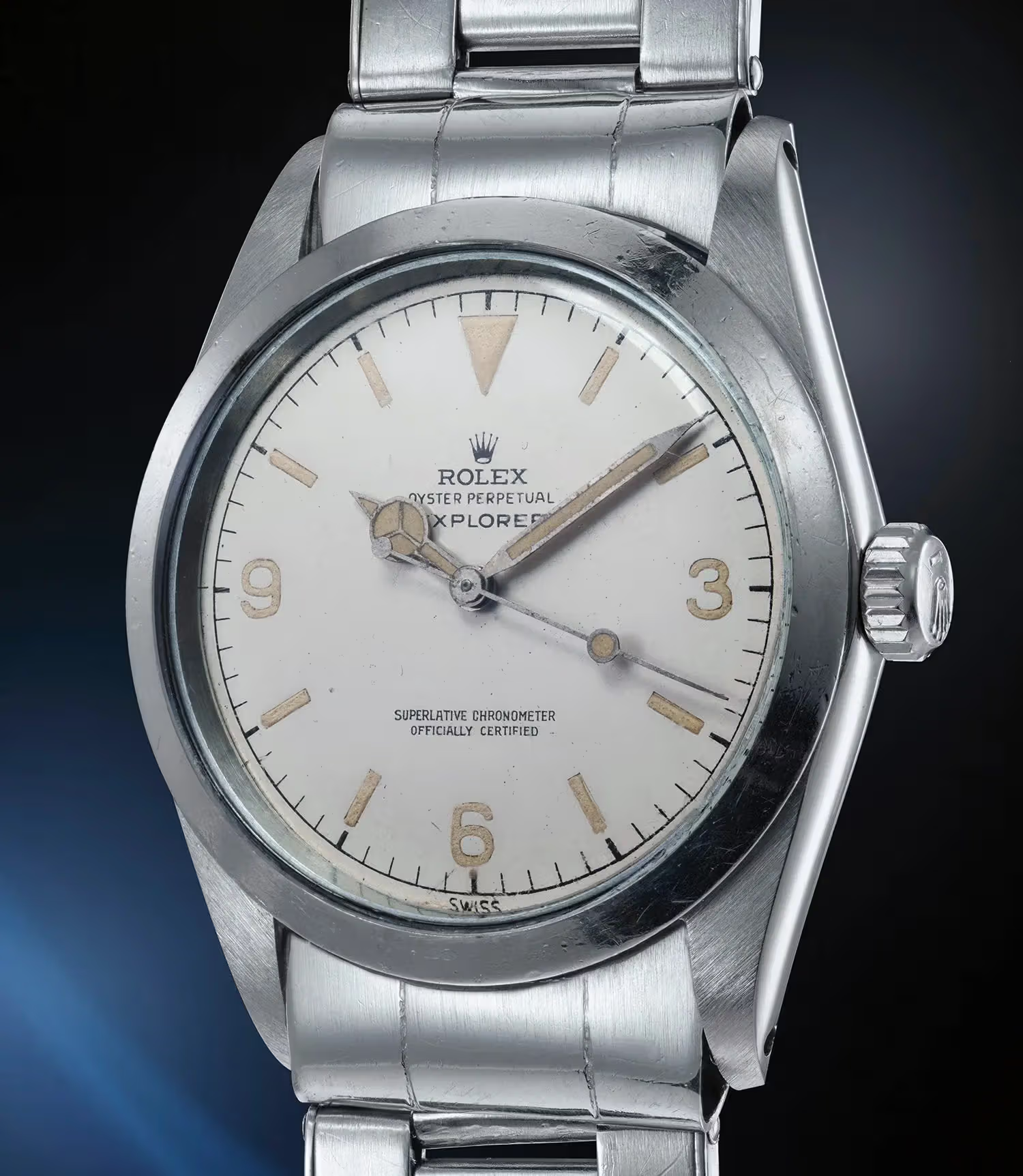
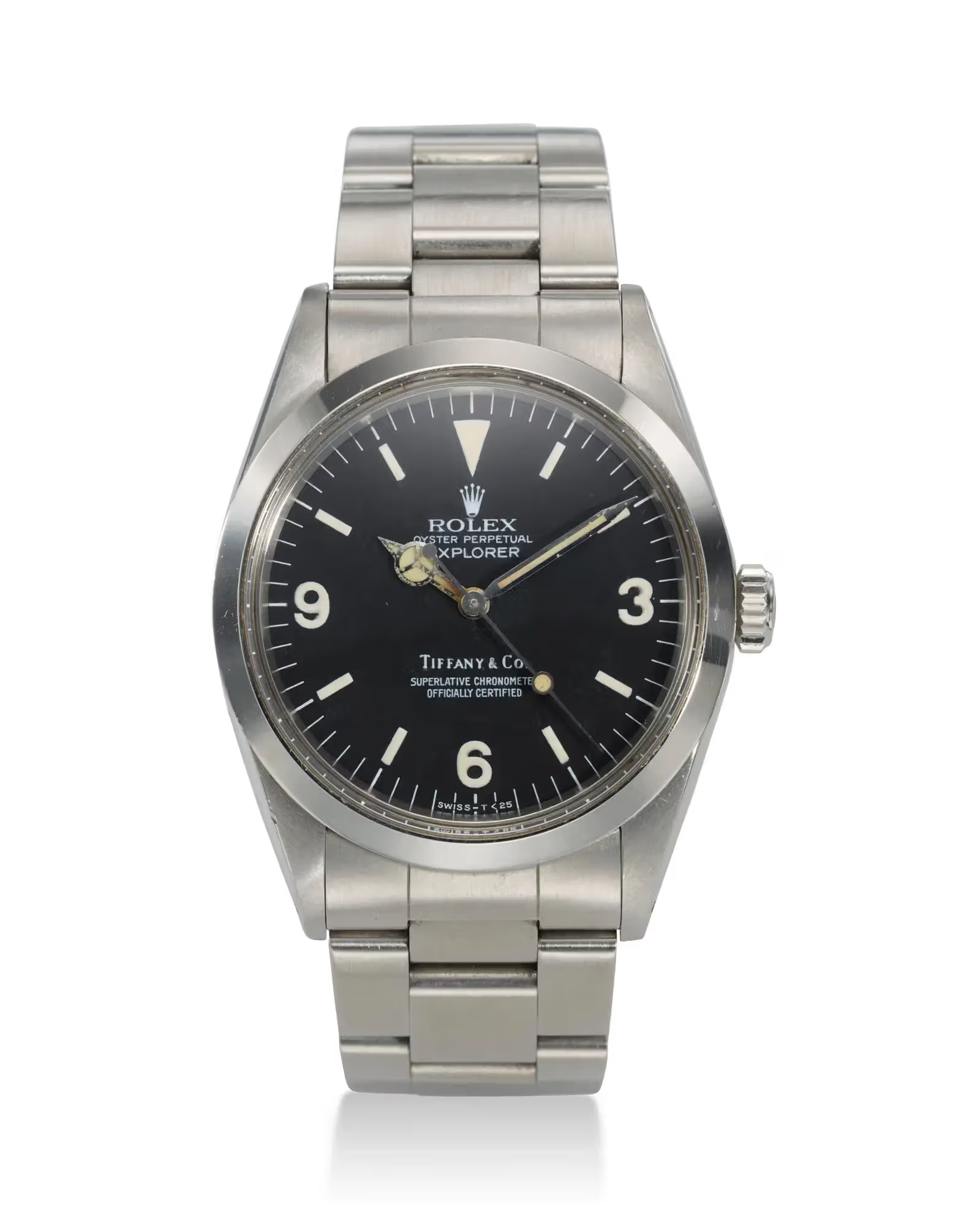
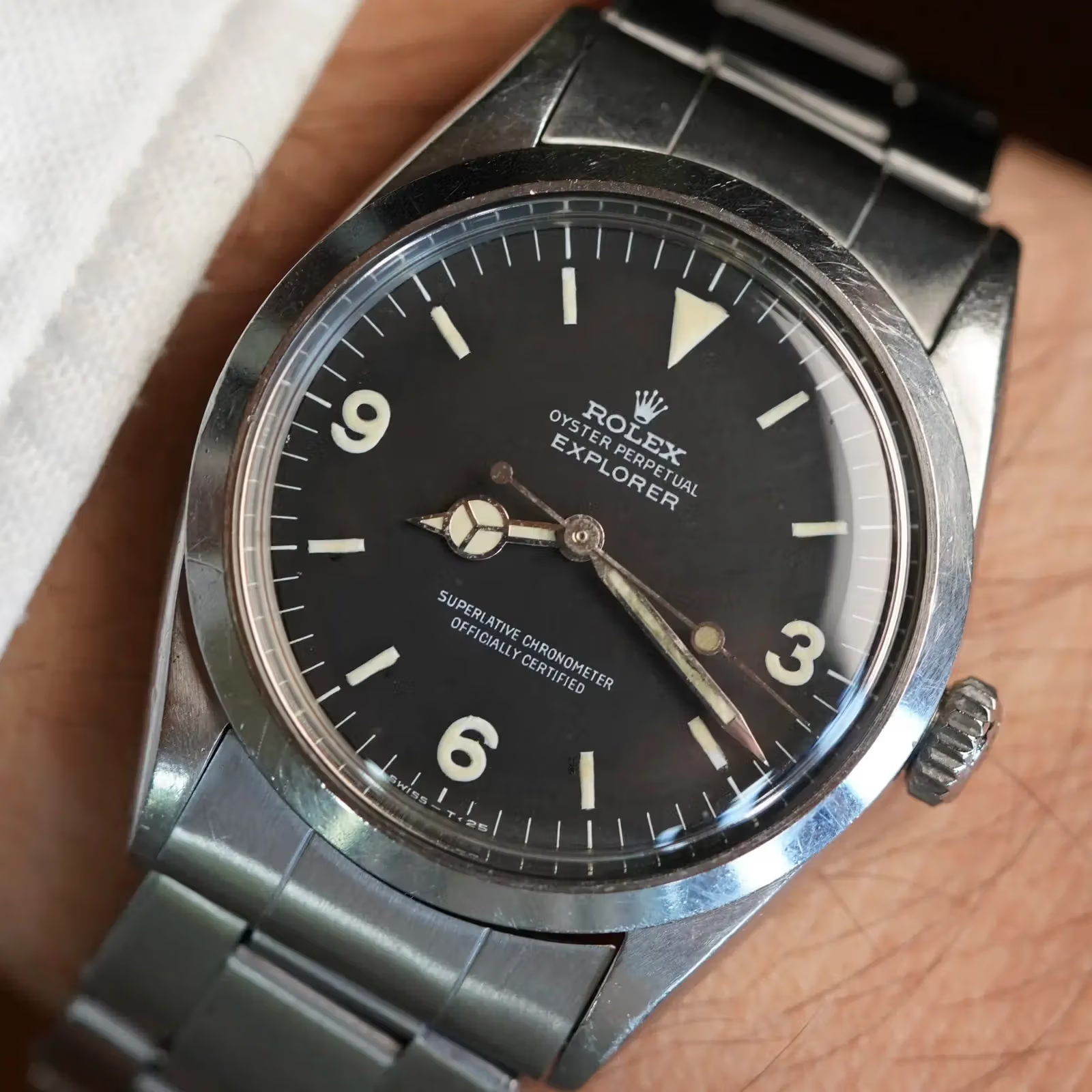
The 1016 is a reference from Rolex's Explorer line, launched in 1960: a 36mm stainless steel case, screw-down crown, smooth bezel, and absolutely no extra functions or complications. The black dial pairs with an open minute track, Mercedes/lollipop-style hands, and a mix of baton, Arabic numeral, and triangle hour markers. At 6 o'clock sits the chronometer certification text, and below 12 o'clock is the full "Rolex Oyster Perpetual Explorer" signature. This particular dial layout became so iconic that the industry simply started calling it the "Explorer dial"—collectors can spot it instantly, even on other references or other brands entirely.
Over nearly three decades of production, the dial printing went through several iterations—glossy "gilt" versions and more understated "matte" versions both exist—but the 1016's identity was never diluted. Stephen Pulvirent, founder of Rime & Reason and a longtime 1016 wearer, describes it like a plain white T-shirt: "There are plenty of vintage Rolexes with more expressive personalities, but that's exactly the Explorer's appeal—it's Rolex stripped down to its most essential form. Whatever character it has left, the wearer has to supply themselves."
The Explorer's DNA traces directly back to field watches. After Edmund Hillary and Tenzing Norgay summited Mount Everest in 1953, Rolex evolved the Oyster Perpetual—originally built around all-weather timekeeping—into a tool watch designed for unknown terrain. The 1016 has no rotating bezel, no pushers—it relies purely on the Oyster case and automatic movement to handle harsh conditions, while staying small enough to slide under a shirt cuff, yet substantial enough on an Oyster bracelet to hold its own with a suit. That's exactly why it stayed in production from 1960 all the way to 1989, making it one of the longest continuously produced references in Rolex history.