Why Revisit The Women? Jungle Red! Opens a Conversation About Costumes, Women and 1939 Hollywood
Illeana Douglas’s Jungle Red! returns to the making of The Women. Its all-female cast, Adrian costumes and colour fashion sequence offer ways to reconsider screen identity, class and women’s roles.
Why can a film from 1939 still begin a conversation about women and dress? Actor and writer Illeana Douglas’s Jungle Red!: The Making of MGM’s The Women returns to George Cukor’s film starring Norma Shearer, Joan Crawford and Rosalind Russell. A recent book interview has brought the classic back into discussion. That does not make the film a 2026 premiere or mean the book was published today.
The useful starting point is not to copy a screen outfit, but to ask how clothing contributes to storytelling. Hats, silhouettes, shine and positioning help direct attention alongside dialogue. For readers interested in fashion and visual culture, treating dress as part of character construction reveals more than simply labelling one star’s look refined or a bad-girl style.
An all-female cast does not remove male power from the story
Adapted from Clare Boothe Luce’s play, The Women follows upheavals in marriage and friendship within New York high society. Shearer’s Mary Haines confronts her husband’s involvement with Crawford’s shop assistant Crystal Allen, while gossip and loyalties shift around them. Men do not appear on screen, yet marriage continues to shape the women’s social positions. That gap is a useful starting point for understanding the film.
In her recent interview, Douglas argues for considering the competition between characters within society’s expectations of women, rather than simply deciding who is nastiest. This is the author’s interpretation of social satire, not a requirement that every viewer approve of the characters’ behaviour. Useful questions include what lives they can choose, and how much autonomy exists between income, marriage and public image.
Adrian’s costumes: look at silhouettes before judging characters
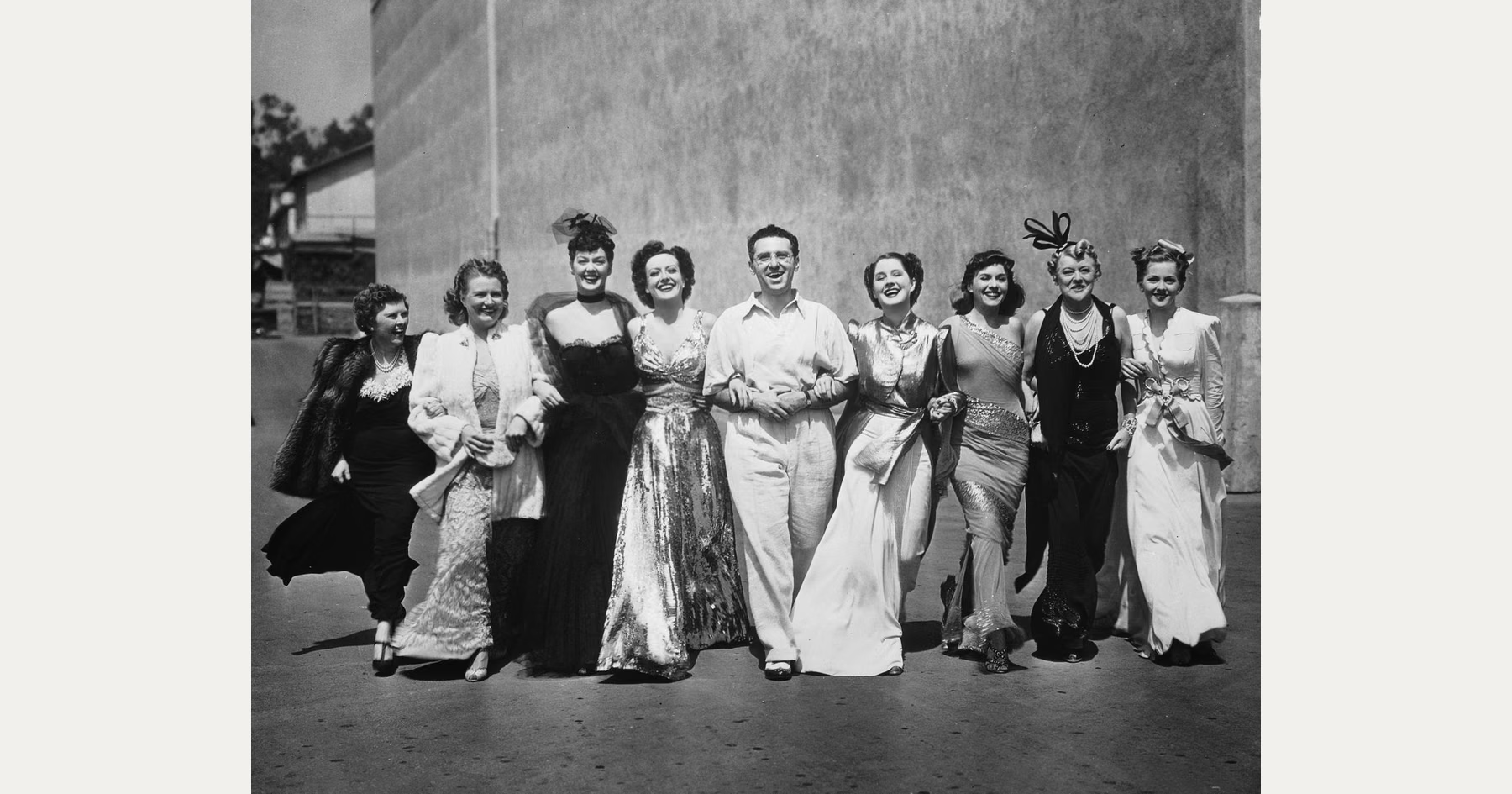
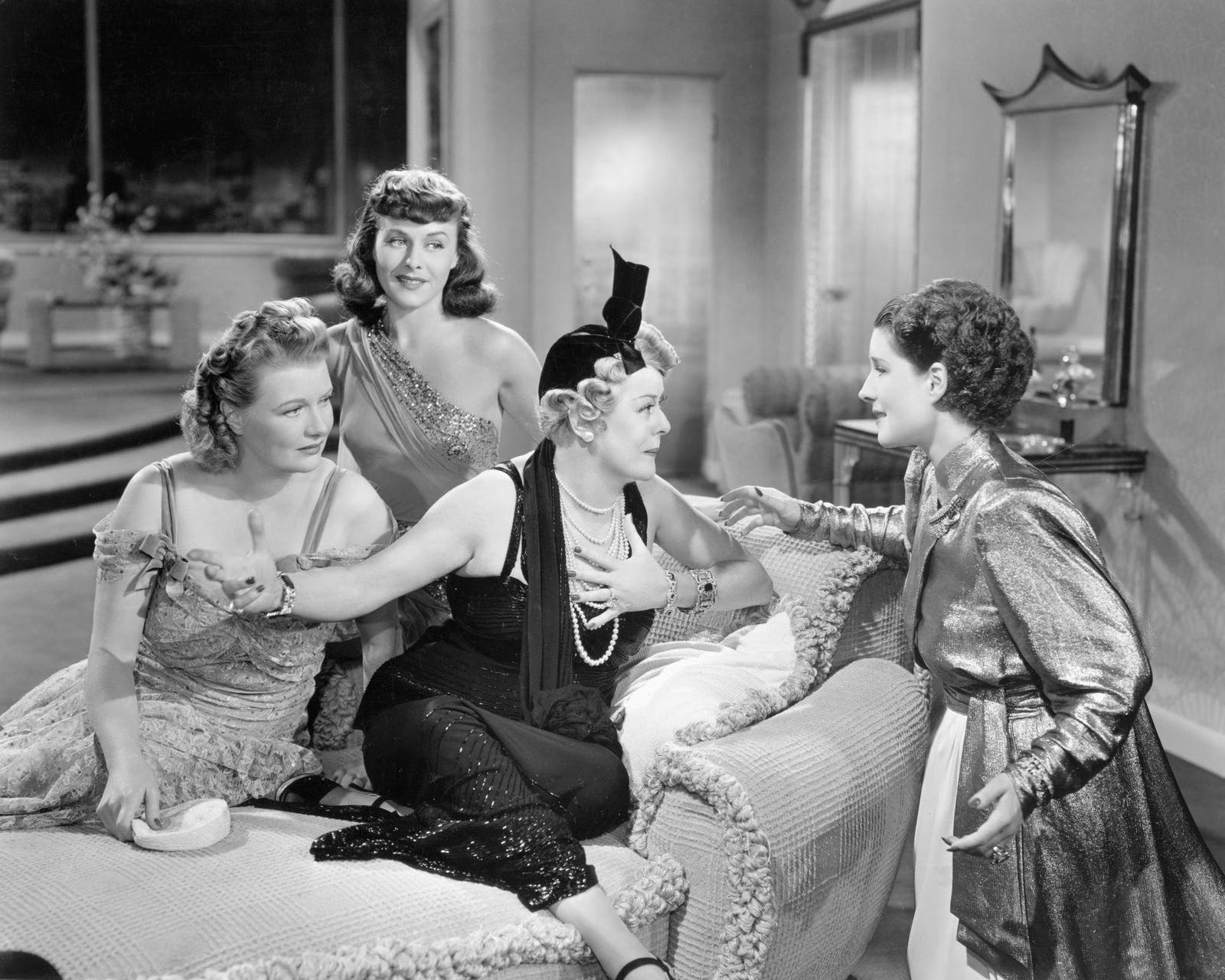
Costume designer Adrian is central to approaching the film. Historical stills show fitted gowns, wrapped headwear, hats, strings of beads and fabrics with different levels of reflection. Necklines, shoulder lines and poses vary between women sharing a frame. Even in black and white, tone, area and line establish visual emphasis; knowing every fabric name is not necessary to notice who attracts attention first.
Black-and-white The Women still with women in contrasting necklines, headwear and beads around a sofa
These designs are more than a catalogue of 1930s trends. Clothing changes how a character occupies the frame and can work against an expression or gesture. Begin with a group still: look separately at silhouettes, accessory placement and distances between people, then return to the plot. Shine or ornament is not proof of a character’s morality, and should not become a rating system for real women.
The colour fashion sequence and the book offer different distances
The film interrupts its black-and-white narrative with a colour fashion presentation, turning clothes from tools worn by characters into a concentrated performance. It is a reminder that cinema’s relationship with fashion and consumption predates streaming. When a legal viewing opportunity is available, compare the rhythm of this sequence with ordinary dialogue scenes rather than relying only on isolated dress images.
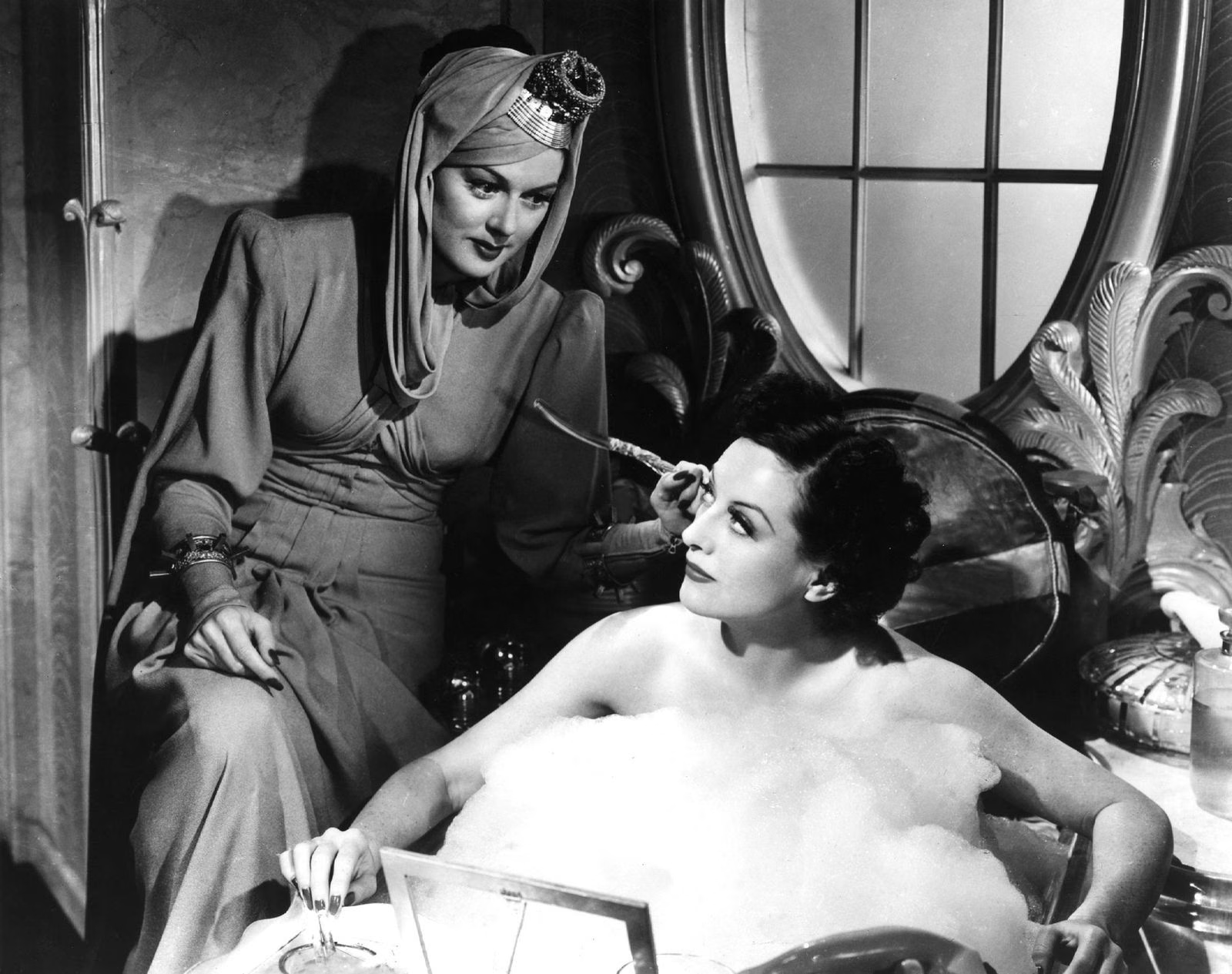
Black-and-white The Women still pairing wrapped headwear with a bubble-bath scene
Jungle Red! offers a production-history route into the film, bringing actors, writers, the director and the costume department into view together. The publisher lists the book, but editions, shipping and availability need checking locally. A new interview does not establish that the film has arrived on a particular Taiwanese streaming service. Start with the work’s basic details, then decide whether to watch, seek out the book or explore costume history.
Questions and answers
Is The Women a new film from 2026?
No. This discussion concerns George Cukor’s 1939 film. The new point of interest is Illeana Douglas’s production-history book and a recent interview.
Who designed the costumes, and why do they matter?
Adrian designed them. Silhouettes, accessories and tonal contrasts help construct characters; a colour fashion sequence offers a contrast with the black-and-white narrative.
Is a Taiwanese streaming platform confirmed here?
No. Check legal services and local catalogues, distinguishing the 1939 film from other adaptations and the new book.