New life need not mean new things: Osaka’s Umeda flea market brings together around 70 shops
Hankyu Umeda’s first Umeda Nominoichi runs November 11–16 on floor nine, with vintage tableware, lace, buttons, paper and flowers. Entry is free; the final day ends at 17:00, and many goods are one-off pieces.
An old cup or a card with the texture of another era can change a familiar corner. Hankyu Umeda’s first Umeda Nominoichi brings around 70 shops to its ninth-floor event space and Shukusai Plaza from November 11 to 16, combining vintage objects with craft, paper, plants and pieces for present-day living.
The indoor market invites a slower look at materials and details. Announced October 28, it is not being presented as a first announcement today. Usual hours are 10:00–20:00, with a 17:00 finish on the last day; entry is free. One-off goods differ from mass-produced new stock, so the exact objects pictured cannot be guaranteed on arrival.
A French area and six themes help narrow the search
Shukusai Plaza focuses on a French flea-market atmosphere, with tableware, lace and tools sourced in Paris and rural towns, alongside some goods from elsewhere. The event hall has six themes: World, Nordic and Eastern Europe and more, Handicrafts and Buttons, Paper and Old Books, Craft, and Flowers and Greenery.
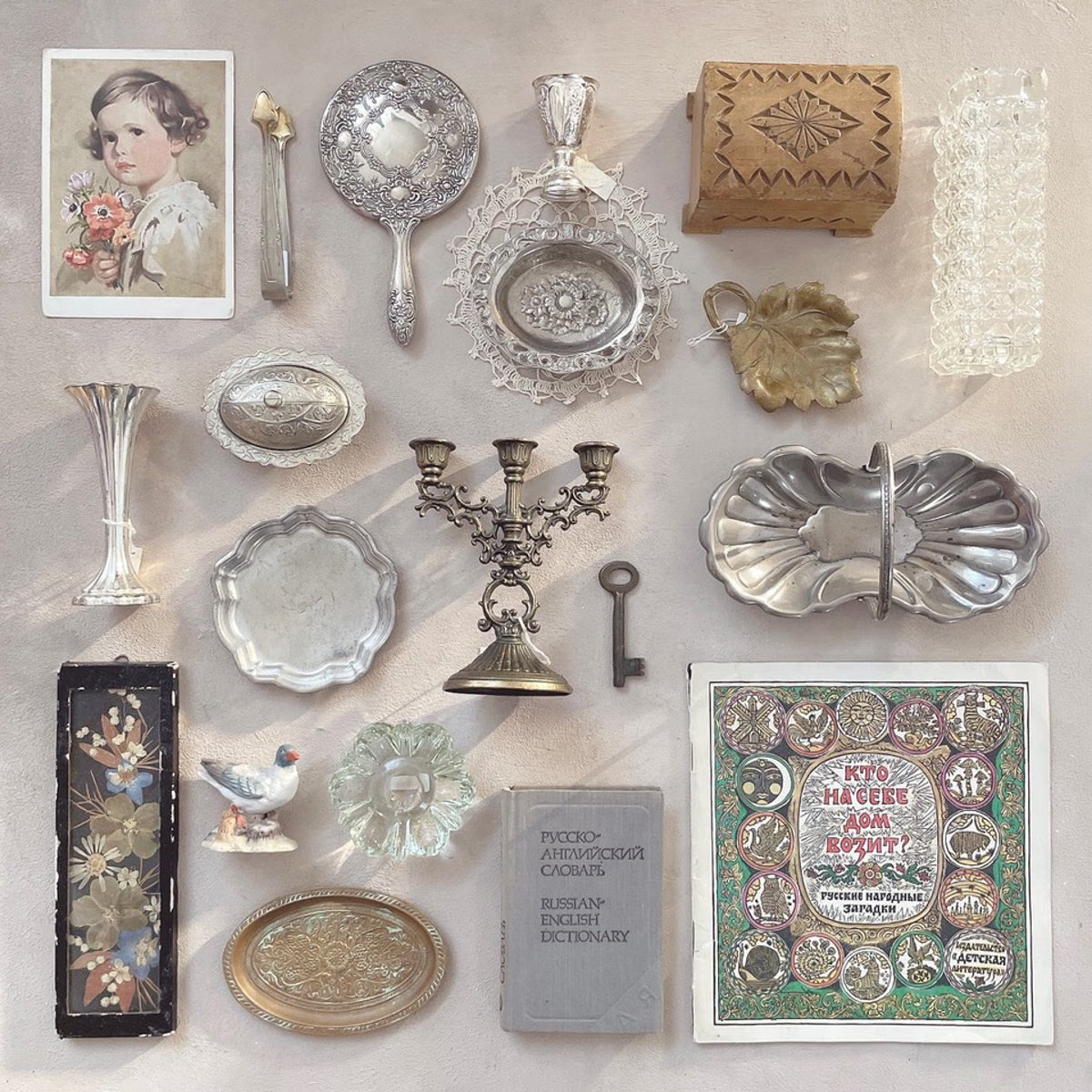
Flat arrangement of vintage dishes, candlesticks, a mirror, books and a wooden box
Homeware enthusiasts can look for Kirsikka’s Nordic tableware, with a Zoéga Café cup and saucer officially illustrated at ¥9,460. Bleu Curacao France offers lace, beads and old perfume labels. These are announced examples, not a promise of constant stock; individual dates and materials cannot be authenticated from an arrangement photograph alone.
Buttons and old rugs find another role in daily life
Atelier Shop Logic turns buttons into earrings, bracelets and pins, with illustrated prices of ¥4,400, ¥5,940 and ¥3,300 respectively. Manami Bookstore brings cards with the character of old paper. These are Japanese tax-inclusive examples; different sizes or periods at the same stall do not necessarily share one price.
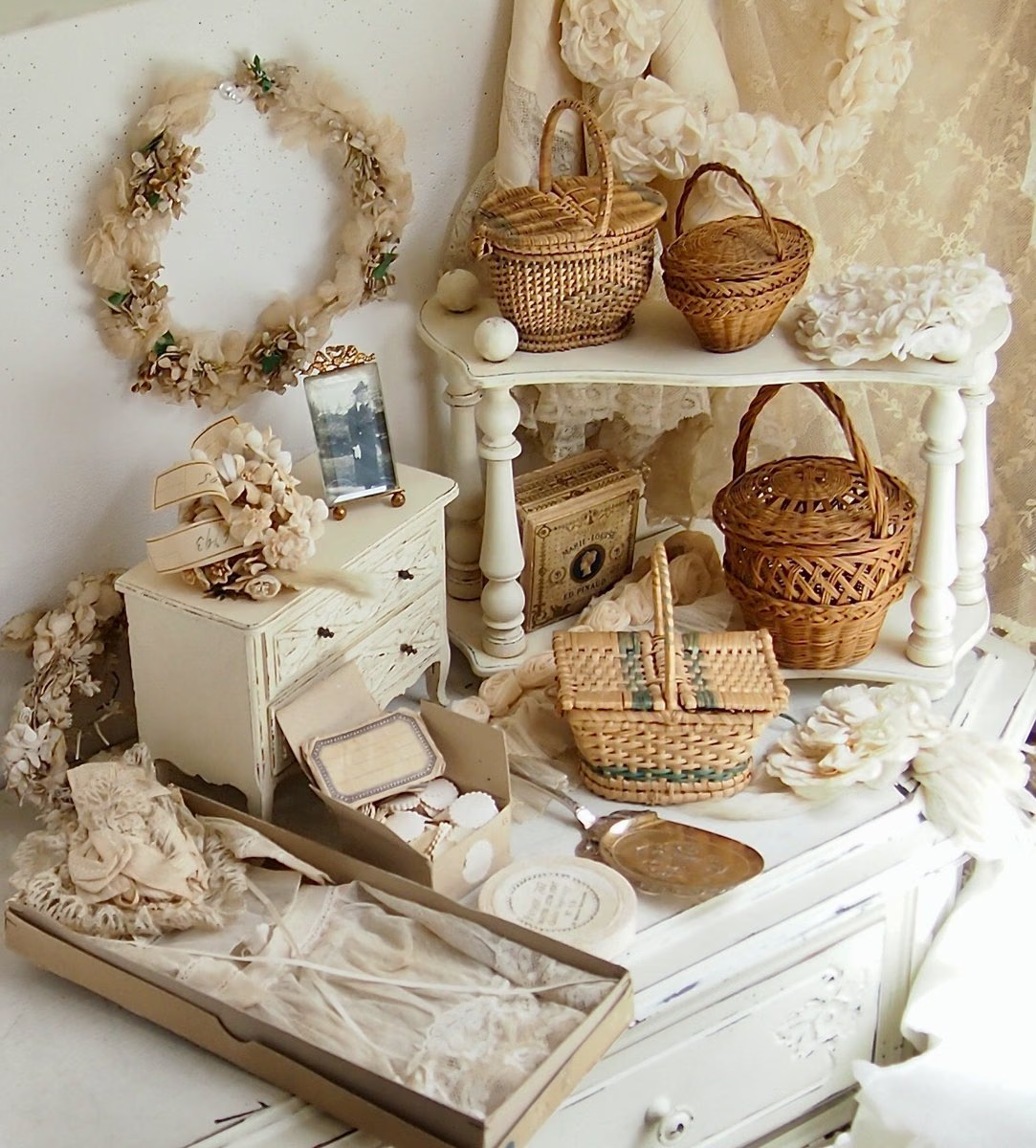
Pale-toned display of woven baskets, lace, floral decorations and small furniture
Arocha Bazaar makes phone bags from old Moroccan rugs, illustrated at ¥11,660, while Botanical Works uses plants’ natural bends and irregularities in dried-flower works. Reusing a material does not establish a shared environmental certification, investment value or cleaning method. Ask about each object’s maintenance separately.
Music runs November 11–15; the market’s final day closes early
Accordion and uncommon traditional-instrument performances are planned November 11–15, according to each musician’s dates, with five approximately 20-minute sets per performer per day and free viewing. The music schedule does not automatically extend to the market’s November 16 finish. Check the actual daily timetable.
The venue is at 8-7 Kakudacho, Kita-ku, Osaka, around three minutes on foot from Hankyu Osaka-umeda Station. Before buying vintage, check cracks, missing parts, dimensions and intended use. The organiser notes that many items are one-offs and unpriced images show reference goods. Photographs here are product arrangements and the official visual, not a market scene photographed before opening.
Questions and answers
Where and when is the market?
Hankyu Umeda’s ninth-floor event space and Shukusai Plaza, November 11–16, 2026, 10:00–20:00, finishing at 17:00 on the final day, Japan time.
Are admission and music free?
Admission is free, as is viewing the scheduled November 11–15 music performances. Goods cost extra; consult the daily performance timetable.
Will the pictured vintage objects definitely be available?
No. Many are one-offs, images are illustrative arrangements and unpriced objects are reference goods. Confirm stock and prices on site.