A back need not be perfectly symmetrical to be seen: Tokyo’s MY BACK BONE turns 100 people’s traces into clothing
Kohei Kanamori’s art project runs November 4–29 at GONZUI in Iriya, using paint and garments to record individual differences. Closed Mondays and Tuesdays; a drink order is required. This is an art exhibition, not a medical examination.
Mirrors usually show us our front; our own back is harder to see. Kohei Kanamori’s MY BACK BONE leaves individual back impressions on clothing, with its first exhibition opening at GONZUI cafe & gallery in Tokyo’s Iriya from November 4 to 29. It makes difference visible rather than reshaping every body into one line.
The exhibition introduction describes 100 backs, with participants ranging from homemakers to creators including photographer Leslie Kee and fashion journalist Rei Shito. The organiser first announced it in September; this article combines late-October reporting with practical visiting details, without calling it today’s first announcement or ranking the bodies represented.
Five paint colours turn clothing into another kind of portrait
Kanamori’s practice works with bodies. The process selects a combination of five paint colours, using body testing, palpation and paint transfer to record individual characteristics on clothing. Colour marks extend along the back, producing portraits that do not rely on facial features for identification.
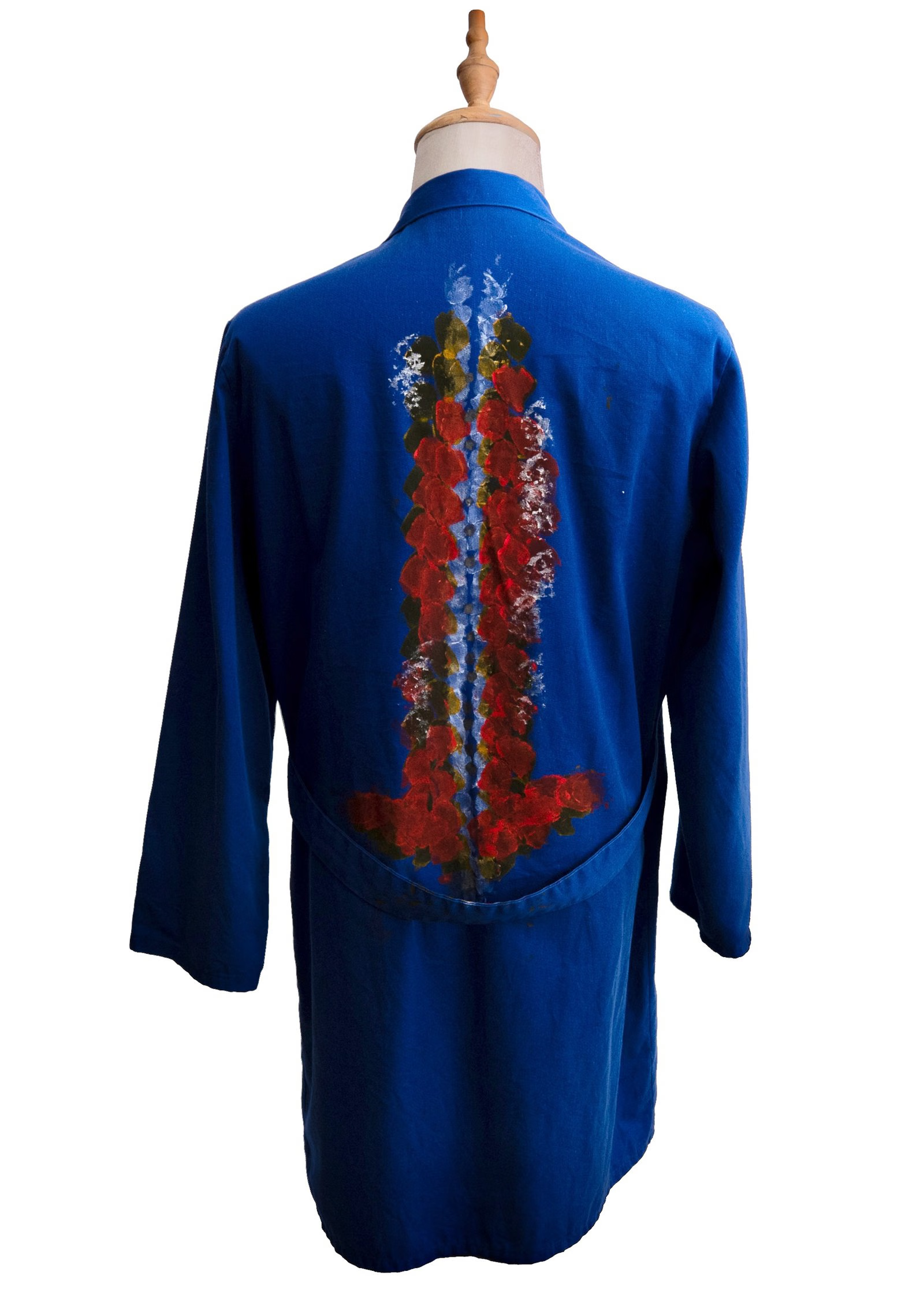
Multicoloured paint impressions extending down the back of a blue garment
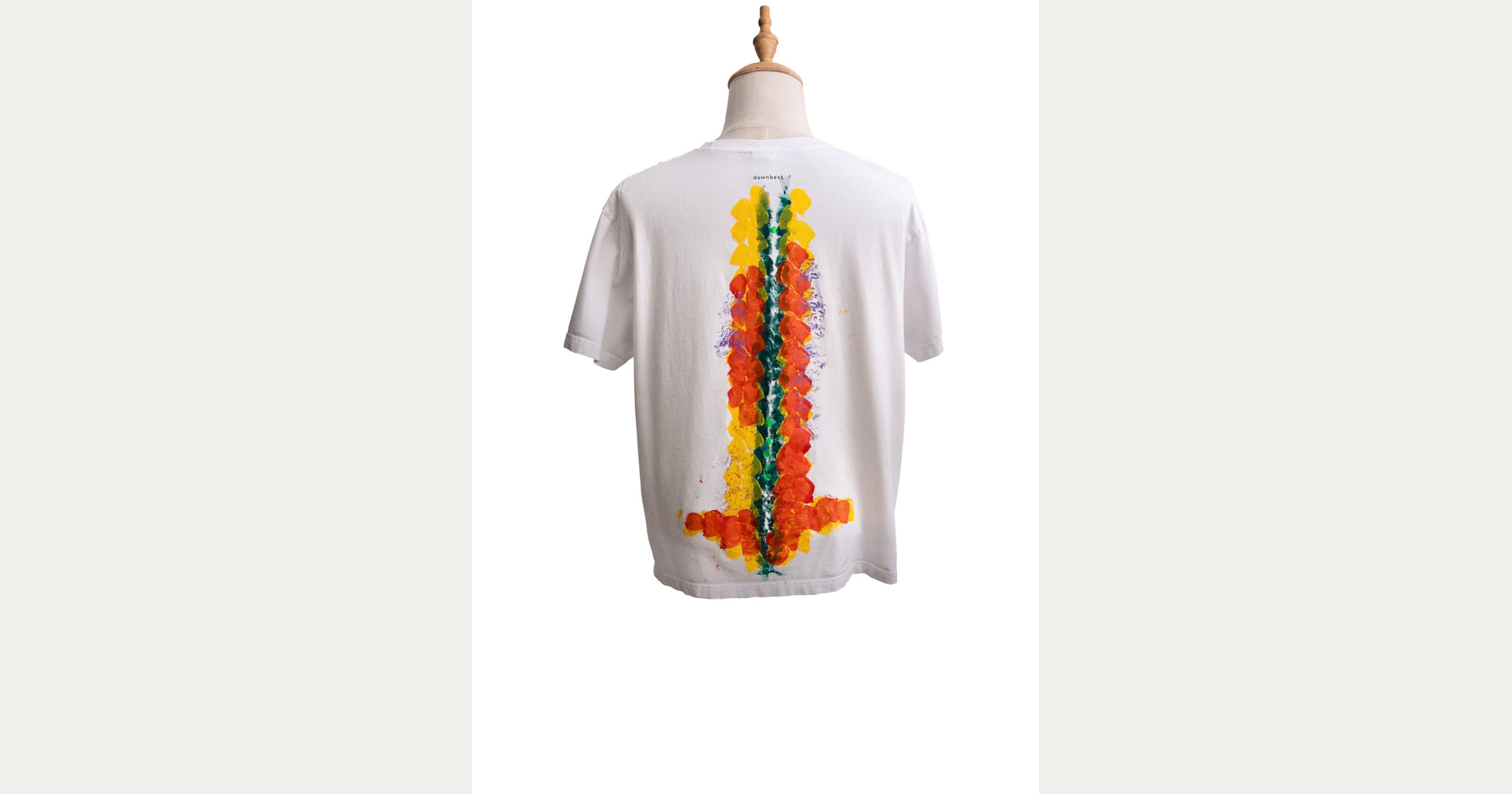
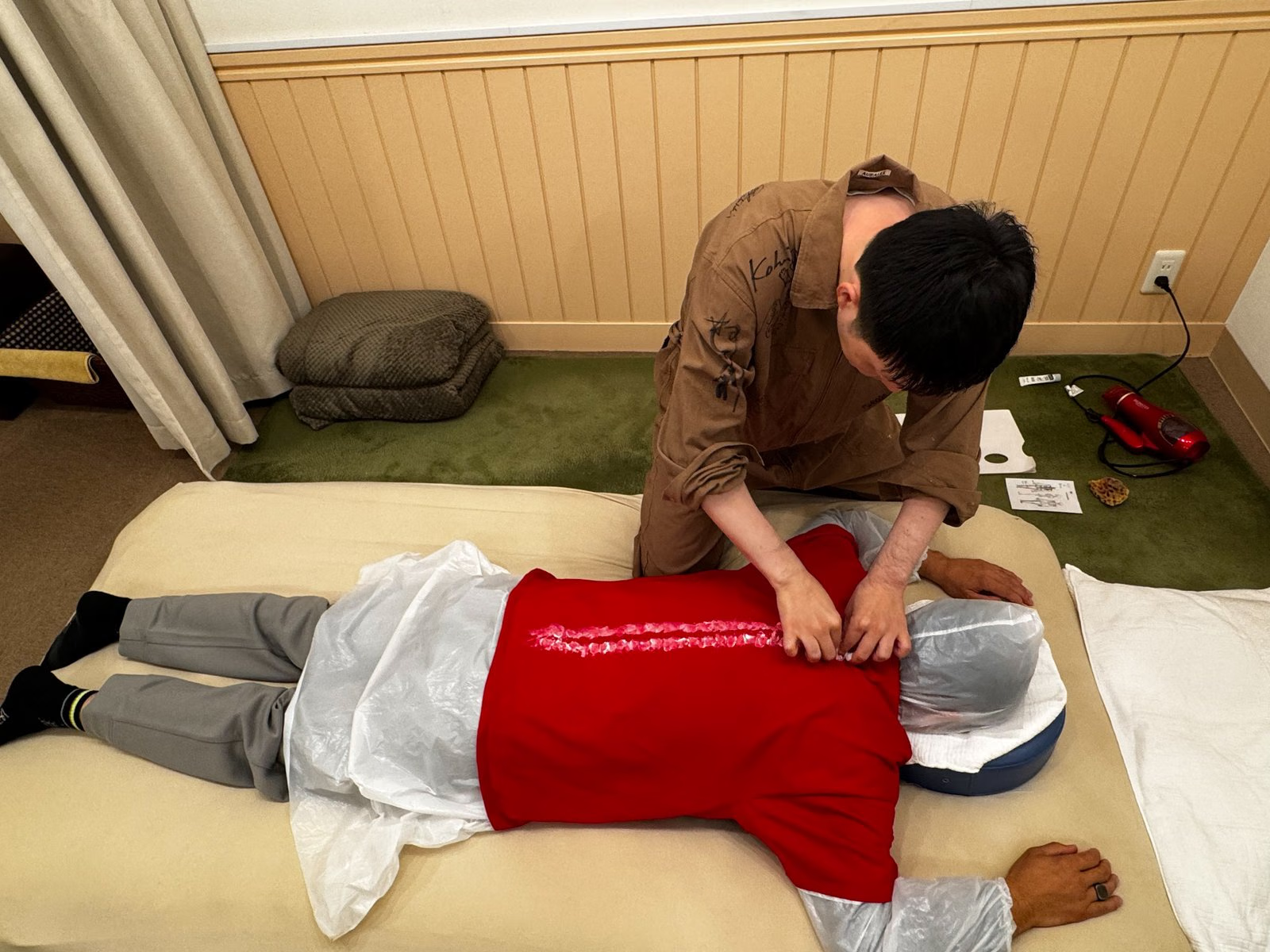
White T-shirts and blue clothing show different painted outlines, while process photographs reveal the contact between paint and garment. These are records of an art process, not X-rays or spinal examination images. A colour patch cannot diagnose a viewer’s health, and symmetry in a work should not be equated with the presence or absence of disease.
From 2006 to its restart, attention returns to bodily difference
MY BACK BONE began in 2006 with a concept of encouraging interest in health, combining shiatsu and art. It paused in 2007 while Kanamori gained experience, then restarted in 2023. That history separates it from a sudden generic spine-print clothing launch.
A practitioner making paint impressions on the back of a red garment worn by a prone participant
For viewers used to searching photographs for flaws, the work offers another starting point: notice what a body leaves behind before asking what is imperfect. This is an interpretive suggestion, not a claim that every participant feels the same way or that the exhibition treats body-image anxiety or mental-health concerns.
A drink order for admission, with a separate irregular-cut T-shirt
GONZUI is at 2-3-1 Iriya, Taito-ku, Tokyo. The organiser gives 10:00–18:00, Wednesday to Sunday, closed Mondays and Tuesdays. A drink order is required; this is not entry without a purchase condition. Check the menu and prices with the venue rather than treating one drink as a ticket with a fixed unverified price.
A separate white Basic Irregular T-shirt uses an asymmetric silhouette inspired by the observation that bodies are not always symmetrical. It costs ¥16,500, with BASE online sales planned after the exhibition. This retail item is not the same as every participant’s individually marked garment, nor does buying it purchase a body assessment or treatment.
Questions and answers
When is the exhibition open?
November 4–29, 2026, with announced hours of 10:00–18:00, closed Mondays and Tuesdays, at GONZUI cafe & gallery in Iriya, Tokyo.
Is entry free, and can I get a body examination?
A drink order is required. The verified information concerns an art exhibition, not a booking or guarantee of medical examinations or treatment.
Is the ¥16,500 T-shirt an individual exhibition work?
The separately sold white Basic Irregular T-shirt is a different concept, planned for BASE sales after the show. It should not be confused with participants’ individually marked garments.