Most museums use display cases to tell history. Zayed National Museum instead lets its rooms move with the seasons. Agata Kurzela Studio, responsible for the interior design of the public, VIP, hospitality, and research spaces, mapped the layout of an entire row of ground-floor meeting rooms directly onto Al Durour—a traditional regional calendar that divides the year according to ecological and climatic shifts. Walking through these rooms arranged around a central courtyard, spatial density, color, and surface texture shift with each "season," effectively turning time itself into a floor plan you can walk through.
The building was designed by Foster + Partners, with Agata Kurzela Studio taking on the interior vocabulary. Three majlis reception rooms each correspond to a different season: Majlis Al Hurr 1 echoes winter's Al Sheta, laid out in muted greens and desert tones, with embroidered patterns referencing rainfall; Majlis Al Hurr 2 corresponds to the scorching summer of Al Qaith, with noticeably brighter tones. The main Boardroom draws from Al Saif, with wall panels embossed with kandura (the traditional Emirati robe) textures—translating garment directly into building material surface.
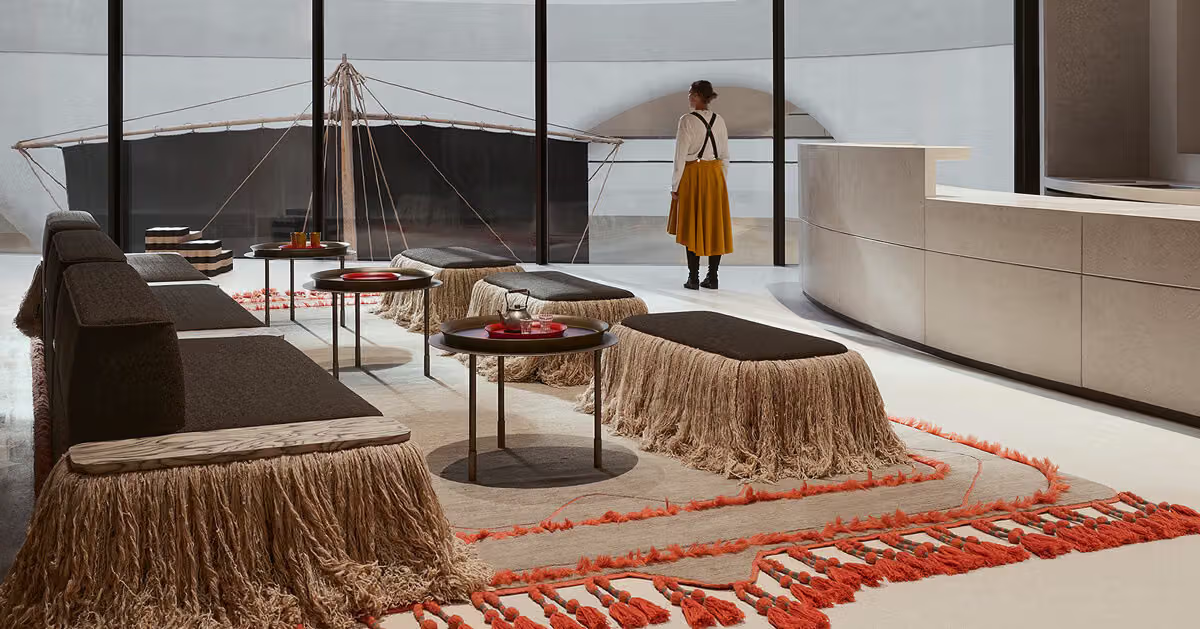
The Majlis Al Shaheen reception hall follows a different logic altogether—rooted in the gahwa hospitality tradition, with textures and patterns built around dates, coffee pots, and woven safeefah. The custom rugs feature long tactile fringes evoking animal hide, with patterns drawn from traditional carved wooden doors. By contrast, the soaring Al Liwan atrium above the central courtyard retains an open, dignified character—the point along the circulation route where visitors pause and reorient themselves. The studio's modular seating system is embedded within it, functioning as part of the building's organization rather than as standalone furniture.
The Research Library speaks the most striking language of all: mirroring the construction logic and materiality of Bedouin tents, and facing the museum's own collection—the Magan Boat with its black woolen sail—it pairs smoked copper, solid wood, and semi-raw woven wool sofas into a deliberately rough-textured material palette. The building's overall material library also includes wool, rope, hand-thrown pottery, camel leather, aged metal, and local stone—not deployed as decorative regional symbols, but finalized only after material testing, kiln trials, and full-scale mockups, repeatedly verified for technique and performance alongside local artisans and regional workshops. The surfaces still bear visible traces of handwork.
The Rugs, Lighting, and Furniture All Carry Local Designers' Names
All rugs in the museum were woven by Zuleya, with hand-finished Emirati fringing completed in collaboration with tarboush specialist Loretta Bilinskaite. The list of furniture and lighting contributors runs long: Abdalla Al Mulla's modular beaded bench, Aljoud Lootah's stone-embedded Takya sofa, Latifa Saeed's Nomad chair, Omar Al Gurg's reinterpreted domestic seating, and lighting from Roudha Al Shamsi, Alya Al Ghefeli, Khalid Shafar, and Nader Gammas. On the art side, works by Afra Al Dhaheri, Juma Al Haj, Michael Rice, and Stephanie Neville are scattered throughout. Agata Kurzela Studio itself handled the core custom furniture, meeting tables, lighting, and rug designs for the library, with the remainder contributed piece by piece by this roster of regional designers and artisans.
In other words, this museum's interior isn't merely a vessel showcasing Emirati culture—it is, in itself, a physical directory of contemporary Emirati design. Photography by Sebastian Boettcher; opening hours and visitor information were not included in the materials released for this feature.