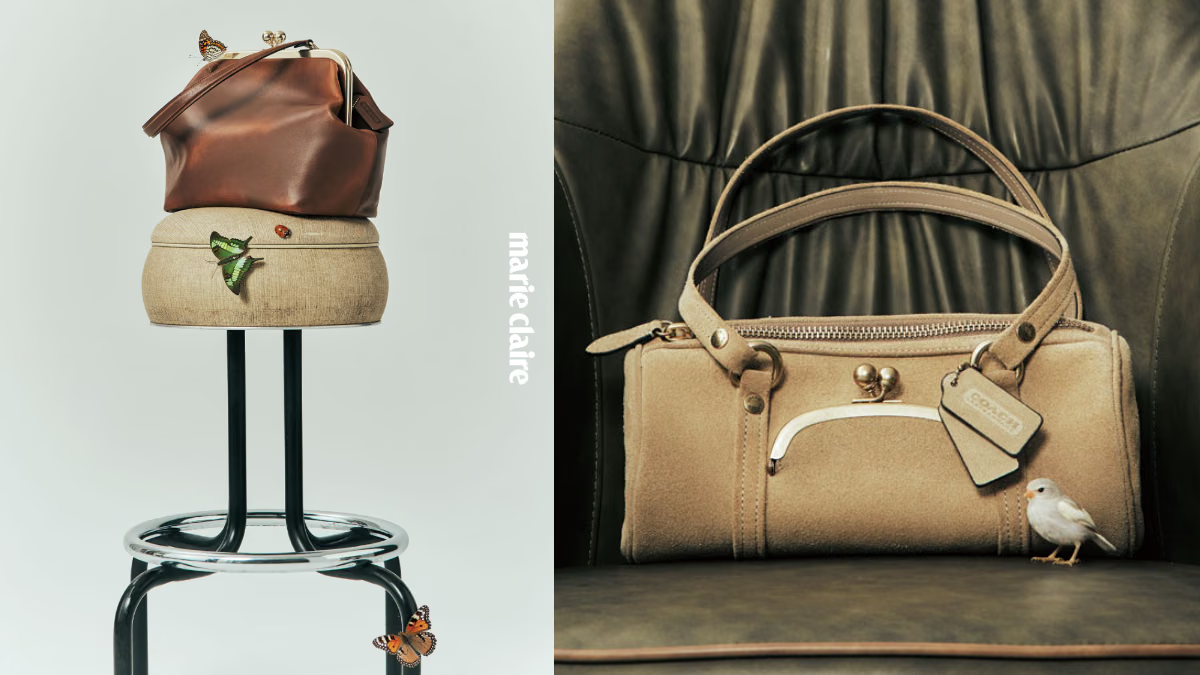
Marie Claire recently published a feature revisiting the design history of Coach's signature Kisslock clasp, tracing its origins back to the era of early Coach designer Bonnie Cashin through to the brand's recently released Kisslock Frame Bag series. According to the report, the Kisslock's metal clasp structure derives from vintage coin purses, where two round metal balls meet to resemble a kiss—hence the name. This design has appeared on various Coach bags since the 1960s.
The report outlines how Bonnie Cashin joined Coach in the early 1960s, establishing a design language that balanced practicality and aesthetics, including relaxed silhouettes and the use of leather paired with metal hardware. The 1969 Cashin Carry is considered one of the key prototypes for the Kisslock structure. Since then, the metal clasp design has appeared across bags of different sizes and forms, from small handbags to larger carryalls. The report also notes that the recently introduced Kisslock Frame Bag continues this historical silhouette while adjusting materials and functionality, incorporating features such as a detachable shoulder strap, interior zip pockets, and card slots.
For those who pay attention to bag design in everyday life, the enduring appeal of hardware like Kisslock may lie not in ornamentation but in the sense of certainty the closure provides—the crisp click when it shuts becomes one of the most direct and memorable parts of the experience. Compared to design logic that emphasizes logo recognition, this storytelling approach rooted in structure itself may remind consumers to pay closer attention to easily overlooked details like hardware and closures when choosing a bag, as these often reflect long-term comfort and durability more than surface decoration does.