Curved furniture remains part of home-design discussion. Cylindrical arms, plump cushions and free-flowing backs create a rhythm different from straight lines. A recent Thai design overview brings these shapes and modular seating together, offering another way to look at a living room.
If you like soft outlines, begin with one chair or sofa section and compare posture and space. Curves are a visual language; comfort depends on seat height, depth and support in use. Consider both without replacing every piece with the same shape.
At a glance
Look for cylindrical arms, organic curves, rounded cushion blocks and module connections.
Bouclé and chenille give similar shapes different surface textures.
Measure furniture edges and circulation first, try the seat and check care, then compare colours and configurations.
Curves change a piece’s boundaries
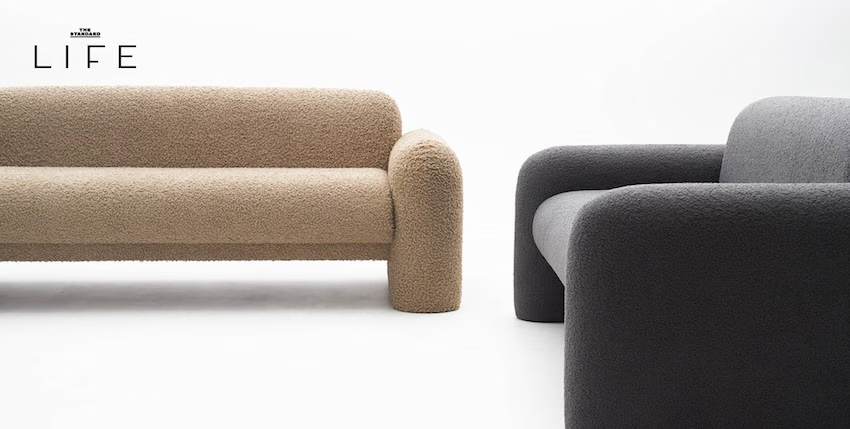
Some seats retain a straight sitting area but round the arms and back; others curve around their entire perimeter. The former can connect with existing square tables and cabinets, while the latter becomes a stronger focal point. Start with lines already in the room.
If a sofa’s back will be visible, walk around it and examine curves and seams. A soft outline seen from the front may occupy unexpected depth at the side. Put actual outer dimensions and walking routes on the same plan.
Beige and dark grey sofas with cylindrical arms
Texture and colour give shape expression
Bouclé has a looped, textured surface, while chenille brings a different touch and play of light. Cream and beige can join shapes into a quiet plane; dark or vivid colours emphasise volume. Compare swatches in the intended location rather than relying on a photograph’s lighting.
Ask about cleaning, removable covers, wear and household needs, then read labels and care instructions. A rounded exterior does not answer these questions or establish how sitting feels. Assess upholstery, filling and depth together.
Modular flexibility still needs measurements
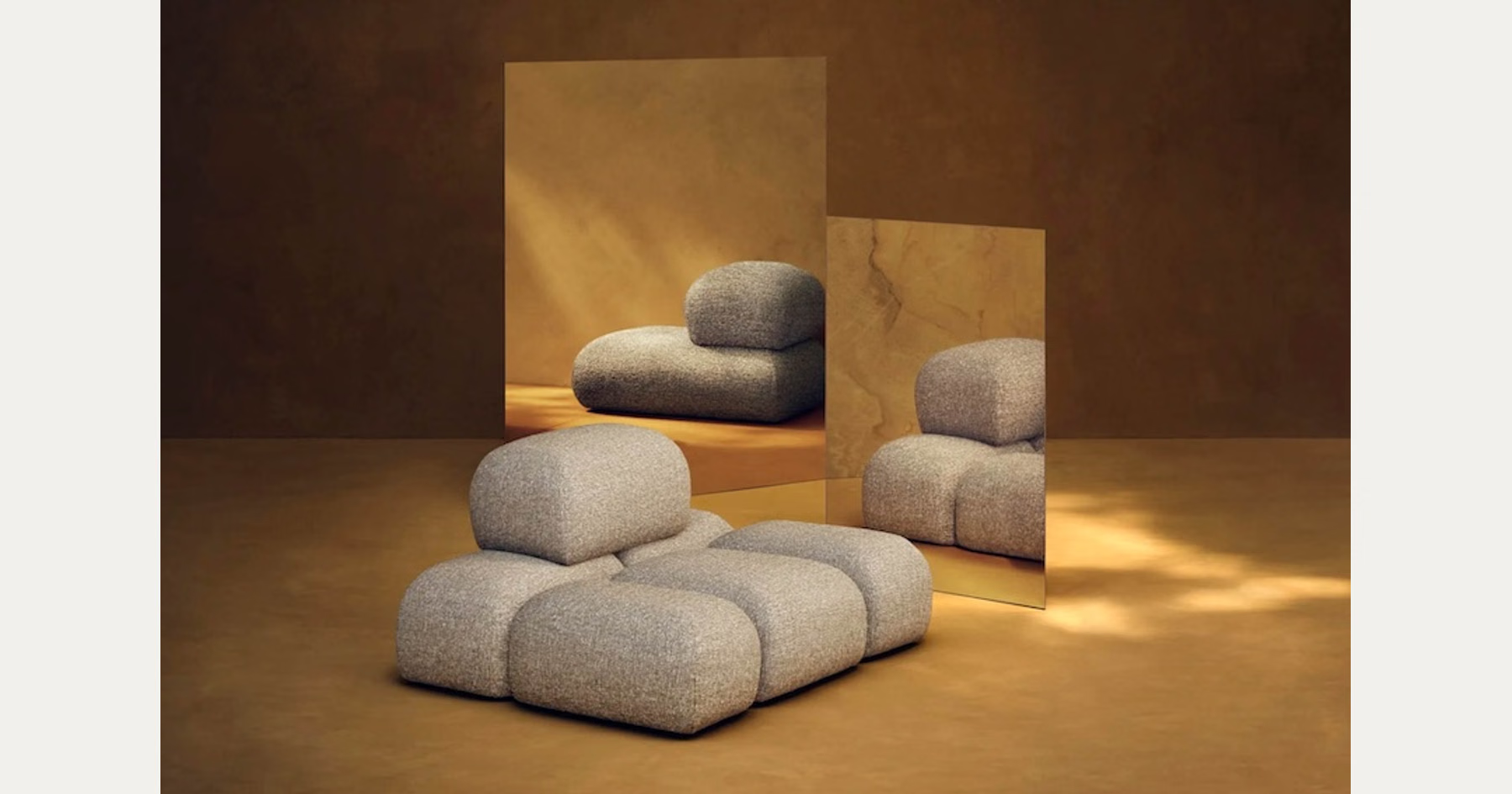
Cushion blocks and modular furniture may look related, but visible divisions alone do not make a sofa modular. Check which parts separate, how they connect and the measurements of seats, corners and footstools before arranging a useful configuration.
A smaller room can begin with one curved chair beside existing straight furniture. Keep walking and door-opening space first, then choose where a curve draws the eye. That is more useful than estimating capacity from a living-room photograph.
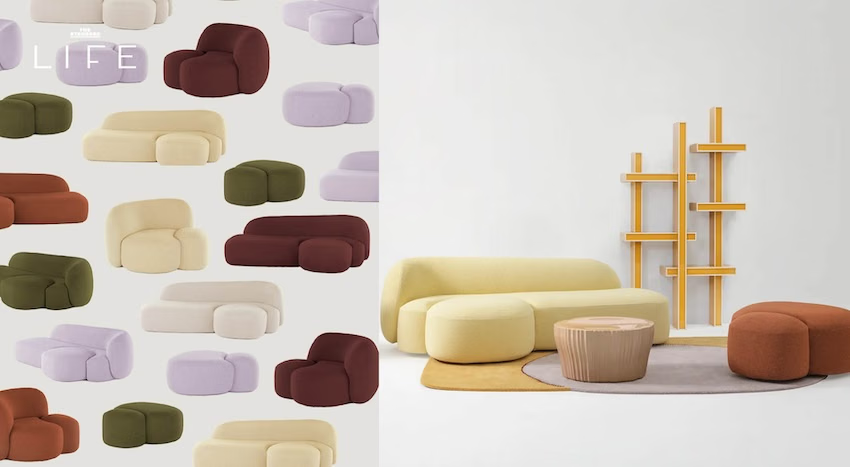
Colourful organic seating and arrangement imagery
Questions answered
Is a curved sofa always more comfortable?
Compare height, depth, filling and your posture. A rounded exterior alone cannot establish comfort.
Can it work in a small living room?
Measure outer edges and circulation. One rounded chair can complement existing straight furniture.
Do divided cushions mean a modular sofa?
Not necessarily. Check separable parts, fixings and section dimensions rather than appearance alone.