Mid-conversation at a dinner with friends, you're already tuning into the laughter at the next table, the hiss of the espresso machine, the sharp clink of a cup on the counter. Someone pauses for half a second, and you already sense the mood shifting. Once you're home, it's not that you're upset—you just need a stretch of time where absolutely no one needs you. This kind of experience often gets waved off with "you're overthinking it," but psychology research is now trying to describe it with more precision.
A study published in July 2026 in Personality and Individual Differences redesigned the Highly Sensitive Person scale, known as the HSP-R. Testing 1,000 adults across the UK and US, the research team landed on an 18-item structure spanning six dimensions: sensitivity to detail, depth of processing, social sensitivity, sensitivity to positive experiences, emotional reactivity, and ease of overstimulation.
What's most notable about this shift is that sensitivity is no longer defined purely by "can't handle it." Earlier versions of the scale leaned heavily on negative experiences, framing high sensitivity as a set of flaws to be managed. This new scale places the ability to notice detail, read social cues, and be deeply moved by beauty and positive experiences on the same map. Sensitivity, then, isn't just about absorbing more—it may also mean receiving more.
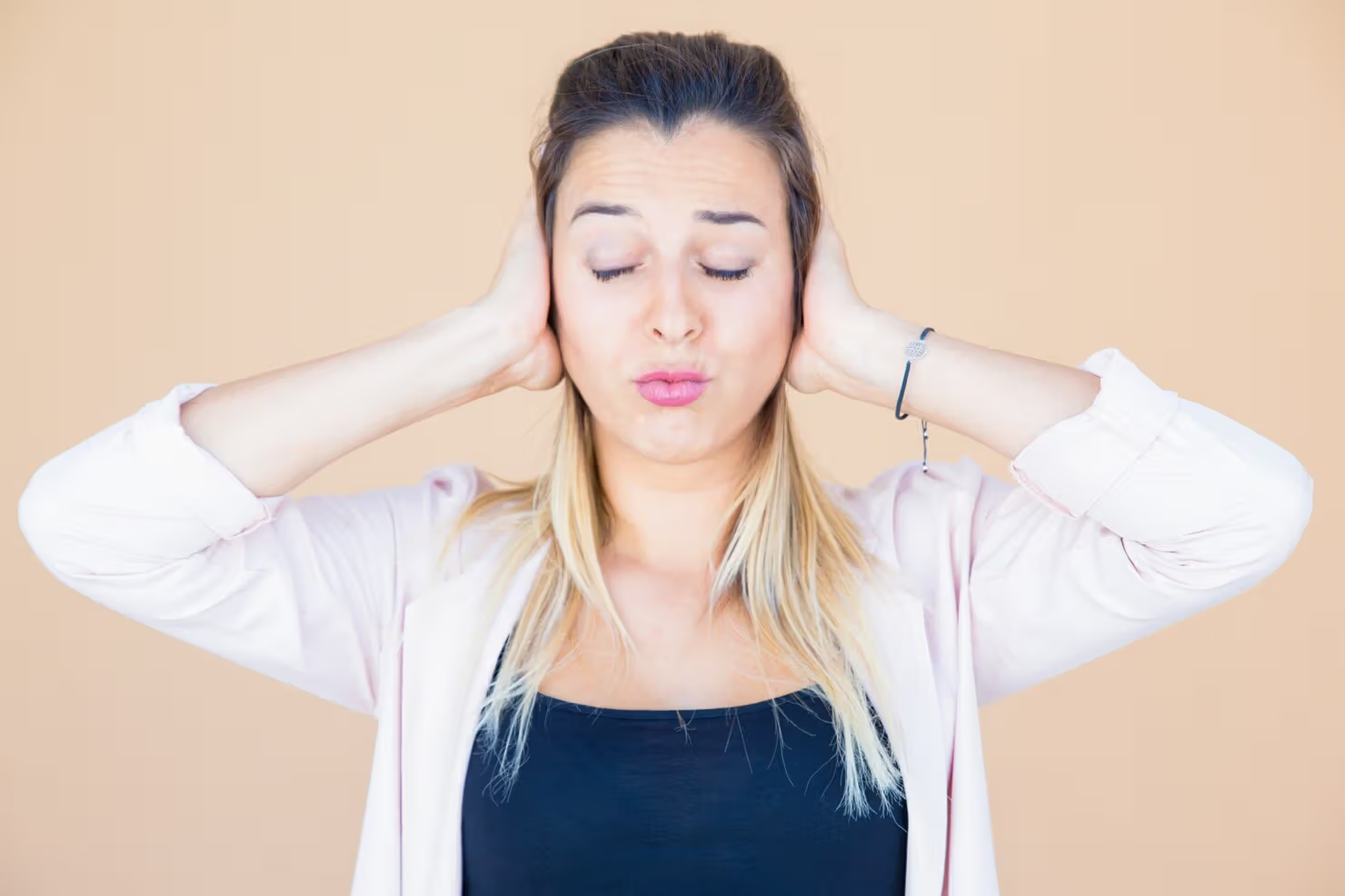
Another study from the same June compared high-sensitivity personality traits with adult sensory processing patterns, finding that people who scored higher on sensitivity also scored higher on sensory sensitivity and active avoidance of stimulation. In other words, needing to step out of a noisy room isn't necessarily being difficult—it may be your body managing input that's exceeded its capacity. That said, these findings describe a personality trait that exists on a spectrum; disliking noise or bright light isn't a self-diagnosis, and none of this replaces professional psychological or medical evaluation.