Can a Gimbal Fit in 9.6mm? Honor Robot Phone Pushes Physical Limits
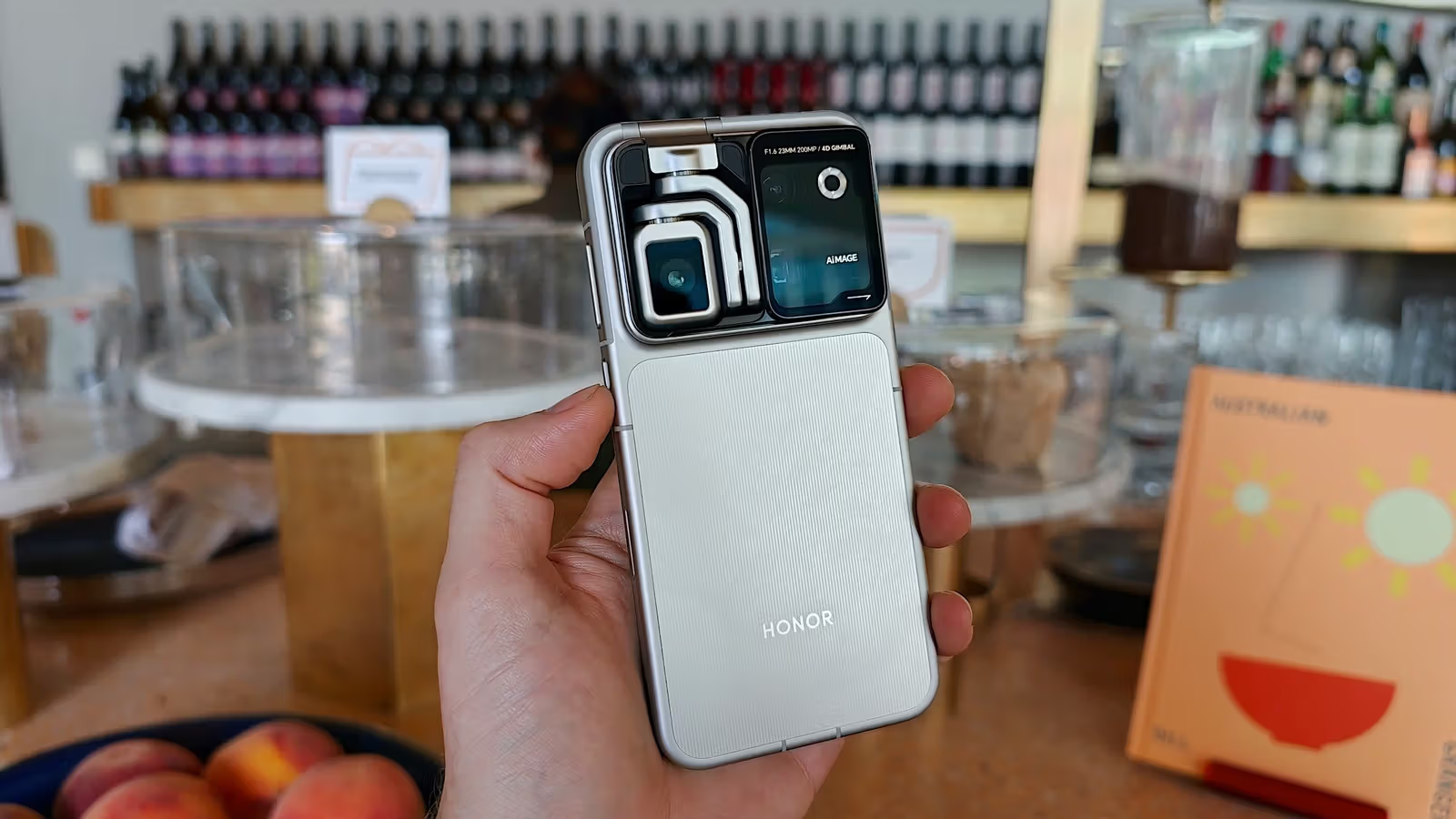
To give the 200MP main camera three-axis stabilization, Honor developed its own 2.6-gram gimbal motor and hid it inside the phone's back cover. Available only in China as a limited run, this experimental device delivers a hands-on experience that sits between a standard phone and a dedicated gimbal camera.
At London's King's Cross station, Engadget's Mat Smith bounced around while filming with his phone held up, yet the footage came out unnervingly steady. This wasn't thanks to post-production or a steady hand — it's because there's an actual mechanical gimbal hidden inside the phone's back cover. That's exactly what makes the Honor Robot Phone so intriguing: how on earth do you fit an entire three-axis stabilization system inside a phone?
The Robot Phone made its debut earlier this year at MWC 2026 in Barcelona, where it was one of the most eye-catching devices on the show floor. It's already on sale in China, but Honor hasn't announced any plans for an international launch — a move similar to Samsung's earlier limited rollout of the Galaxy Z TriFold. With component costs continuing to climb, testing the waters with a small production run is the more cautious play.
A 2.6-Gram Gimbal Motor, at the Cost of a 9.6mm-Thick Body
Honor claims this is the world's smallest gimbal motor, weighing just 2.6 grams, and it only fits into the phone's back cover recess thanks to proprietary manufacturing. The trade-off is a body that's 9.6mm thick (not counting the camera module) — hardly slim. To use it, you first have to manually slide open the back cover, then tap the activation button in the camera app or AI assistant before the gimbal arm extends. During this process, the screen even displays an X-ray-style animation showing the mechanical structure working behind the scenes.
The gimbal drives a 200MP main camera with an f/1.6 aperture, which can also function as a regular phone camera with traditional OIS when the gimbal is retracted. The phone also packs a 200MP telephoto lens with OIS and 2.7x optical zoom, a 50MP ultra-wide lens with a 122-degree field of view, and a 50MP front camera, all on a 6.31-inch display.
Mat Smith described the gimbal's performance as "sturdier than expected" — in super-stable mode, the footage stayed smooth even as he bounced around the station, and the 190-degree rotation recording mode was equally impressive. There is a learning curve, though: the gimbal once auto-locked onto a stranger's face passing by, not the subject he'd intended to track, so it takes some time to get a feel for the system's subject-priority logic. On the upside, you can hold the phone upright while still capturing landscape-orientation footage — a level of freedom that's hard to achieve with traditional handheld shooting.
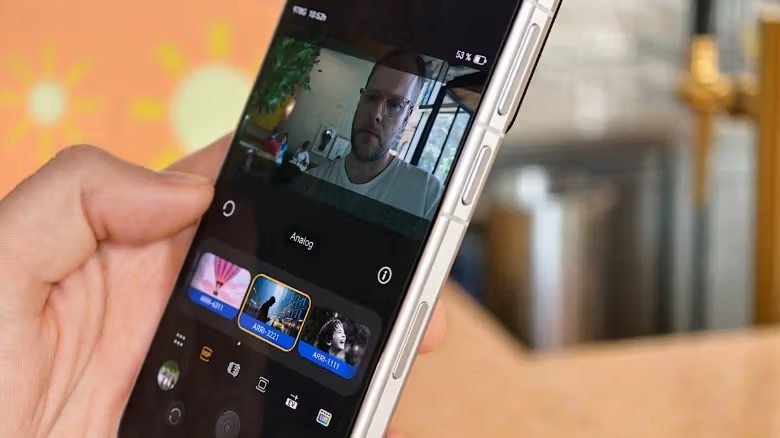
Compared to a standalone gimbal camera, adjusting shooting modes and tracking speed — or even manually steering the gimbal's angle with an on-screen joystick — is noticeably more convenient directly from the phone's screen. The gimbal can also track a person and a stationary object simultaneously, outperforming some third-party phone gimbal accessories on the market. Honor also partnered with cinema camera maker ARRI on the interface, LUT color grading, and shooting workflow, supporting recording in ARRI's LogC3 format for easier post-production color grading, with real-time LUT preview available while shooting.
The Robot Phone retails for 9,999 yuan in China, roughly $1,500 USD — pricier than Honor's other foldable, the Magic V6, which costs £2,000 (over $2,700 USD) in the UK. If the Robot Phone ever does make it to international markets, expect the price to climb even higher. It carries an IP54 rating, but dust and water resistance only applies when the gimbal is fully retracted — the mechanical structure itself still carries the risk of wear and failure, a concern inherent to any device with moving mechanical parts built in.
An Honor spokesperson told Engadget that the company is evaluating whether to release a version for international markets down the line. Given how compact this gimbal system is, there's also another intriguing possibility on the table — spinning it off from the phone entirely into a truly pocketable mini gimbal camera of its own.