ÉTAT HER

No Steering Wheel, No Problem: Tesla's Cybercab Now Officially Serving Riders in Austin

Austin riders can now hail a ride via Tesla's Robotaxi app, though specifying a vehicle type isn't yet an option—among the 314-vehicle fleet, dominated by Model Ys, 45 are Cybercabs.

Tzu-Han Chou, Travel Editor
No Steering Wheel, No Problem: Tesla's Cybercab Now Officially Serving Riders in Austin

Landing a Cybercab right now is basically down to luck. Tesla announced on its website that the Robotaxi App (available on both iOS and Android) now offers Cybercab as a ride option—the driverless vehicle with no steering wheel and no brake pedal has finally made it to actually picking up passengers, two years after its debut. The app covers six cities: Austin, Dallas, Houston, Miami, Orlando, and Tampa, but the Cybercab option currently only shows up in Austin, and riders can't specifically request one—which vehicle you actually get depends on how many people are riding together and the fleet's real-time dispatching.

According to The New York Times, Tesla is authorized to operate a total of 314 driverless vehicles in Texas, with the vast majority being Model Ys—Cybercabs make up just 45 of them. The report also notes that it's currently unclear how many of these vehicles are actually in service picking up passengers versus how many remain in internal company testing. In other words, at this stage, Cybercab looks more like a small sample mixed into a massive fleet than a standalone service in its own right.
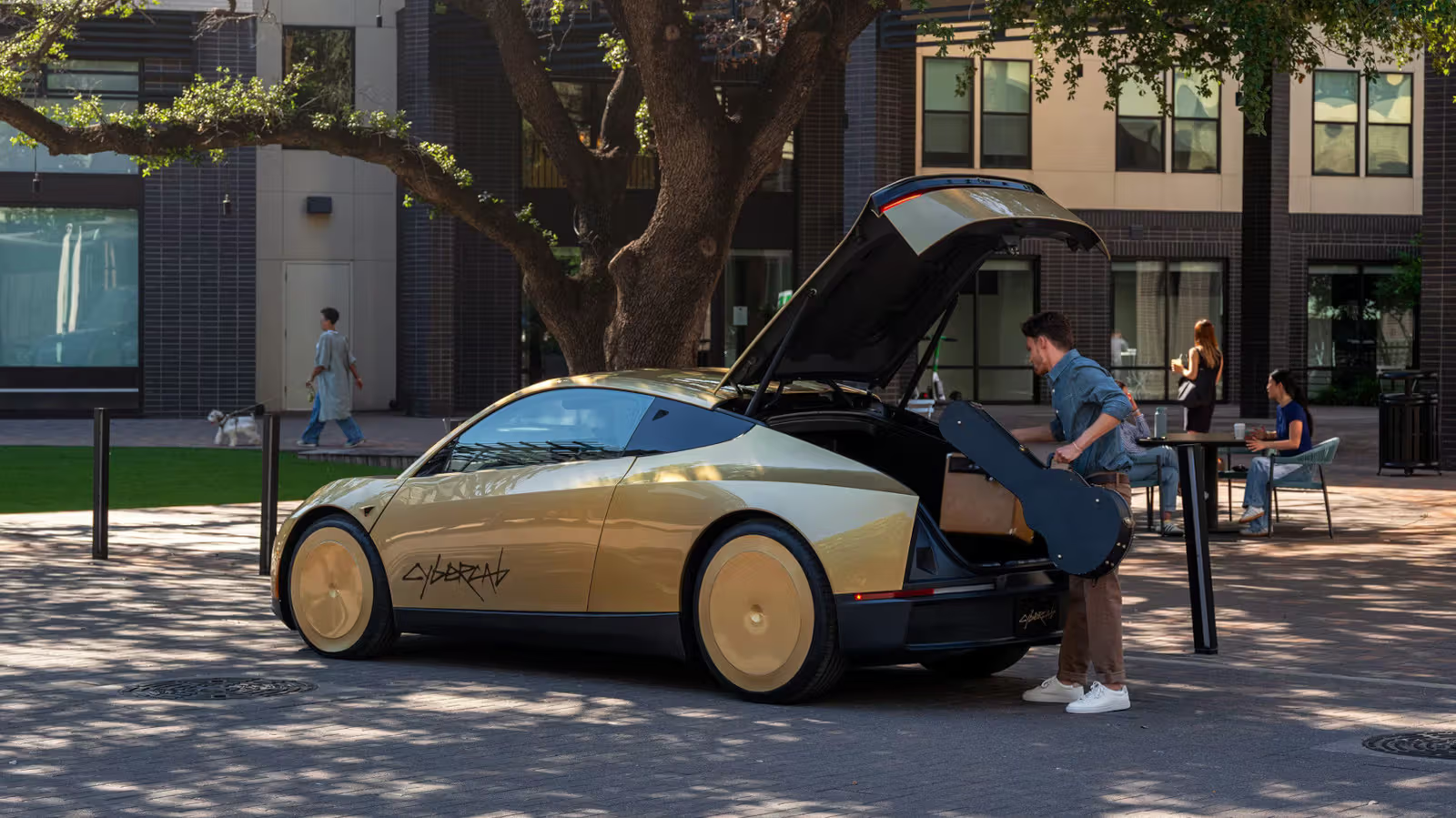
As for the design, the Cybercab's interior features bench-style seating that fits a maximum of two passengers, with the center console taken up by one large touchscreen display. While the seating only accommodates two people, the trunk space is built to handle bulkier items like suitcases and scooters. Tesla's own website describes the vehicle's purpose as being for "ride-hailing, errands, and commuting"—a line of brand messaging pulled straight from the site.

All the Cybercabs currently operating in Austin are owned entirely by Tesla, though the company plans to sell them to the public eventually. When CEO Elon Musk unveiled the vehicle, he laid out a vision where individuals could own multiple Cybercabs and generate income by running them through a shared fleet network. That personal-fleet concept remains just that for now—a concept—since the vehicle isn't yet available for consumer purchase. At this stage, Tesla is only accepting expressions of interest, and the target audience is business customers willing to buy fleets in bulk to help build out the robotaxi network.

Related

What to know | Rugged Phone Hides an Action Cam: RugOne Xsnap 7 Pro's Camera Module Detaches with Magnets
Living

What to know | Rugged Phone Hides an Action Cam: RugOne Xsnap 7 Pro's Camera Module Detaches with Magnets

The key details: Ulefone's sub-brand RugOne unveiled the rugged Xsnap 7 Pro at IFA 2026, featuring a camera module on the back that can be fully detached and carried around as a waterproof action cam. Early-bird pre-orders open on Kickstarter September 7 at €799.

What to know | Boox Go 6 Gen II Review: The E-Reader That Runs Google Play, but the Battery Only Lasts Eight Days
Living

What to know | Boox Go 6 Gen II Review: The E-Reader That Runs Google Play, but the Battery Only Lasts Eight Days

The key details: The $200 Boox Go 6 (Gen II) runs Android, letting you install any reading app and use a stylus, but its battery life falls well short of Kindle and Kobo—and it's still stuck on Android 11, which has already lost security updates.

Anthropic Gives Users the Power to Rewrite What Claude Remembers Long-Term
Living

Anthropic Gives Users the Power to Rewrite What Claude Remembers Long-Term

With new granular controls rolled out by Anthropic, Claude users can now edit or delete memories by topic and decide whether sensitive information gets included at all.

Samsung Devices Set to Gain Android's Scam Detection, With the Galaxy S26 Leading the Rollout
Living

Samsung Devices Set to Gain Android's Scam Detection, With the Galaxy S26 Leading the Rollout

Previously exclusive to Pixel phones, Google's AI-powered call scam detection is now confirmed to be coming to the Samsung Galaxy S26. Android's security toolkit also includes several often-overlooked features, such as updates, two-factor authentication, Find Hub, and anti-theft locks.

Can a Gimbal Fit in 9.6mm? Honor Robot Phone Pushes Physical Limits
Living

Can a Gimbal Fit in 9.6mm? Honor Robot Phone Pushes Physical Limits

To give the 200MP main camera three-axis stabilization, Honor developed its own 2.6-gram gimbal motor and hid it inside the phone's back cover. Available only in China as a limited run, this experimental device delivers a hands-on experience that sits between a standard phone and a dedicated gimbal camera.

From Dust Collector to AI Powerhouse: NVIDIA's PAIR Pools Your Idle PCs for Free
Living

From Dust Collector to AI Powerhouse: NVIDIA's PAIR Pools Your Idle PCs for Free

At IFA 2026, NVIDIA rolled out PAIR, a free open-source tool that spreads AI compute tasks across idle machines on your local network—sparing your main rig from carrying the full GPU burden solo.