Dressing for yourself: a Japanese survey explores style, mood and everyday care
An October 29 survey release from Yamada Bee Farm covers 1,038 female members aged 35–84. Some 54.7% saw style and beauty as lifting mood or motivation. Its spending average describes this membership sample, not a budget women should match.
Choosing a favourite outfit before leaving home can be a matter of courtesy, pleasure or a small lift to the day. A survey released by Yamada Bee Farm on October 29 looks at how respondents understand fashion and beauty beyond a tidy appearance, including mood, willingness to meet people and ways of living. It opens a conversation about what dressing means to the wearer herself.
The company's editorial and digital marketing teams conducted the online survey from October 8 to 12, receiving valid responses from 1,038 women aged 35–84 who belonged to its LINE mini app in Japan. These are views from a particular brand's membership. They cannot be assumed to represent all Japanese women or used to decide how women in Taiwan should spend or dress.
Mood and motivation sit alongside courtesy and grooming
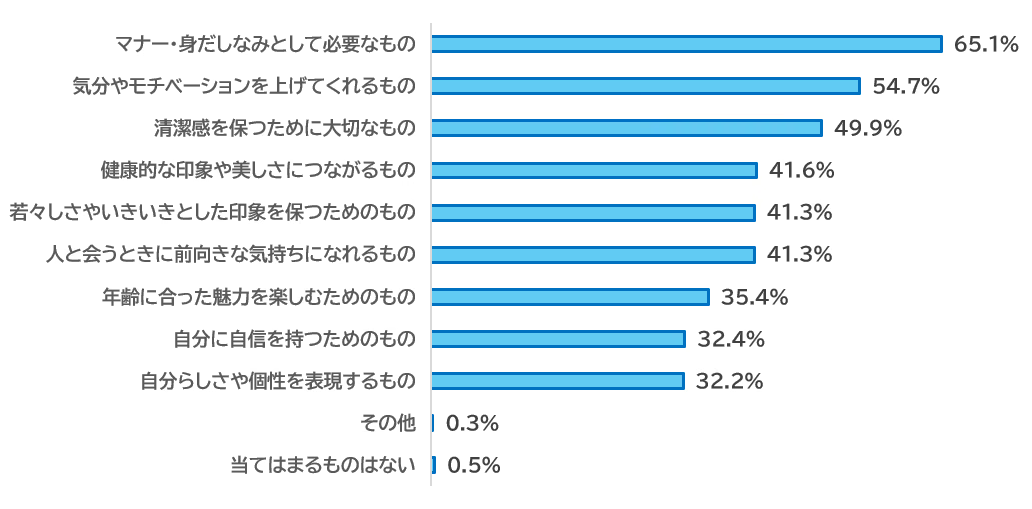
In a multiple-response question about the value of fashion and beauty, 65.1% selected manners and grooming, 54.7% said they lifted mood or motivation, and 49.9% cited maintaining cleanliness. The answers can overlap: getting ready for an occasion can also be enjoyable. Neither motive needs to be treated as more valid than the other.
Original multiple-response chart of respondents’ views on fashion and beauty
Interest in dressing up varied. The high-interest group accounted for 55.4%, the middle group 24.4% and the low-interest group 20.2%. A majority expressing interest does not mean the remainder care less about their lives. Nor is the belief that getting dressed lifts mood experimental evidence that buying clothes or beauty products improves mental health.
A monthly average of ¥28,276 is not a spending target
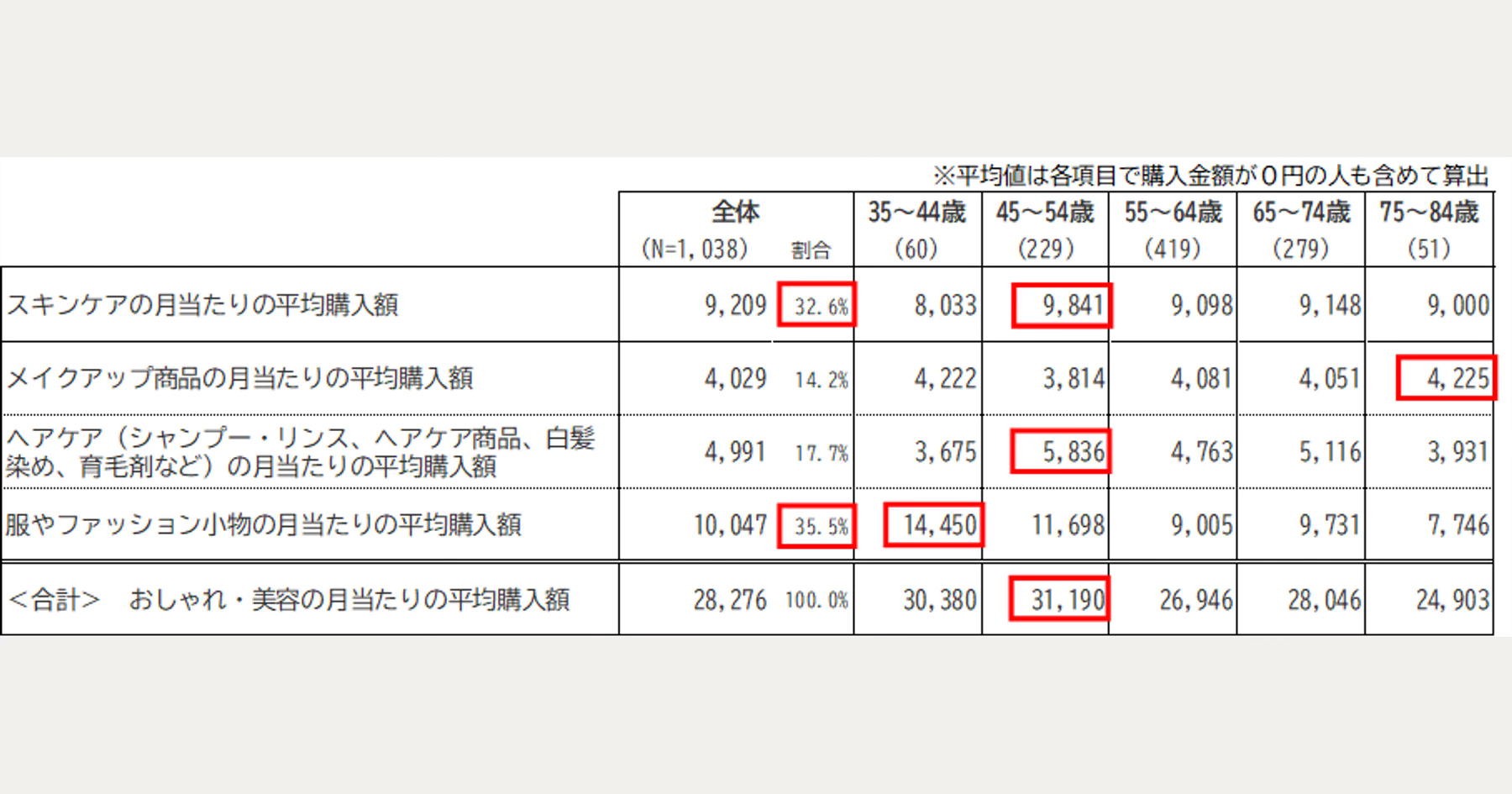
The survey added four categories—skincare, makeup, haircare, and clothing and accessories—to produce a monthly average purchase amount of ¥28,276. Calculations included respondents reporting zero expenditure in the relevant categories. Clothing and accessories averaged ¥10,047 and skincare ¥9,209; together they represented 68.1%. These figures describe purchases within the sample, rather than a suitable budget for every household.
Women aged 45–54 had the highest combined category average in this survey, at ¥31,190. A mean is not a median, and it does not mean every woman in that age group spent that amount. Age groups also contained different numbers of respondents. Income, needs, products already owned and individual priorities remain relevant when considering the findings; a single average is not a way to score one's own life.
Style can also be about how someone lives
Priorities included looking like oneself, appearing clean, fitting the occasion, being presentable and feeling good. Open-ended responses extended beyond purchases: some noticed well-maintained shoes, some appreciated grey hair paired with bright clothes, and others mentioned posture, speech and dining manners. These are examples of individual responses, not a ranking agreed by the whole sample.
The findings offer room to discuss style through age, individuality and everyday habits rather than a shopping list alone. People who enjoy dressing up can take pleasure in choosing, while those who invest less time or money can follow their own rhythm. The survey establishes neither a universal appearance standard nor proof that greater spending produces confidence. Keeping its limits visible allows the numbers to start a conversation instead of creating another expectation.
Questions and answers
Who took part in the survey?
The October 8–12, 2026 online survey received 1,038 valid responses from women aged 35–84 in Yamada Bee Farm's LINE mini app membership in Japan. It was not a representative sample of all women.
Is ¥28,276 a recommended monthly beauty and clothing budget?
No. It is the sample's mean purchase amount across skincare, makeup, haircare, and clothing and accessories, including zero spenders. It is neither a median nor a personal budget recommendation.
Does the 54.7% figure prove shopping has a psychological benefit?
No. It reflects self-reported views in a multiple-response question, not an experiment establishing that shopping treats emotional difficulties.