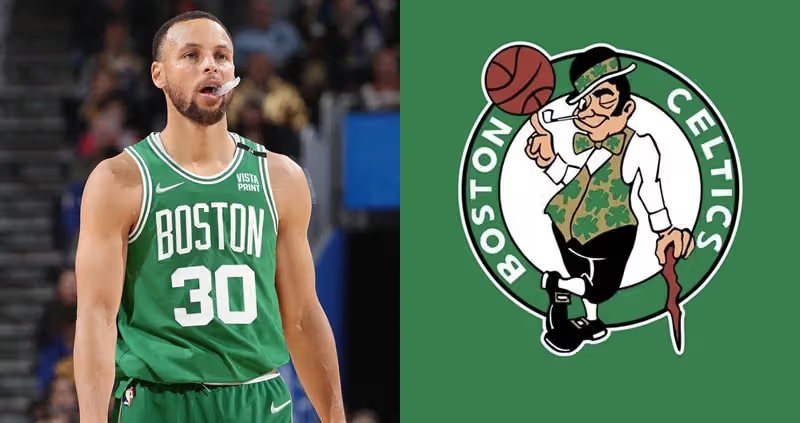
Let's cut to the chase: this isn't some fan-made trade machine fantasy. Celtics president of basketball operations Brad Stevens actually picked up the phone and called Golden State's front office to ask one question — "Is Stephen Curry available?" That call alone, regardless of what package gets attached to it, is worth more attention than any hypothetical trade. When a team is willing to directly inquire about a still-active, league-defining superstar, that signals something beyond mere interest — it signals opportunity.
According to veteran Celtics reporter John Karalis, this wasn't an idle question. Boston's leverage here traces back to the aftershocks of the earlier deal that sent Jaylen Brown out and brought back Paul George along with four draft picks. Brad Stevens said at the time that the move was about preserving flexibility — and now that flexibility has a specific target. The reported package: Paul George, Sam Hauser, an unprotected 2031 76ers first-round pick, and another first-rounder, all in exchange for Stephen Curry.
The Crack Isn't a Trade — It's Two Different Team-Building Philosophies
The backdrop to all this is an internal divide within the Warriors organization. The Athletic's Marcus Thompson previously reported that Stephen Curry has grown somewhat weary of the front office's relentless star-chasing approach, and that he'd rather serve as a bridge figure helping the team transition to its next generation. San Francisco Standard reporter Tim Kawakami, meanwhile, said owner Joe Lacob's stance is clear: he wants to prove the Warriors can function after Stephen Curry, rather than have the franchise's entire era rest on one man's shoulders. Neither side has publicly declared a split, but put these two accounts side by side and the source of tension becomes obvious — this isn't about sentiment, it's about planning.