Kaohsiung's Old New Taiwanese Cuisine Autumn Crab Feast: Three-Cup, Huadiao, and Variations on Taiwanese Technique
This season, Kaohsiung's Old New Taiwanese Cuisine restaurant presents a ten-course crab feast centered on mud crab, covering different genders and maturity states including virgin female crab, male mud crab, female mud crab, and red mud crab. Through steaming, three-cup style, huadiao wine, and other techniques, the menu showcases the differing flavors of crab meat and roe, closing with ginger duck to form a seasonal Taiwanese menu suited for group dining.
As autumn arrives and crab meat reaches its peak, Kaohsiung's Old New Taiwanese Cuisine has built this sense of the season into an entire menu, presenting ten dishes centered on mud crab in one sitting. From the light, refreshing meat of virgin female crab to the rich roe of female mud crab and red mud crab, paired with familiar Taiwanese cooking vocabulary, the menu forms an autumn dining option suited for sharing among a group.
Key Facts
The full crab feast consists of ten dishes, with menu items designed according to different states of mud crab (virgin female crab, male mud crab, female mud crab, red mud crab)
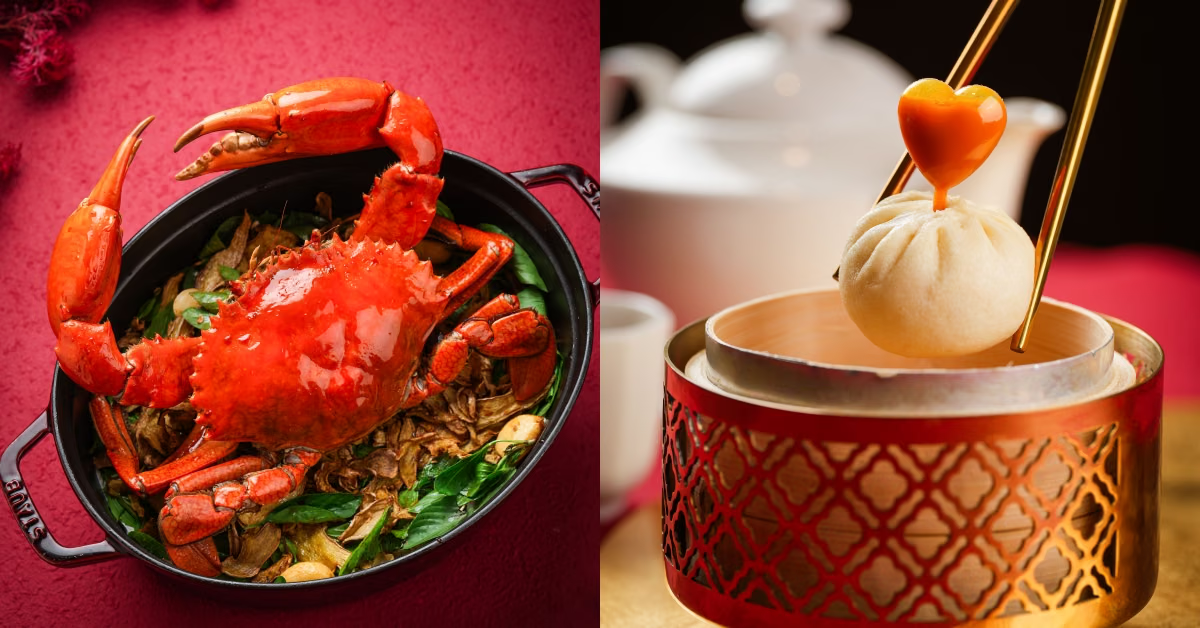
The opening dish, 'Autumn Equinox Three Flavors,' combines French consommé technique with Taiwanese culinary methods, incorporating fermented dough elements drawn from Kaohsiung's breakfast food culture
Main dishes include steamed virgin female crab, three-cup male mud crab, and huadiao female mud crab stir-fried rice noodles, each corresponding to a different heat level and seasoning logic
Crab roe and crab fat are extended into side dishes such as tofu, taro cake, and loofah, so that the savory flavor is not concentrated in a single main dish alone
The full meal closes with Hsueh's Taiwanese-style Ginger Duck, slow-simmered with native duck and aged ginger to shift the table's flavor direction
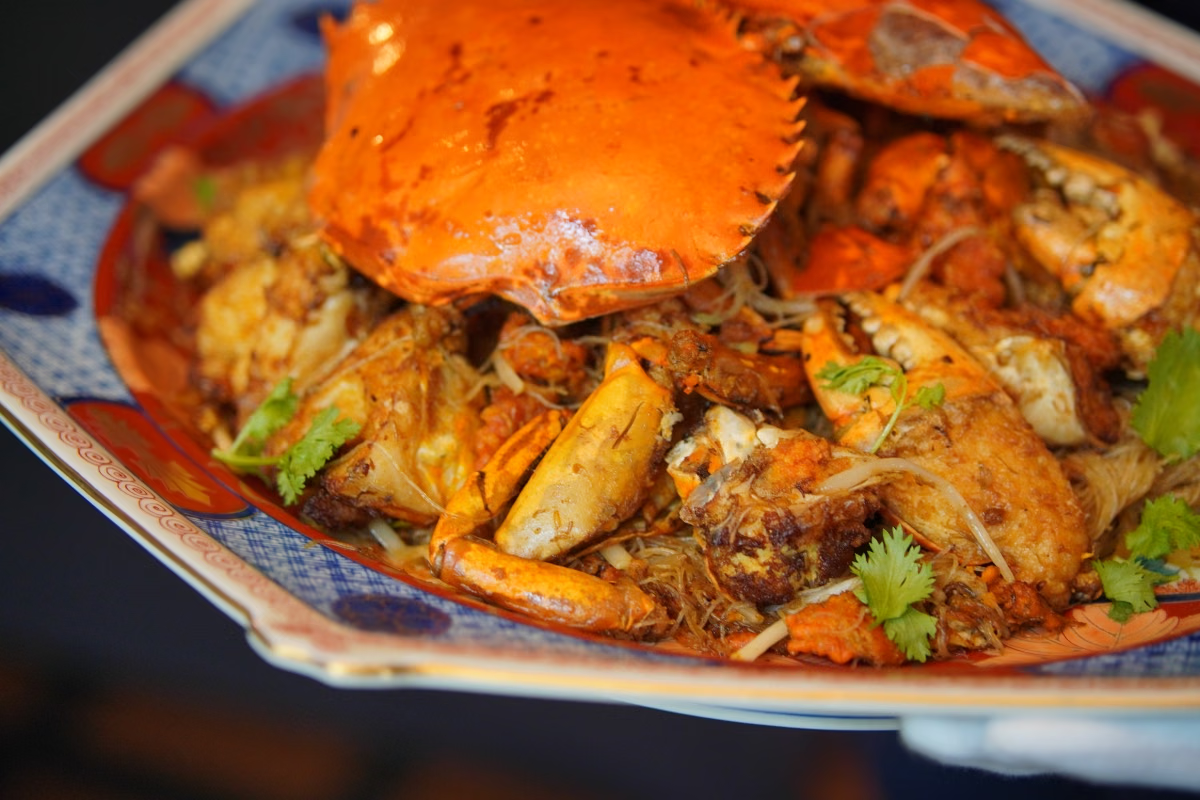
Autumn crab paired with rice noodles, allowing the rice to absorb the crab roe and sauce.
Arranging Different Dishes According to Mud Crab States
The core design of this autumn crab feast lies in treating mud crab according to its different states separately, rather than applying a single cooking method throughout the entire meal. Virgin female crab, male mud crab, female mud crab, and red mud crab each differ in meat texture and roe proportion, and the menu assigns cooking methods accordingly, so that each dish has a distinct focal point, avoiding repetitive textures across the whole table.
The opening dish, 'Autumn Equinox Three Flavors,' sets the stage for the entire meal, combining the clear, light approach of consommé with the rich seasoning typical of Taiwanese cuisine, presenting a layered contrast of lightness and depth. This dish also incorporates a fermented dough technique wrapping seafood and meat fillings, echoing Kaohsiung's familiar local breakfast imagery, serving as a palate warm-up before the crab feast formally begins.
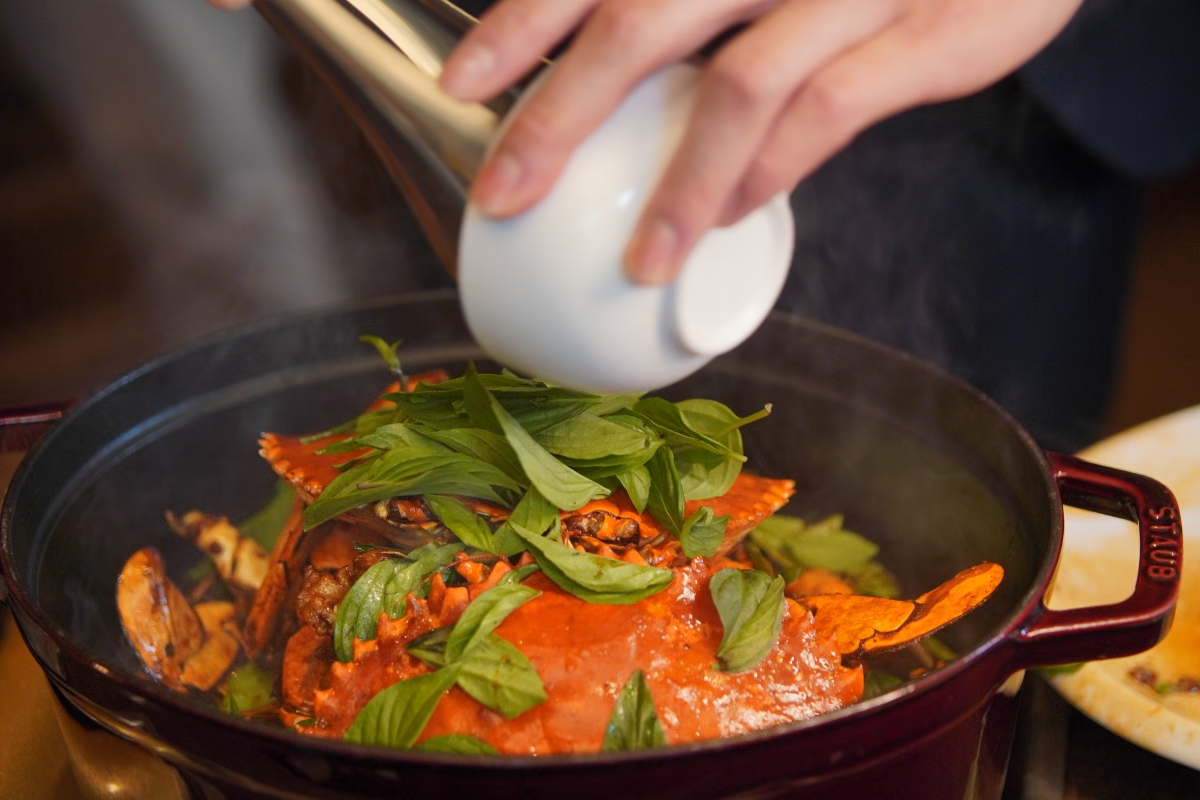
Three-cup style pairs wok aroma and spices with mud crab.
Steaming, Three-Cup, and Huadiao: A Comparison of Three Heat Techniques
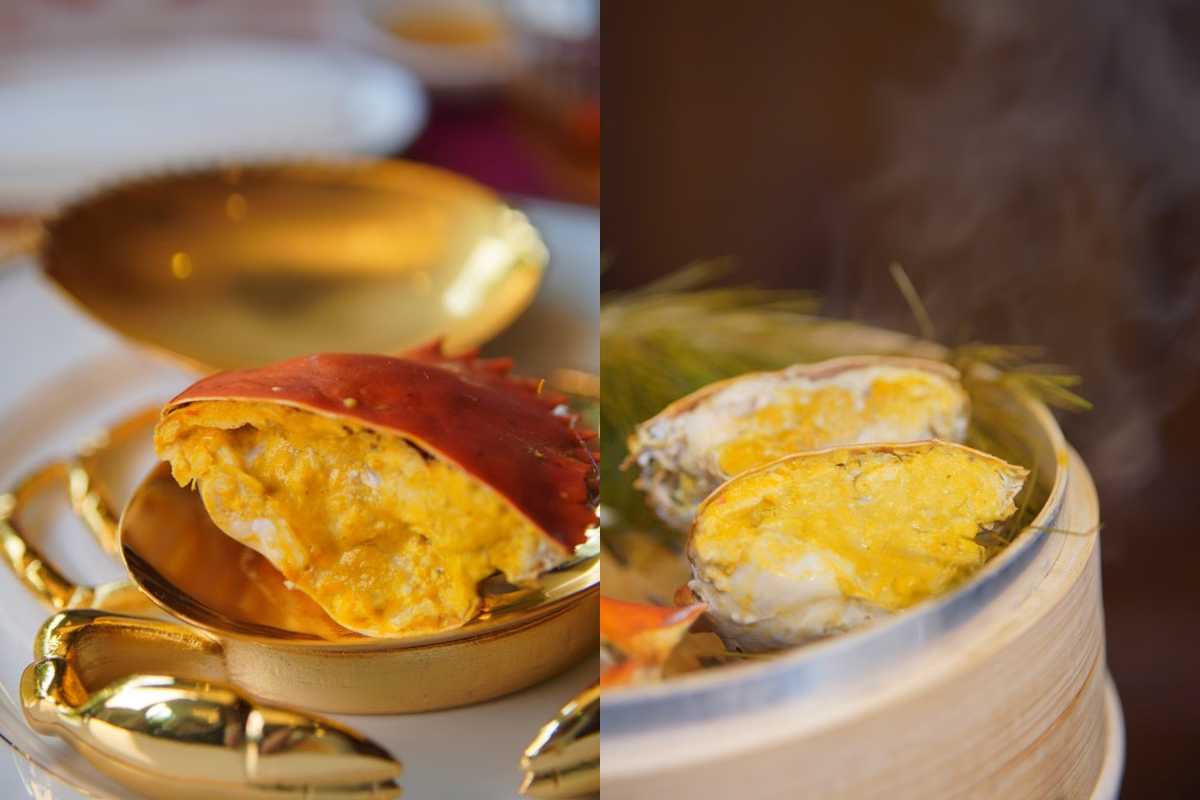
'Autumn Red Virgin Female Crab Platter' uses a white-sliced steaming method, preserving both the sweetness of the crab meat and the smoothness of the roe through precise temperature control, taking a relatively light approach. In contrast, 'Wok Hei Three-Cup Male Mud Crab' uses heavier male mud crabs, quickly stir-fried in a high-heat cast iron pot to draw out wok hei, presenting the intense aroma and sweet-salty interplay typical of Taiwanese three-cup cooking.
'Huadiao Female Mud Crab Stir-Fried Rice Noodles' takes a different approach, allowing handmade rice noodles to absorb the roe and huadiao wine aroma from female mud crab; the absorptive quality of the rice noodles gives the dish more layers of flavor than eating the crab meat alone. These three main dishes—steamed, three-cup, and huadiao rice noodles—present distinctly different seasoning focal points, giving the full crab feast clear distinction in texture and flavor rather than repeating the same method.
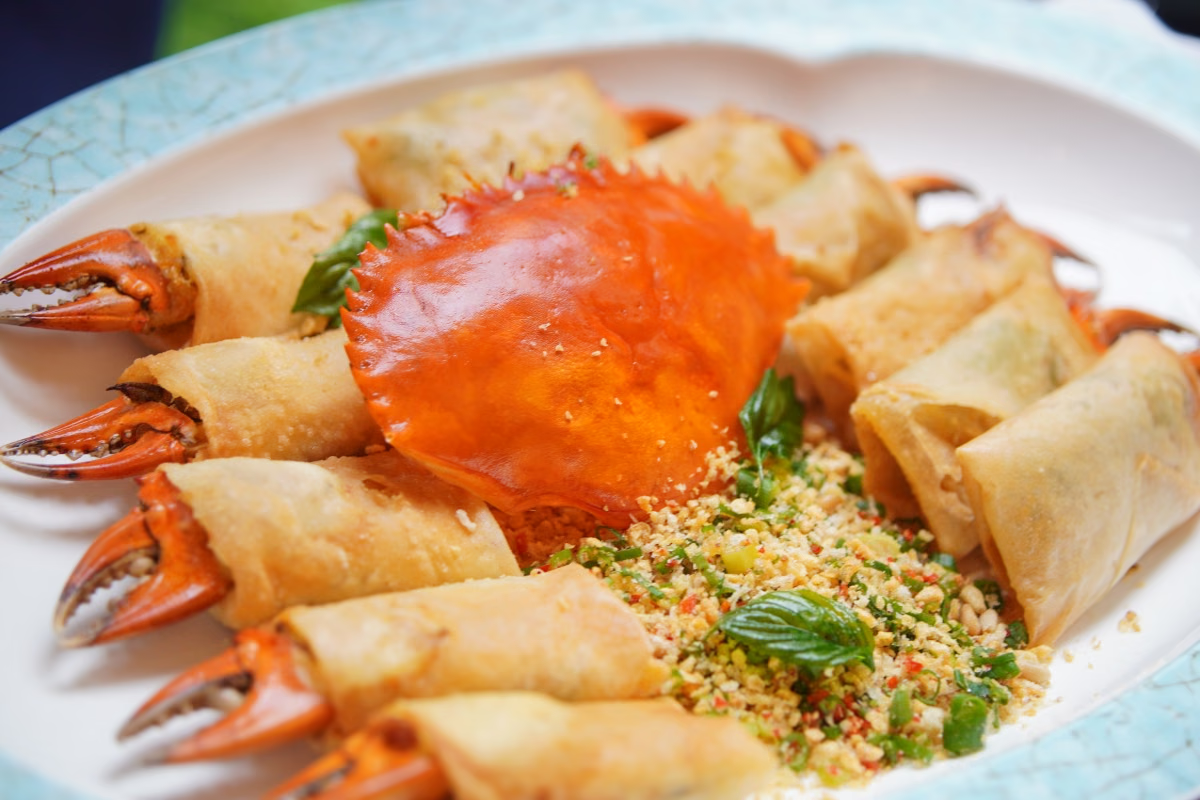
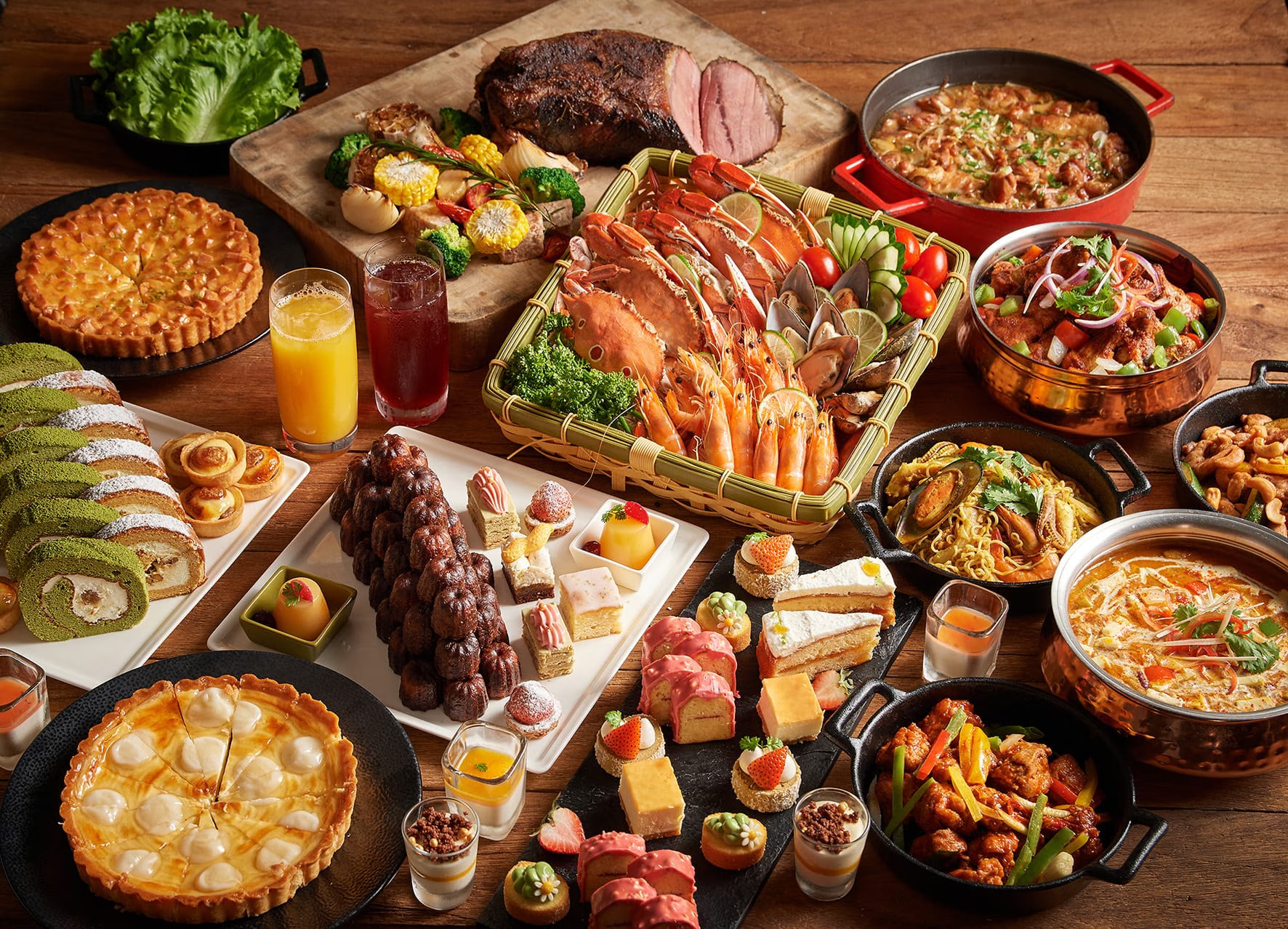
Combinations of crab meat with various side dishes, showing the variations of a Taiwanese crab feast.
Side Dish Extensions and Group Dining Arrangements
Beyond the featured crab dishes, the menu also extends crab roe and crab fat into the side dishes. 'Crab Roe Tofu with Fragrant Taro Cake' combines taro from Jiaxian's betel palm heart variety with Donggang sakura shrimp, further enhanced with red mud crab oil and roe; 'Fragrant Crab Roe Stir-Fried Loofah' uses the natural sweetness of loofah paired with crab roe to create a textural contrast, so that the entire table's dishes are not concentrated solely on crab shell and meat.
The full meal closes with 'Hsueh's Taiwanese-style Ginger Duck,' using native duck breed and aged ginger simmered slowly over a long period, with fish maw added for texture, using a relatively mellow flavor to transition from the preceding dishes' emphasis on sweetness and wine aroma. Since seafood dishes are affected by season and supply specifications, readers planning a group meal are advised to confirm with the restaurant in advance the number of people suited for the set menu and the actual dishes offered on the day. Dining companions with shellfish allergies or who do not consume alcohol-infused dishes should also notify the restaurant beforehand to confirm whether adjustments can be made.
Different textures of crab roe and crab meat in the serving dishes.
Frequently Asked Questions
Are the virgin female crab, male mud crab, and female mud crab in this feast different crab species?
This feast centers on mud crab, with virgin female crab, male mud crab, female mud crab, and red mud crab being culinary terms distinguished by gender and maturity state, not unrelated species. The menu arranges steaming, three-cup, and huadiao rice noodle methods based on their differing meat texture and roe presentation.
How many dishes does the full crab feast include in total? How does it conclude?
The full menu includes ten dishes, from the opening Autumn Equinox Three Flavors, through various mud crab main dishes, to crab roe side dish extensions, concluding with Hsueh's Taiwanese-style Ginger Duck, which uses the mellow flavor of slow-simmered native duck and aged ginger to transition from the preceding dishes' sweetness and wine aroma.
What should I keep in mind when arranging a group meal?
Since seafood is affected by season and supply specifications, it is advisable to confirm with the restaurant in advance the number of people suited for the set menu and the actual dishes available that day. If dining companions have shellfish allergies or do not consume alcohol-infused dishes, this should also be communicated to the restaurant beforehand to confirm whether adjustments can be made; booking details are subject to the restaurant's own announcements.