SpaceX Starship 40 Splashes Down Fully Intact, But Won't Be Back in Texas for Months
Starship 40 launched from Texas in July and completed a 65-minute suborbital test flight before splashing down in the Indian Ocean, remarkably staying intact. Its journey home now relies on a cargo ship, transferring via Christmas Island, with arrival at the Port of Brownsville, Texas expected around October 8.
It took Starship 40 about 65 minutes to fly from SpaceX's Starbase in Texas to its splashdown in the Indian Ocean. But bringing the rocket back home to Texas? SpaceX says that'll take "months." That gap between launch and recovery is what makes this whole retrieval operation worth documenting.
Starship 40 lifted off from SpaceX's Starbase in South Texas on July 24 for a suborbital flight lasting roughly 65 minutes, during which it deployed 20 Starlink V3 satellites. Those satellites briefly connected to SpaceX's network before burning up in the atmosphere about 20 minutes after deployment — a planned outcome, not an actual satellite launch mission. The real purpose of the flight was to test Starship's payload deployment system, part of SpaceX's ongoing push toward a fully reusable launch system.
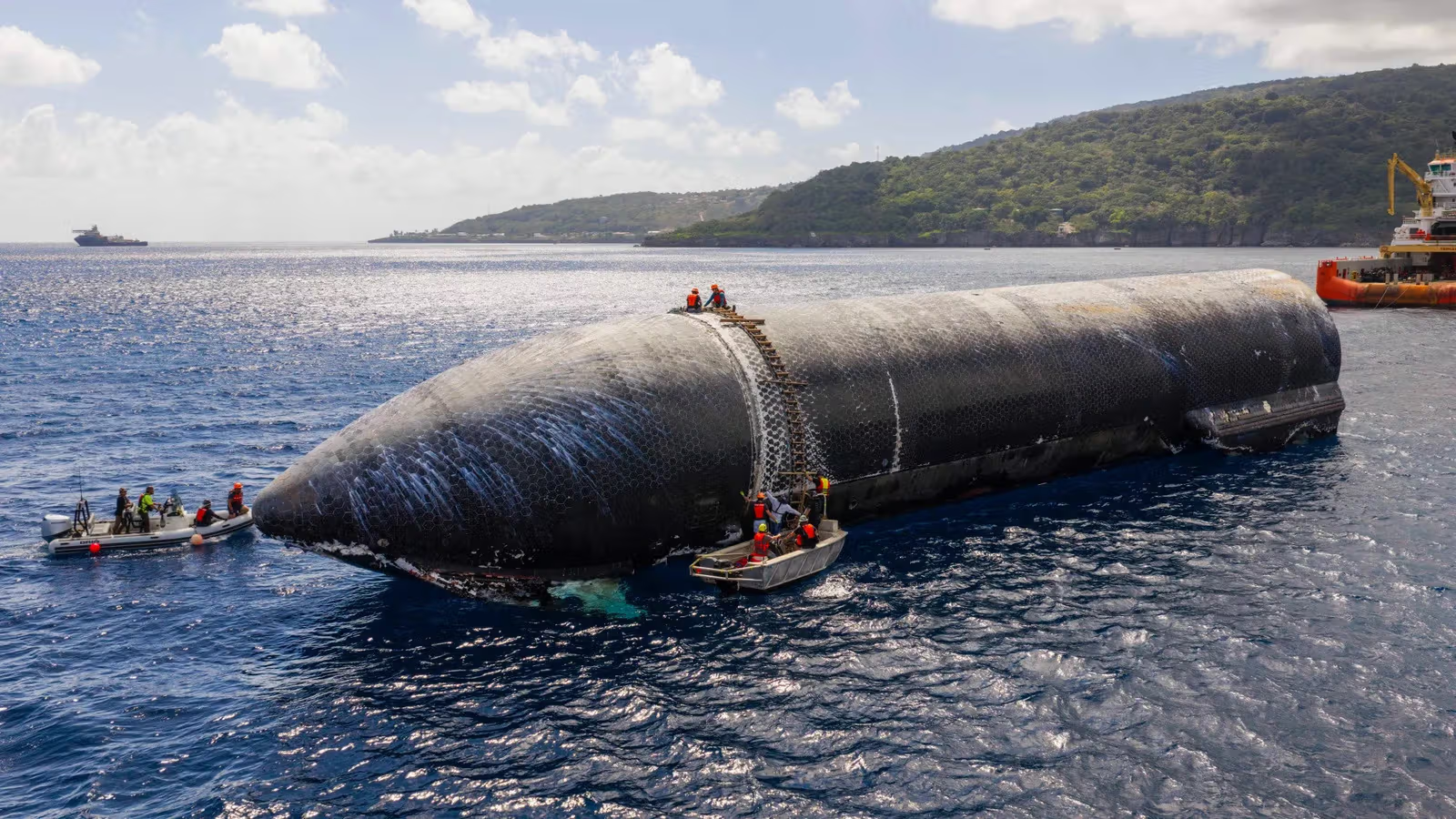
What caught the engineering team off guard was that Starship 40 splashed down completely intact — a stark contrast to the fate of previous Starship upper stages. While this particular vehicle likely won't fly again, having a whole, intact wreck lets engineers examine details firsthand instead of piecing things together from telemetry data or scattered debris.
A Relay from the Indian Ocean to Christmas Island
Getting the 171-foot spacecraft back from the Indian Ocean to Texas is no small task. Starship 40 spent 24 days drifting at sea before SpaceX's recovery team began towing it toward calmer waters. The nearly 300-foot tugboat Normand Ranger first hauled the spacecraft away from the splashdown site, heading toward the area near Christmas Island — an Australian territory south of Indonesia — where it waited for the handoff vessel to arrive.
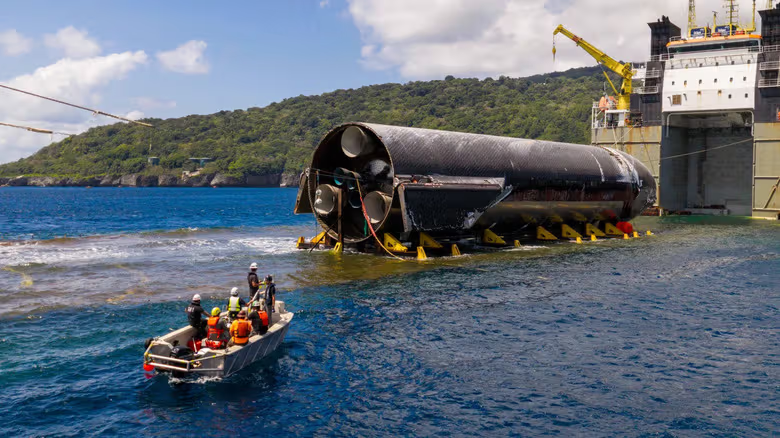
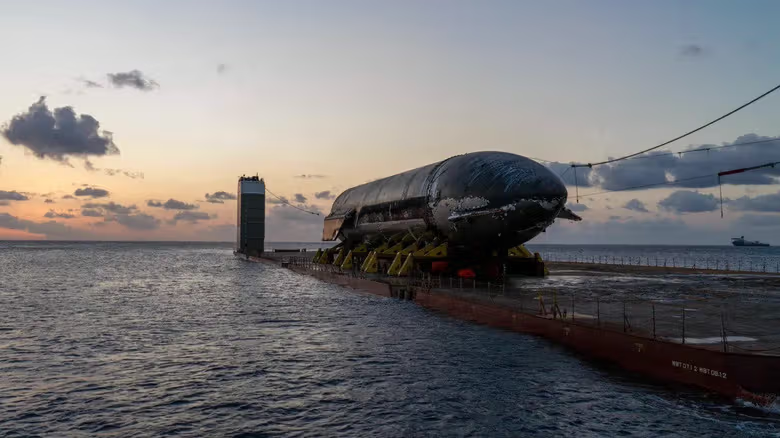
Taking over was the 710-foot transport vessel Forte. The crew first secured Starship 40 alongside Forte, then the transport ship took on ballast water, submerging its cargo deck below the surface so the spacecraft could be aligned with a custom-built cradle mounted on the deck. Once positioned, Forte pumped out the ballast water, slowly rising back up and lifting the spacecraft out of the water along with it.
Sal Mercogliano, a shipping industry expert and history professor who runs the YouTube channel "What's Going On With Shipping?", noted that this kind of operation is nothing unusual for a vessel like Forte: "Ships like Forte do this every day — whether it's oversized cargo, barges, cranes, or all kinds of vessels, this is a pretty routine operation in the shipping industry." Using a rocket as cargo may be a first, but the method itself isn't new.
SpaceX hasn't disclosed Forte's exact route back to Texas, only saying the trip will take "several months." According to ship tracking data, Forte is currently broadcasting an estimated arrival date of October 8, with the Port of Brownsville, Texas as its destination. Mercogliano observed the ship heading westward, suggesting a route around the Cape of Good Hope as one likely possibility.
Engineers have already collected heat shield samples from Starship 40, which officials say offer "valuable insights" into how the upper stage performed during reentry — data that will inform future Starship designs and mission planning. SpaceX's goal is for future Starship missions to return directly to Starbase in Texas and be caught by the launch tower, eliminating the need for this long ocean detour through the Indian Ocean altogether.