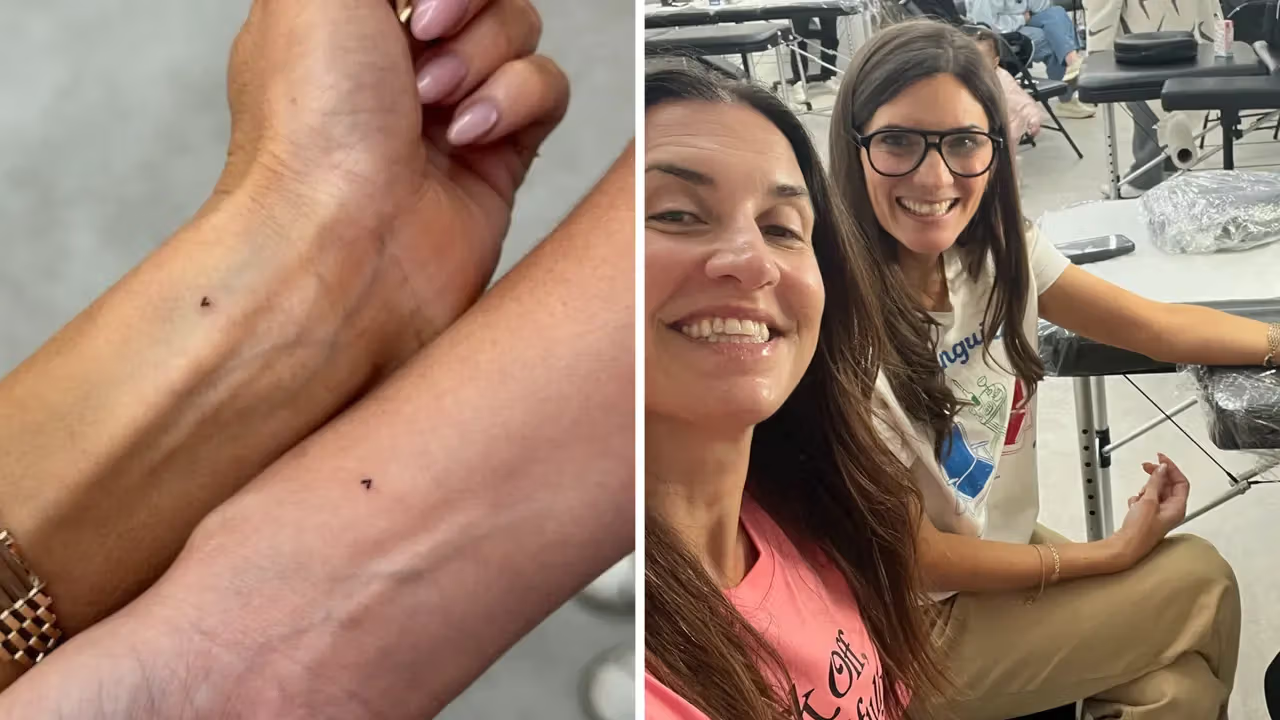
Tattoos aren't supposed to disappear in a week. In her personal column, British beauty editor Donna Francis shares how she and Leah—her childhood best friend, now living in a different city—decided to get matching tiny brown heart tattoos on the insides of their wrists to mark their respective 50th birthdays. The design, inspired by images the two had been sending each other on Instagram for months, was inked at a Soho studio in London known for fine-line tattoos. Each paid £100 (about $135), and given the studio's celebrity clientele, they were confident the price reflected the quality of the work.
The senior artist they'd booked couldn't make it that day, so another artist stepped in instead. The process was far less painful than expected—Leah described it as "like being lightly scratched by a cat," and Francis herself barely felt a thing. A week after returning home to Florida, she looked down and the heart on her wrist had vanished entirely—not even her husband could spot a trace of it up close. When she posted about the experience on Instagram, the comments flooded in with similar stories: one person's cat-face tattoo lost its nose when the scab fell off in the bathtub; another's anniversary date had faded within two weeks to look like something scribbled with a ballpoint pen.
Why Fine-Line Tattoos Sometimes Disappear Entirely
Pilar Zurita, a fine-line tattoo artist at Atelier Eva in New York, explained to Francis that micro and fine-line tattoos hurt less because they use extremely thin needles—but that also makes it easier for artists to work too shallowly in an effort to avoid ink bleeding. "If the pigment doesn't reach the right layer of skin, it simply won't hold," she said. If an artist goes over the same spot repeatedly, even gently, it can still cause excessive trauma to the skin, forming a thick scab that pulls the pigment away when it heals. Sarah Gaugler, a tattoo artist with nearly two decades of experience, points to another variable: the pressure of a last-minute substitution. "When an artist feels rushed or nervous, the needle tends to stay too shallow, and the pigment ends up sitting in the scab—so it flakes off along with it."
Francis initially wondered if it was simply a matter of her skin at 50. Dr. Mona Gohara, a board-certified dermatologist who got her own first tattoo at 50, confirms that age does bring less collagen, thinner skin, and slower healing—but "a tattoo disappearing entirely usually has more to do with technique and how deep the pigment was placed than with simply turning 50." As for whether the tattoo's small size was the culprit, Gaugler says no: as long as the needle placement is precise, a tiny fine-line tattoo can last a lifetime just like any other.
Brown Ink, Inner Wrists, and Lessons in Choosing an Artist
The inner wrist is widely considered one of the trickier spots to tattoo. Zurita notes that placement should avoid the wrist crease, sitting a few centimeters lower to be safe—but even then, the thin, constantly moving skin there tests an artist's ability to gauge depth correctly. The brown ink they'd originally fallen in love with was also flagged by Gaugler as a poor choice for longevity: brown is mixed from primary colors—blue, red, and yellow—and the chemical bonds in red and yellow are weaker than those in pure carbon black. Sun exposure breaks down those two colors first, causing the tattoo to fade unevenly and patchily. Marina Molist, a fine-line tattoo artist in New York, says she only works in black, since the body tends to accept and retain that color far better.
Looking back, Francis believes their biggest mistake was agreeing to the last-minute swap—they'd specifically requested the senior artist, only to cave when the studio reassured them it would be fine. Molist puts it bluntly: "Price shouldn't be the main factor in choosing a tattoo artist. A tattoo is with you for life, so it's worth finding someone you truly click with." She advises checking an artist's healed work rather than just fresh, freshly-finished photos, since "anyone can make a brand-new tattoo look good—it's the healed result that shows real skill."
Both women ultimately received full refunds from the studio, and neither gave up on marking the milestone birthday with ink—they just plan to switch to black this time, and be more careful with aftercare. Gaugler recommends applying an unscented, lanolin-free A&D ointment two to three times a day for the first one to two weeks, letting the skin breathe rather than relying on the medical-grade bandages often used, which can trap heat and encourage bacteria. Gohara adds that staying hydrated and applying sunscreen once healed are just as crucial, since UV exposure is one of the most common causes of premature fading.