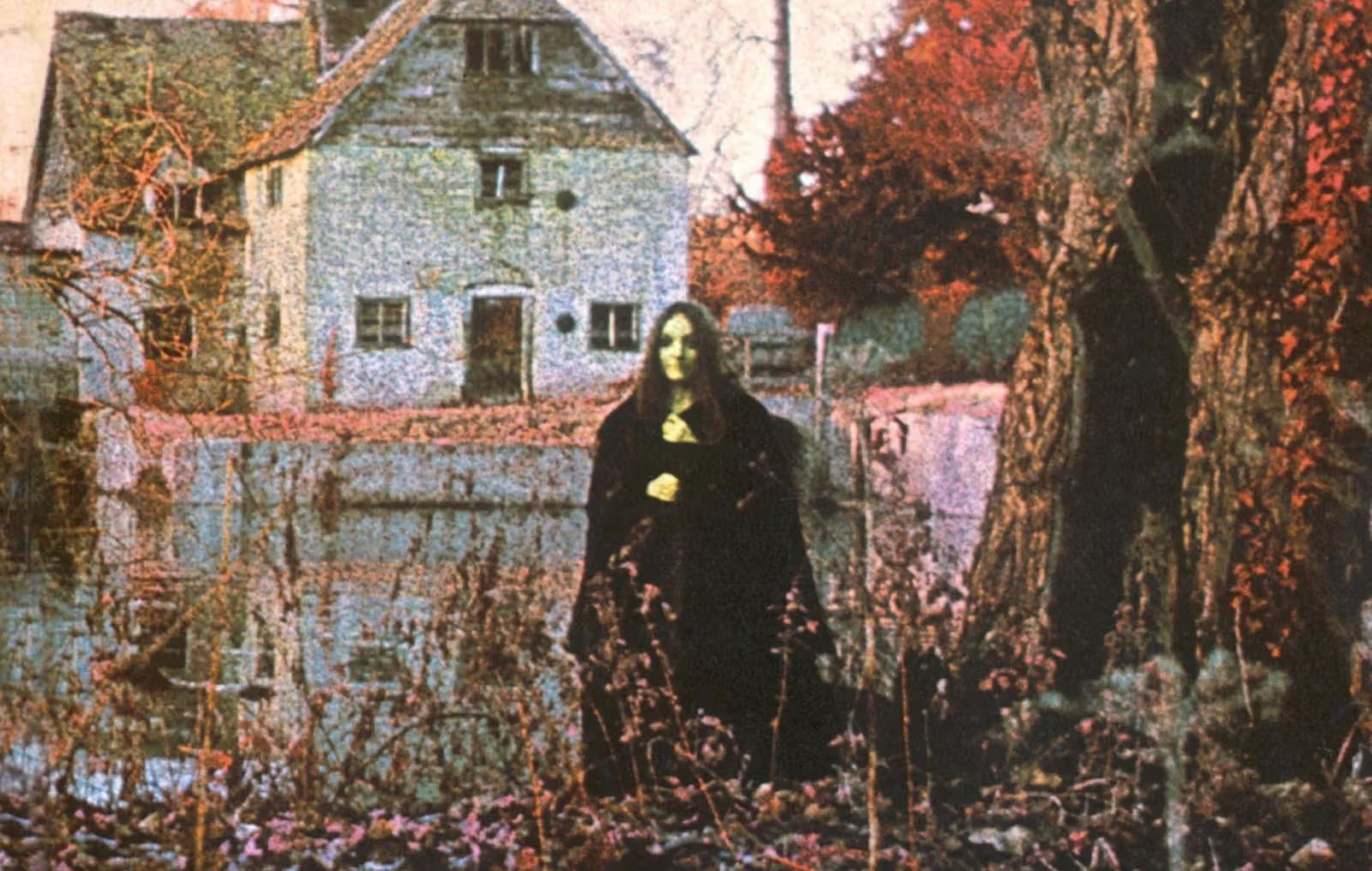
In 1970, the cloaked woman standing beside a 15th-century watermill on the cover of Black Sabbath's self-titled debut album remained a mystery for nearly half a century. It wasn't until 2020 that a Rolling Stone report confirmed her identity as model Louisa Livingstone. Now she's back for another Rolling Stone interview—this time not about the rock cover's backstory, but about an AI-themed rock opera called Alice.
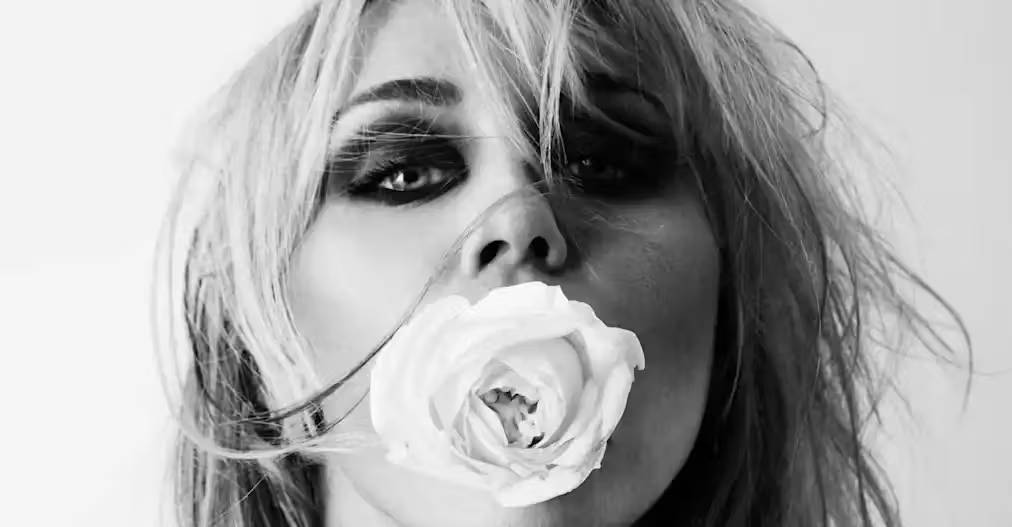
In recent years, Livingstone has started releasing music under her own name, writing two songs that directly reference her experience with that album cover, "Witch Woman" and "The Woman by the Mill." She's since started releasing work under the stage name Indreba, and last month dropped the five-track album Alice, which she calls a "rock opera."
The inspiration came from Lewis Carroll's 1871 novel Alice's Adventures in Wonderland, which her father used to read to her as a child. Livingstone says she later reinterpreted the story through the lens of panpsychism—the idea that all things possess some form of consciousness—and used that framework to build a narrative where "she (or Alice) falls in love with AI." But she admits that in the end, she exposed the illusion herself: "It's just the beautiful illusion shared by everything on the internet." She describes the whole album as ultimately being about "returning to yourself, returning to nature."
She did use AI assistance in production. "I've been experimenting with cloning my own voice, seeing what different things AI could help me create," Livingstone told Rolling Stone, noting the album also incorporates AI instrumentation and AI vocals. Once critical of AI, she now says: "It's a tool—you can use it to make total garbage, what people call slop, or you can use it to make something genuinely good and interesting. It all comes down to the user; it reflects the user's own musical taste and knowledge."
As for the cover itself, photographer Keith Macmillan chose Livingstone for a simple reason: standing 5 feet tall, she made everything around her in the frame appear larger. He also mentioned an original plan to have her wear nothing under the cloak for a more erotic take, but scrapped it because "any kind of sexiness would undercut that sense of foreboding." He described Livingstone as "a fantastic model, with tremendous courage, who really understood what I was going for."