Yohji Yamamoto Drawings Arrives in Japan November 6: Sketches from 1981–1999
Selected by Yamamoto, written by Alexandre Samson and designed by Peter Saville, this book offers a view of fashion before the finished garment. Paris launch photographs reveal drawings, page layouts and the relationship between them.
What does a designer put on paper before a garment reaches the runway? Yohji Yamamoto Drawings brings together previously unpublished sketches made for women’s and men’s collections between his 1981 Paris debut and 1999. Its Japanese release is scheduled for November 6, 2026, priced at ¥22,000 including tax, offering a route into the creative process beyond finished clothes.
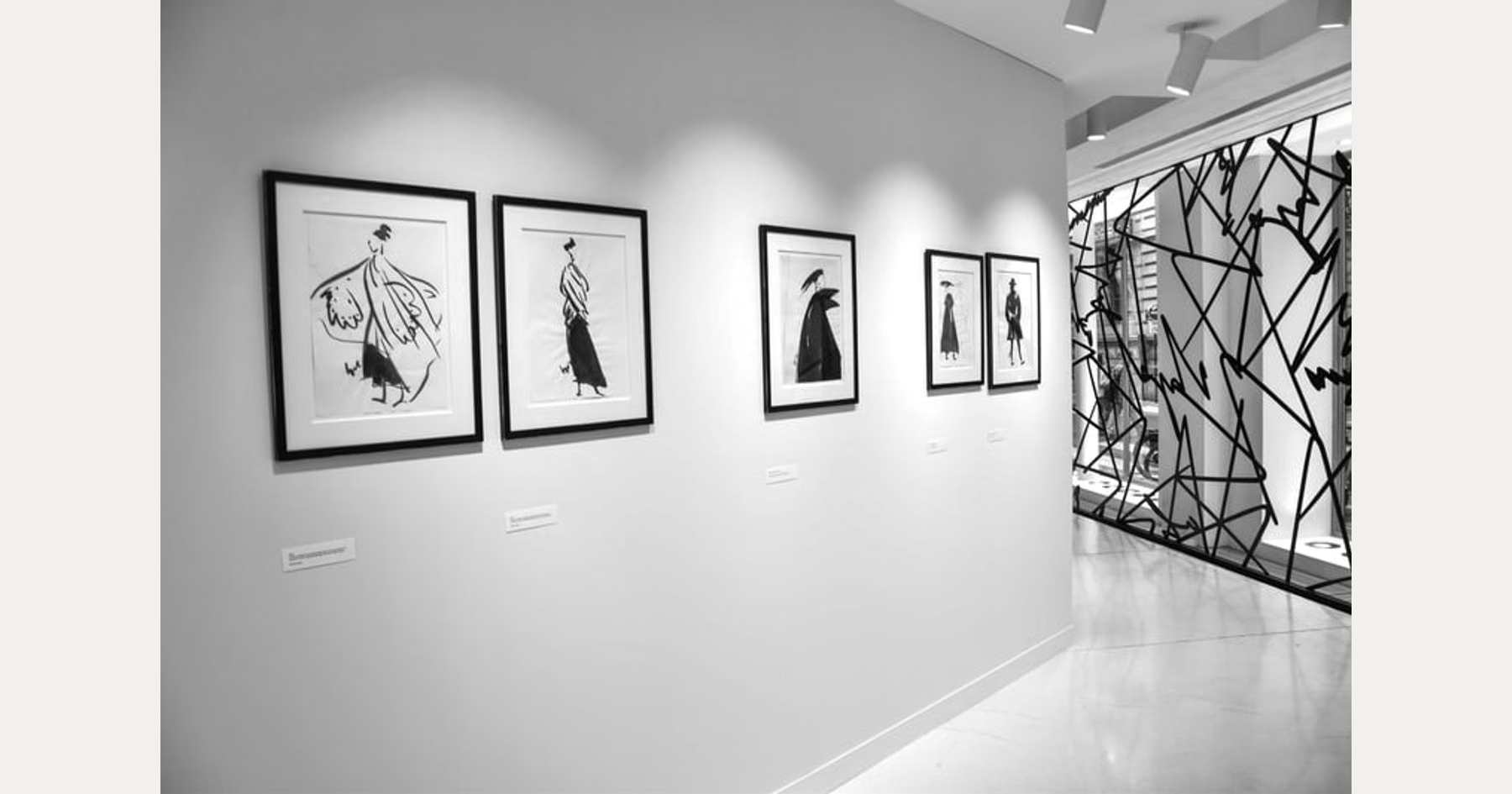
The drawings were found among hundreds of bundles of paper stored in a Tokyo warehouse, with Yamamoto selecting the works for publication. During Paris Fashion Week, the brand held a book launch at its Cambon store and displayed original drawings. These photographs document a past publishing event; they are not an announcement that the exhibition remains open today.
From warehouse papers to pages, beyond the finished look
The book spans the years 1981–1999 and includes both womenswear and menswear sketches. Drawings and runway photographs invite different scales of looking: finished clothes show fabric on a body, while lines on paper first articulate decisions about shoulders, hems, length and width. These marks belong to a design process, rather than a complete sewing pattern that can be copied directly.
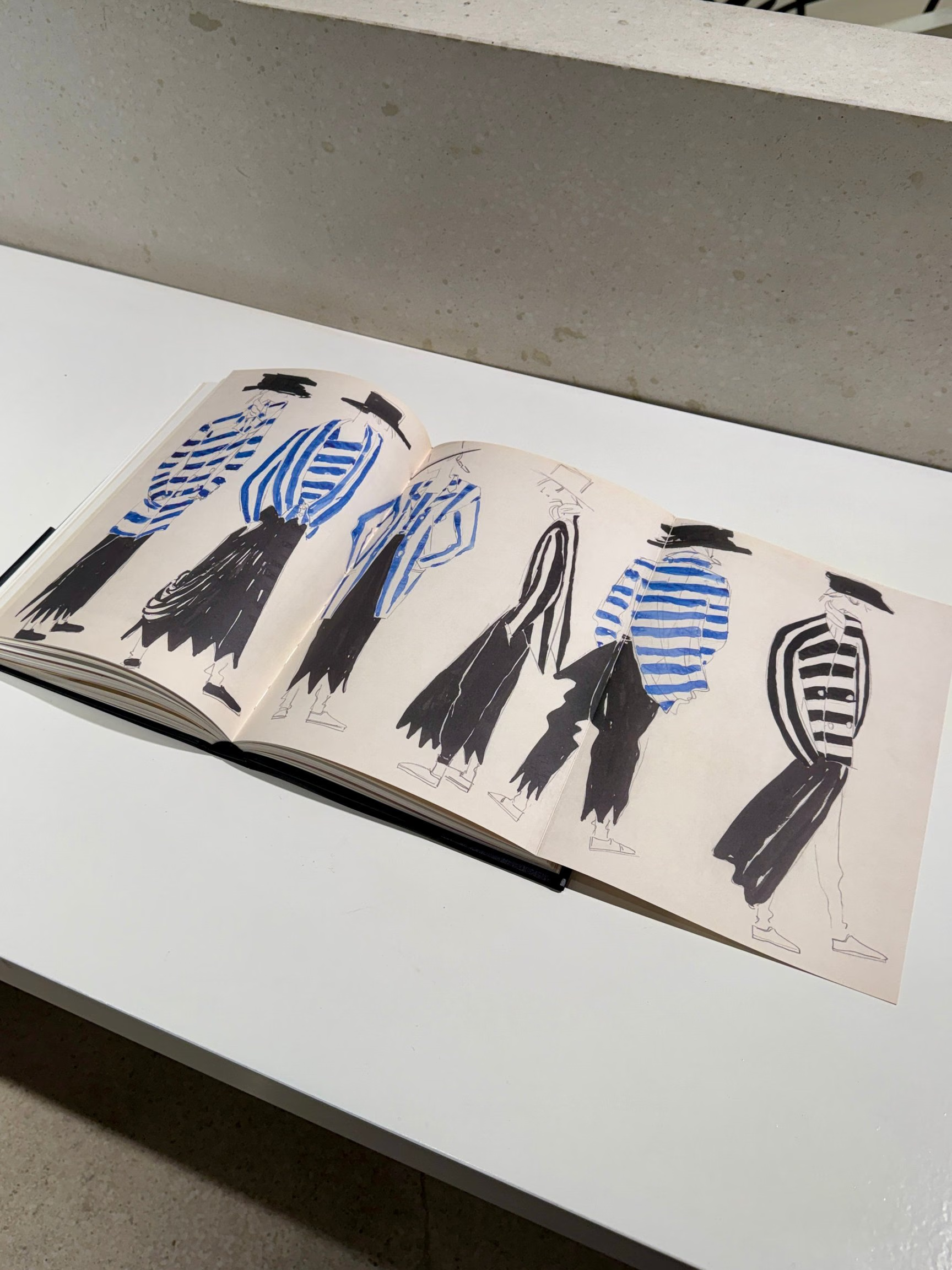
One published spread shows figures in hats with blue-and-black striped upper garments and loose, dark silhouettes below. Faces do not dominate; differences in garment length, stripe direction and outer edges are easier to notice. Attention moves from recognising a model to comparing clothing lines, a reminder that a design drawing serves a different purpose from a realistic portrait.
An open spread with blue-and-black striped clothes and figures in hats
Alexandre Samson and Peter Saville shape the reading experience
The book is written by Alexandre Samson, fashion historian and curator at the Palais Galliera in Paris, with book design by Peter Saville, a long-standing Yamamoto collaborator. Their roles connect historical context with the physical presentation of a book, turning working papers into something readers can turn through, compare and spend time with.
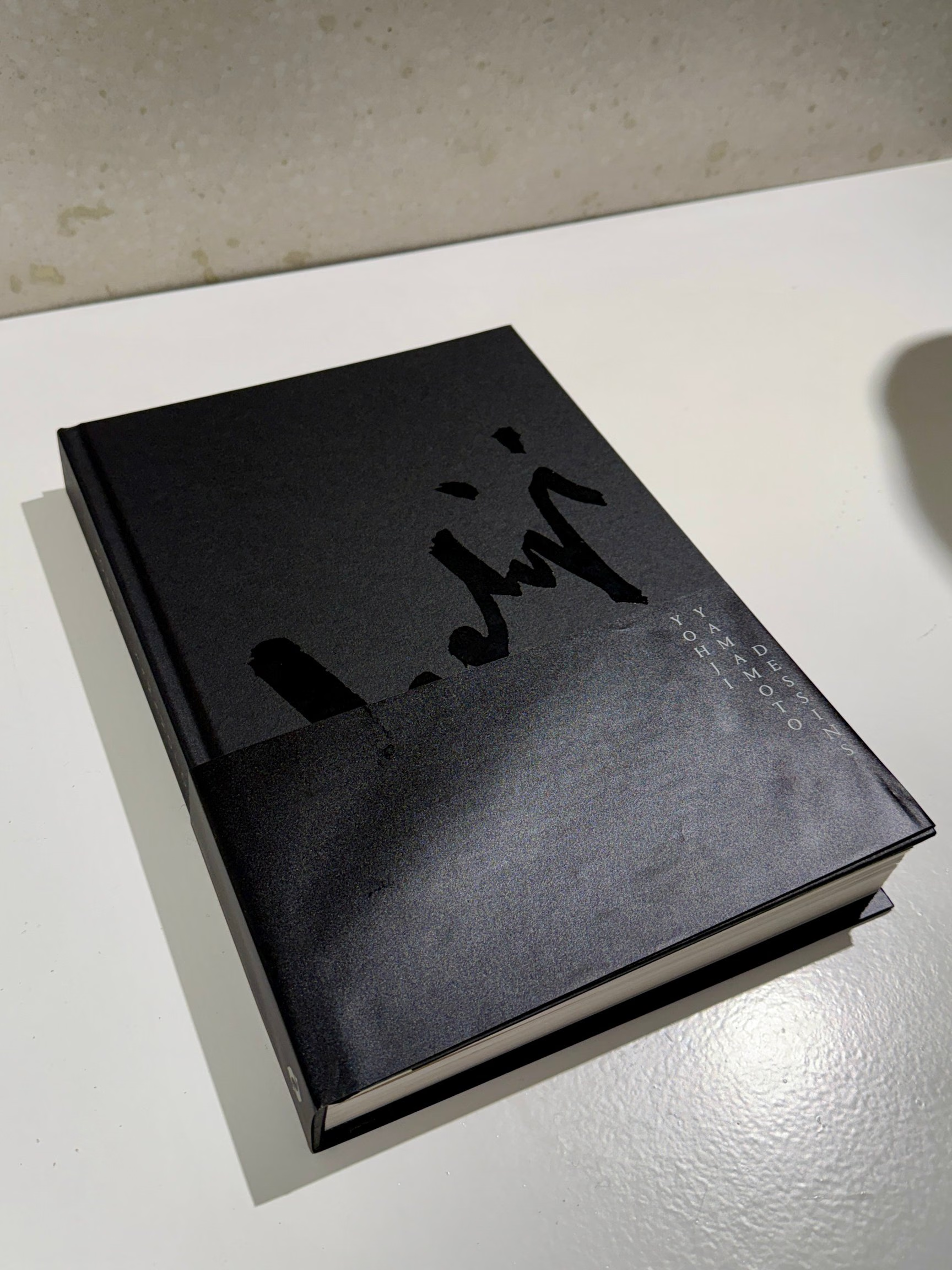
Photographs of the physical book show black graphics with contrasting sheen on a dark cover, set against lighter interior pages. Some pages fold outward to give the drawings more room. Looking is therefore not confined to individual sketches: white space, the arrangement of figures and the rhythm of page turns create a conversation between different silhouettes.
The black cover of Yohji Yamamoto Drawings with contrasting sheen
Separate the Japanese release from the Paris event
The Japanese release date is November 6. Announced stockists include Yohji Yamamoto and Yohji Yamamoto POUR HOMME stores across Japan, plus the official THE SHOP YOHJI YAMAMOTO website. ¥22,000 is the Japanese tax-inclusive price, not a delivered price for Taiwan or other markets. International delivery, duties and language editions should be checked with the actual retailer.
Readers interested in fashion, illustration or publication design can use the book to observe a visual language: look first at shoulders and hems on a spread, then compare black shapes and stripes between figures. The original drawings at the Paris Cambon launch and the book are different media. Any later exhibition needs its own current confirmation; buying information is not a guarantee of access to original artworks.
Questions and answers
When is the Japanese release and what does it cost?
The scheduled release is November 6, 2026, at ¥22,000 including Japanese tax.
Which period do the drawings cover?
They cover womenswear and menswear work from Yamamoto’s Paris debut in 1981 through 1999, selected by the designer himself.
Are the original drawings definitely still on view in Paris?
The photographs document a launch during Paris Fashion Week. They do not establish that an exhibition continues; check the store’s current announcements.