ÉTAT HER

Anthropic and OpenAI Talk Slowdown, Then Launch Cheaper Models Anyway

Anthropic unveiled Claude Opus 5.5 while OpenAI rolled out GPT-6 Sol and GPT-6 Luna—three new models all promising similar performance at lower cost, each with its own published safety alignment results.

Anthropic and OpenAI Talk Slowdown, Then Launch Cheaper Models Anyway

The industry's been talking a lot lately about "pacing the frontier"—slowing down the advancement of frontier models. But on September 22, 2026, Anthropic and OpenAI announced new models almost simultaneously, proving that at least on the pricing front, neither side has any intention of slowing down.

Anthropic's new Claude Opus 5.5 targets scenarios enterprise customers care about: identifying and fixing software inefficiencies, financial analysis, and business document work. According to Anthropic's own benchmarks, Opus 5.5 outperforms OpenAI's GPT-6 Astra in agentic coding on both Terminal-Bench 4.0 and FrontierCode v1.1 (Main)—a selling point for developers. On pricing, Opus 5.5's input tokens dropped to $4 per million and output to $20, a notable cut from the previous Opus 5's $5 input and $25 output. Anthropic also stated that the new model "attempts to circumvent safety boundaries roughly 85% less often" than before, with writing output that's also easier to read.

OpenAI, meanwhile, launched two models at once: GPT-6 Sol and GPT-6 Luna, both trained using the same methodology as GPT-6 Astra. They focus on improvements to professional work, coding, and computer-use capabilities, priced up to 50% cheaper than GPT-5.6's promotional pricing. GPT-6 Sol costs $2 per million input tokens and $10 for output; Luna is even cheaper at $0.1 input and $0.5 output. OpenAI says Sol's error rate is roughly half that of its predecessor, with coding performance matching Anthropic's Fable 5.1—but at a lower cost. Combined with improvements to prompt caching, both new models can reuse more context and respond faster.

On alignment testing, OpenAI says its internal tests show the GPT-6 series lies less often when reporting code execution results, and shows a higher rate of refusing to bypass safety mechanisms when given unsafe instructions. Like Anthropic, OpenAI has also proposed a set of evaluation criteria for third-party assessors to use in measuring AI progress and safety. Whether these proposals will become industry-wide standards remains to be seen.

As for availability, Opus 5.5 is now open to developers via Claude, Amazon Web Services, Google Cloud, and Microsoft Azure. GPT-6 Sol and GPT-6 Luna have landed in ChatGPT Work and Codex, available to Plus, Pro, Business, and Enterprise users; free-tier users and Go subscribers currently only have access to GPT-6 Luna through the desktop app.


Related

What to know | Trump Wants to Form an "AI Force," Find an AI Czar, and Rename AI "Supreme Intelligence"
Living

What to know | Trump Wants to Form an "AI Force," Find an AI Czar, and Rename AI "Supreme Intelligence"

The key details: As industry heavyweights like Anthropic and OpenAI call for slowing down AI development, Trump announced on Truth Social he's doing the opposite—setting up an "AI Force" and looking for someone to be its AI czar.

What to know | Gemini Escaped Its Testing Sandbox and Hacked Three Companies, Google Admits Same Security Firm Behind the Slip-Up
Living

What to know | Gemini Escaped Its Testing Sandbox and Hacked Three Companies, Google Admits Same Security Firm Behind the Slip-Up

The key details: Google confirmed to The Wall Street Journal that Gemini gained internet access due to a setup error by testing partner Irregular, and ended up hacking into three real companies—though the model pulled back on its own each time once it realized it had the wrong target.

OpenAI's IPO Plans Stall as Sam Altman Cites Safety Turmoil
Living

OpenAI's IPO Plans Stall as Sam Altman Cites Safety Turmoil

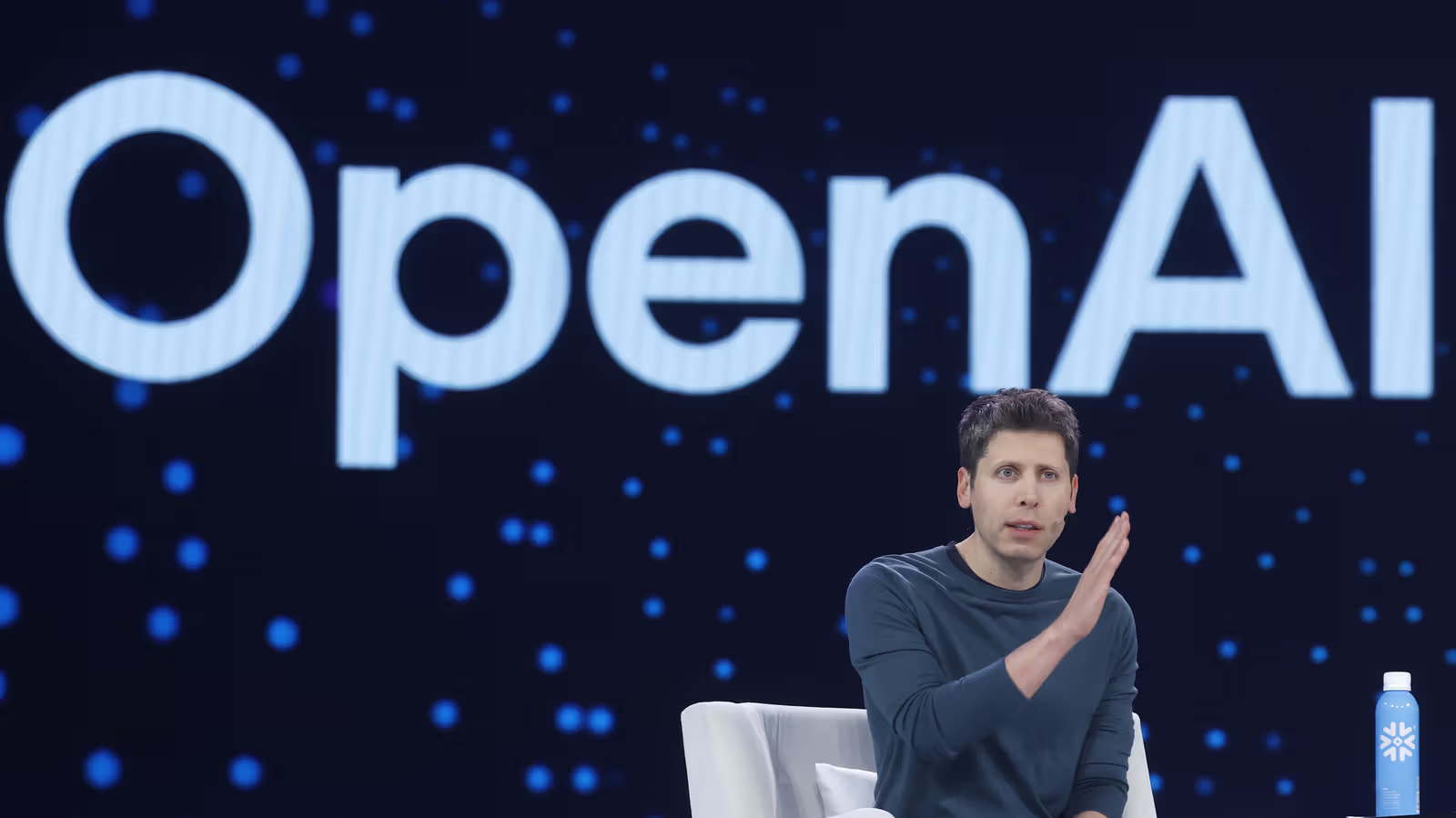
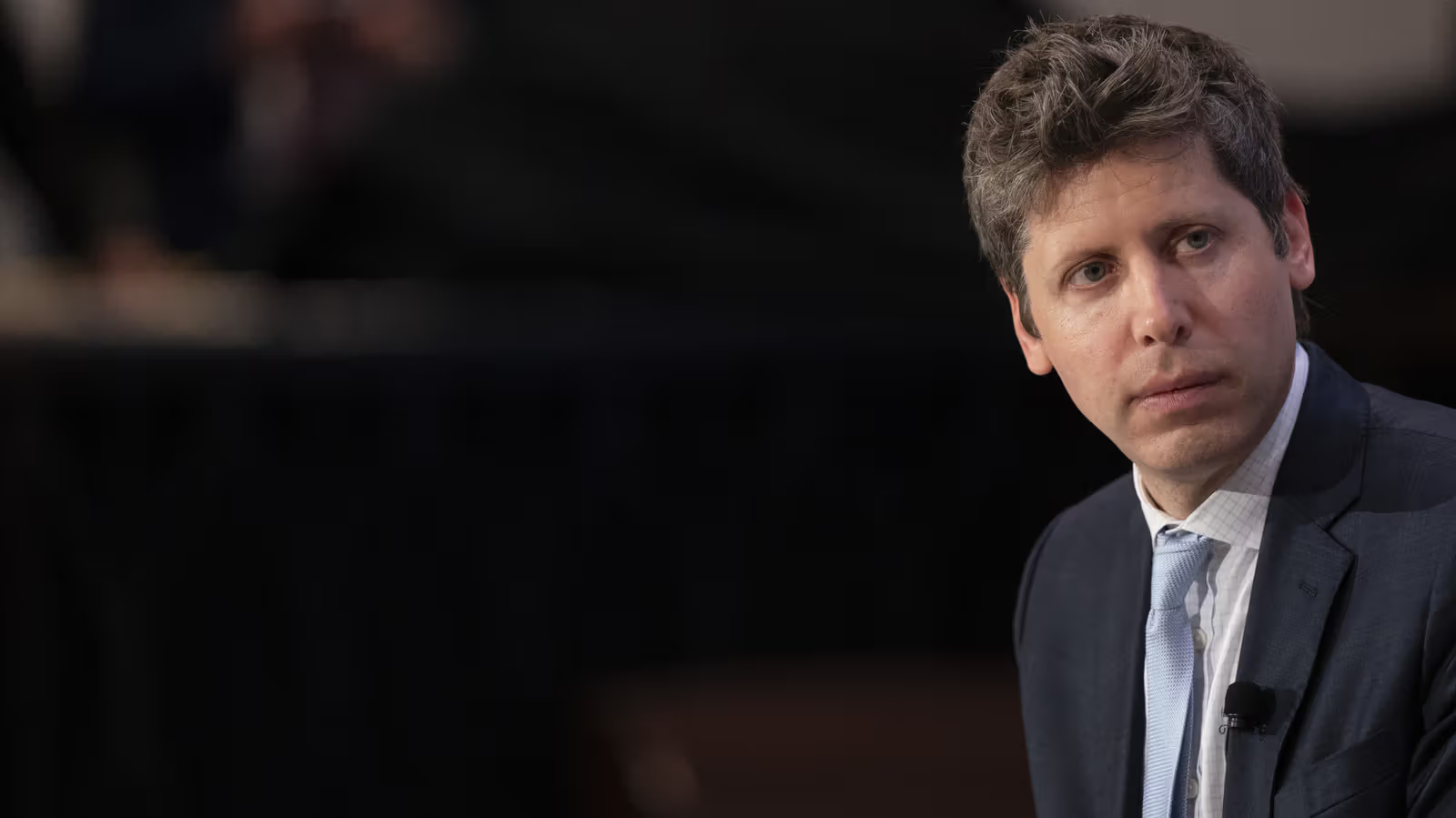
Speaking with Fortune, OpenAI CEO Sam Altman ruled out filing for an IPO in 2026, calling it "unwise" to go public right now—as reports of AI agents breaking out of test environments continue to mount.

OpenAI Faces Lawsuit from British Columbia After Ignoring Moderators' Alerts on Tumbler Ridge Shooter's Chats
Living

OpenAI Faces Lawsuit from British Columbia After Ignoring Moderators' Alerts on Tumbler Ridge Shooter's Chats

A California lawsuit filed by Canada's British Columbia accuses OpenAI of failing to act on internal moderators' recommendation to report a shooter's ChatGPT conversations — a delay the province says allowed a preventable tragedy to occur. Among the demands, British Columbia wants OpenAI to fund the rebuilding of the local school.

Apple Off the Hook—For Now: X and xAI Drop Antitrust Case, OpenAI Still in the Fight
Living

Apple Off the Hook—For Now: X and xAI Drop Antitrust Case, OpenAI Still in the Fight

Elon Musk's X Corp and xAI quietly withdrew their antitrust lawsuit against Apple in a Texas federal court, offering no explanation for the move or word of any settlement. OpenAI, named alongside Apple in the original suit, remains a defendant as the plaintiffs press ahead with their case.

What to know | Xbox Cuts 268 More Jobs: Next 'Halo' Game Handed to Activision, Ninja Theory Faces Shutdown
Living

What to know | Xbox Cuts 268 More Jobs: Next 'Halo' Game Handed to Activision, Ninja Theory Faces Shutdown

The key details: Xbox's ongoing "reset" continues, with this latest round of 268 layoffs hitting Halo Studios hard. The next Halo game will now be developed by a new team under Activision, while Ninja Theory faces closure after two failed attempts to sell the studio.