BaZi, Human Design or tarot? GATSEE maps 24 systems through five starting points
GATSEE groups 24 destiny and personality systems by birth data, names, questionnaires, questions and numbers. Its public guide helps readers compare the inputs, missing-time limitations and differences between free charts and personal interpretations.
You may know your zodiac sign, have heard of Human Design and be curious about BaZi or tarot. The first obstacle is often deciding what information you need and where to begin. GATSEE's public systems guide groups 24 destiny and personality systems into five categories according to their inputs, then explains each method, its scope and its limitations.
The useful starting point is your purpose. Birth-data or questionnaire systems offer descriptions of longer-term personality patterns, while question-based approaches focus on a particular situation. You can read the introductions before creating a chart, but personal results require signing in and supplying the relevant information.
Five starting points, with different information requirements
The birth-data category contains 12 systems, including BaZi, Zi Wei Dou Shu, Korean Saju, Western and Vedic astrology, Human Design and numerology. Two name-based systems cover Chinese name analysis and Chaldean numerology; the questionnaire category contains the Enneagram. These groups help readers choose a reading order, but systems within a category do not necessarily require identical fields. Each individual guide still matters.
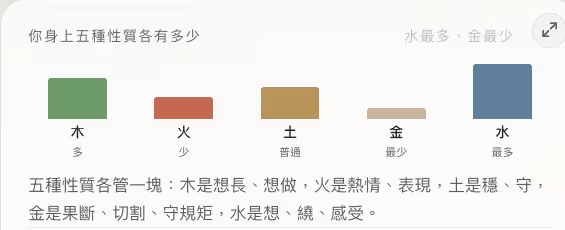
The BaZi page pairs a five-element chart with plain-language explanations. This account example was captured on October 19, 2026; it is not the reader’s chart or a health or ability score.
Six question-based systems cover the I Ching, Plum Blossom Numerology, Qimen Dunjia, tarot, oracle cards and sixty Jiazi fortune slips. They start with a question you want to consider. Phone numbers, license plates and brand names make up the remaining three entries, grouped under numbers. Brand names still involve text input: the category label does not mean every entry accepts digits alone. Choosing a relevant group is more useful than trying to work through all 24 at once.
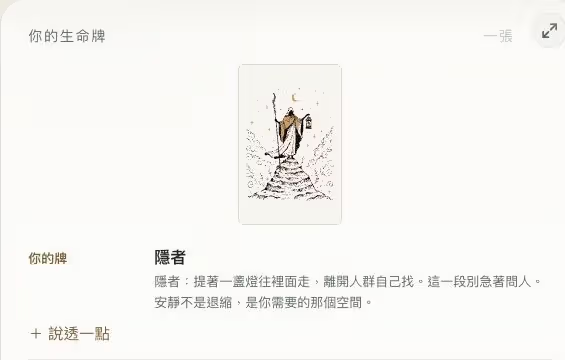
The Hermit on a tarot life-card page, captured on October 19, 2026. A life card and drawing cards for a specific question are different entry points; this image does not represent a draw or answer for the reader.
Missing birth time means different things in different systems
The BaZi introduction says a chart without a birth time can retain the year, month and day pillars, while omitting the hour pillar and interpretations that depend on it. On a day when a solar term changes, the time can also affect which pillar applies. Incomplete data therefore does not make every part unreadable, but a three-pillar result should not be treated as a complete eight-character chart.
Human Design needs particular care. Its introduction warns that a noon reference chart can differ in its channels, type and inner authority because of the Moon's position. The FAQ instead lists Human Design as unavailable without a birth time. The wording differs across these pages; a sample should not be treated as a definitive personal result. An astrology chart's ascendant and houses are also time-sensitive. Readers seeking an entry point without birth data can first explore the Enneagram or question-based tarot introduction.
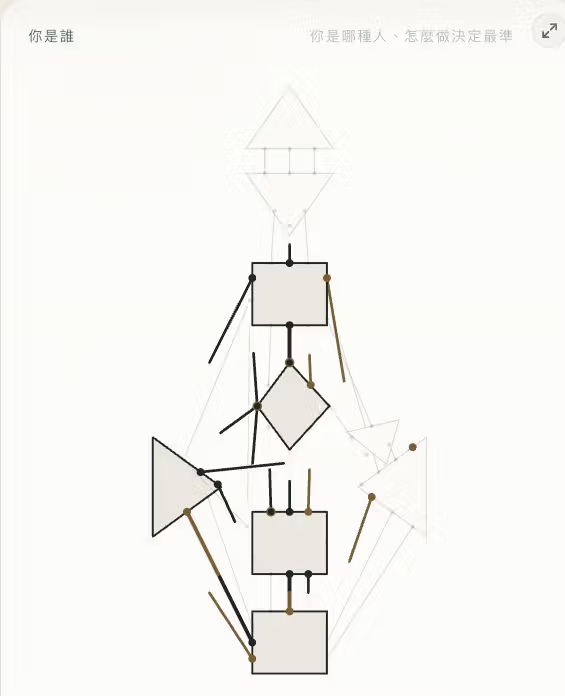
Centers and channels in a Human Design account example from October 19, 2026. Birth time can affect the configuration; the image cannot be applied to the reader or used to fill in an unknown birth time.
What is free, what is personal and what AI does
GATSEE lists system introductions, its glossary, chart calculations for the 24 systems and the shared almanac as free content. Deeper personal interpretations and some services have paid access, with a seven-day full trial for new members. Being able to read an introduction or generate a chart does not mean every layer of personal analysis is included. Current account access and the pricing page determine the applicable scope and purchase conditions.
According to the platform, each system's software engine calculates the charts, while AI turns existing results into readable prose. It also says AI does not receive birth dates, birth times, birthplaces or real names. These are the provider's public statements, rather than findings from an independent technical audit for this article. Agreement across systems describes a similarity of interpretations, not a prediction's success rate. The tools can be starting points for cultural exploration and self-reflection, while professional decisions need appropriate judgment.
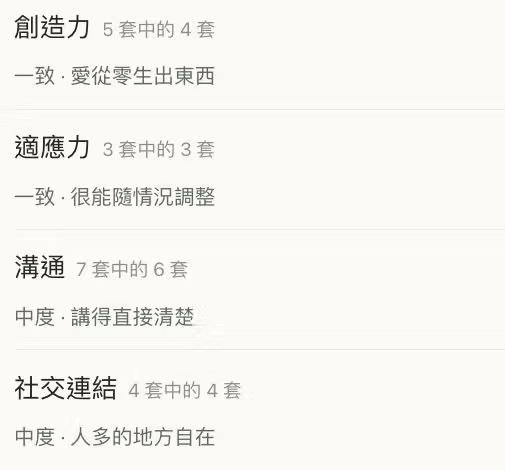
The cross-system view uses system counts to describe agreement in this October 19, 2026 example. Counts are not accuracy rates, and the number of contributing systems can vary by dimension.
Questions and answers
Do all 24 GATSEE systems need a birth time?
No. The guide divides them into birth data, names, questionnaires, questions and numbers, with requirements varying by system. BaZi can provide three pillars without the hour pillar; Human Design and parts of astrology need a birth time. A sample cannot supply a definitive missing answer.
Can I explore the systems without signing in?
Yes. Public guides, system introductions and FAQs are available first. Personal charts and results require signing in and providing the relevant information. Free introductory content and paid personal interpretations have different scopes.
Does agreement across several systems mean greater accuracy?
That conclusion does not follow. The platform's agreement measure describes whether systems point in similar directions; it is not a validated accuracy rate, probability or guarantee. Differences, missing data and methodological limits still matter.