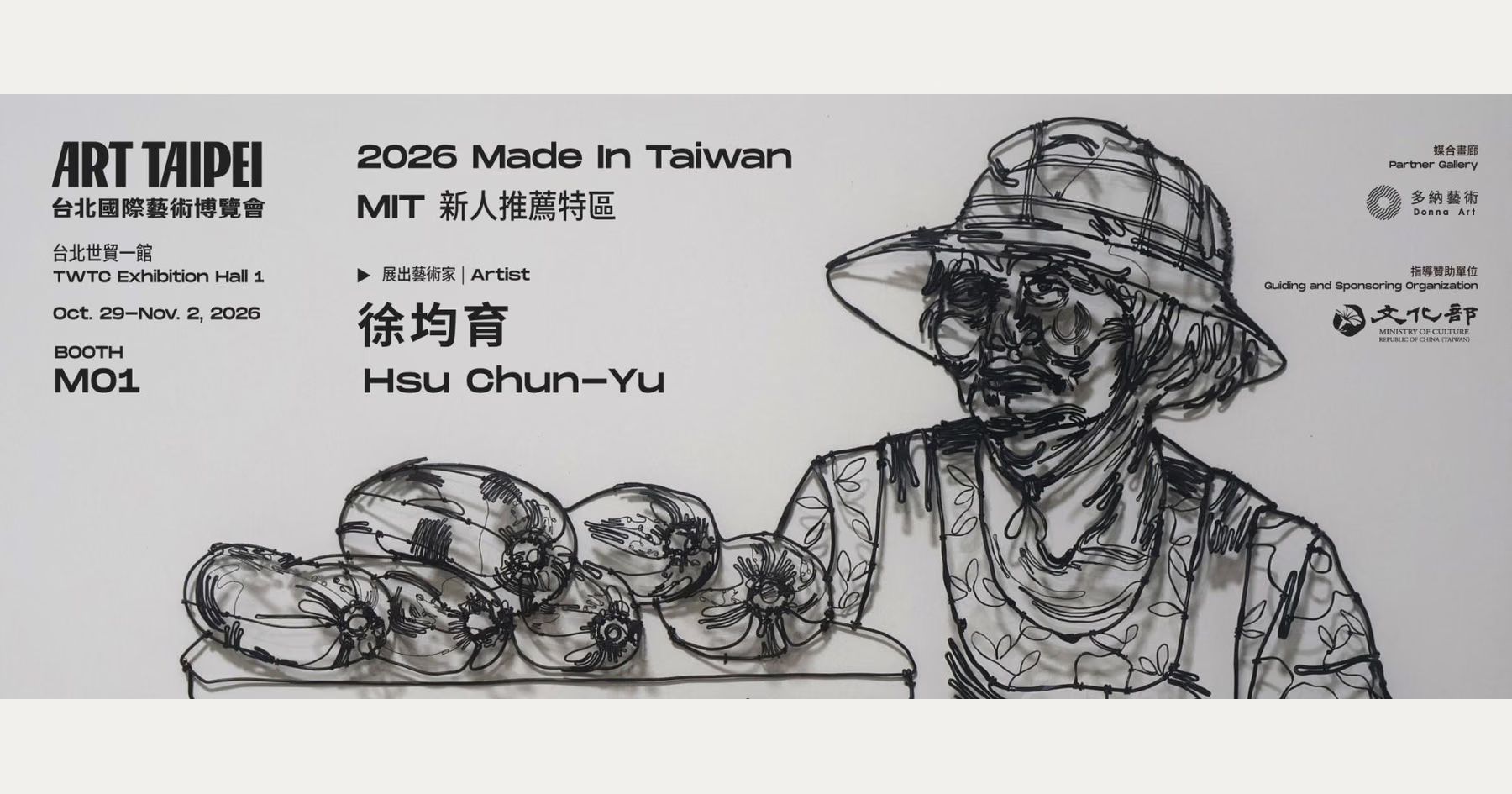
HSU Chun-Yu brings wire sculpture to ART TAIPEI booth M01, with public access from October 30
Donna Art presents the artist in the MIT emerging-artist section. Copper wire, open space and shadows turn everyday subjects into sculptural lines; preview and public hours differ.
Donna Art is partnering with HSU Chun-Yu for the MIT emerging-artist section at booth M01 during ART TAIPEI 2026. Public viewing begins at 2pm on October30 and continues through November2. October29 is a VIP preview day; the overall fair dates should not be read as unrestricted daily public access.
A useful thread through the presentation is how metal wire moves from a drawn line into a three-dimensional form and its shadow. HSU bends, wraps and crosses wire to retain a figure’s outline while allowing the background to remain visible through it. Instead of a closed surface defining volume, line, gaps and shadows share the work.
Lines replace solid masses in everyday subjects
Born in Hsinchu in1996 and now living and working in Tainan, HSU combines a background in metalwork with sculpture. Observation and sketches become figures shaped from copper wire, iron wire and related materials, describing posture, clothing folds and movement. The people need not have names or explicit stories; walking, pausing and resting become subjects worthy of attention.
Open structures also change the act of looking. As a viewer moves, lines at different depths overlap differently, while shadows form another contour. One approach is to begin with the overall posture, move closer to examine bends and joins, then look at how light and the background contribute. This is a suggestion for viewing the construction, rather than a record of a visit by us.
A puppy and a money tree show different uses of wire
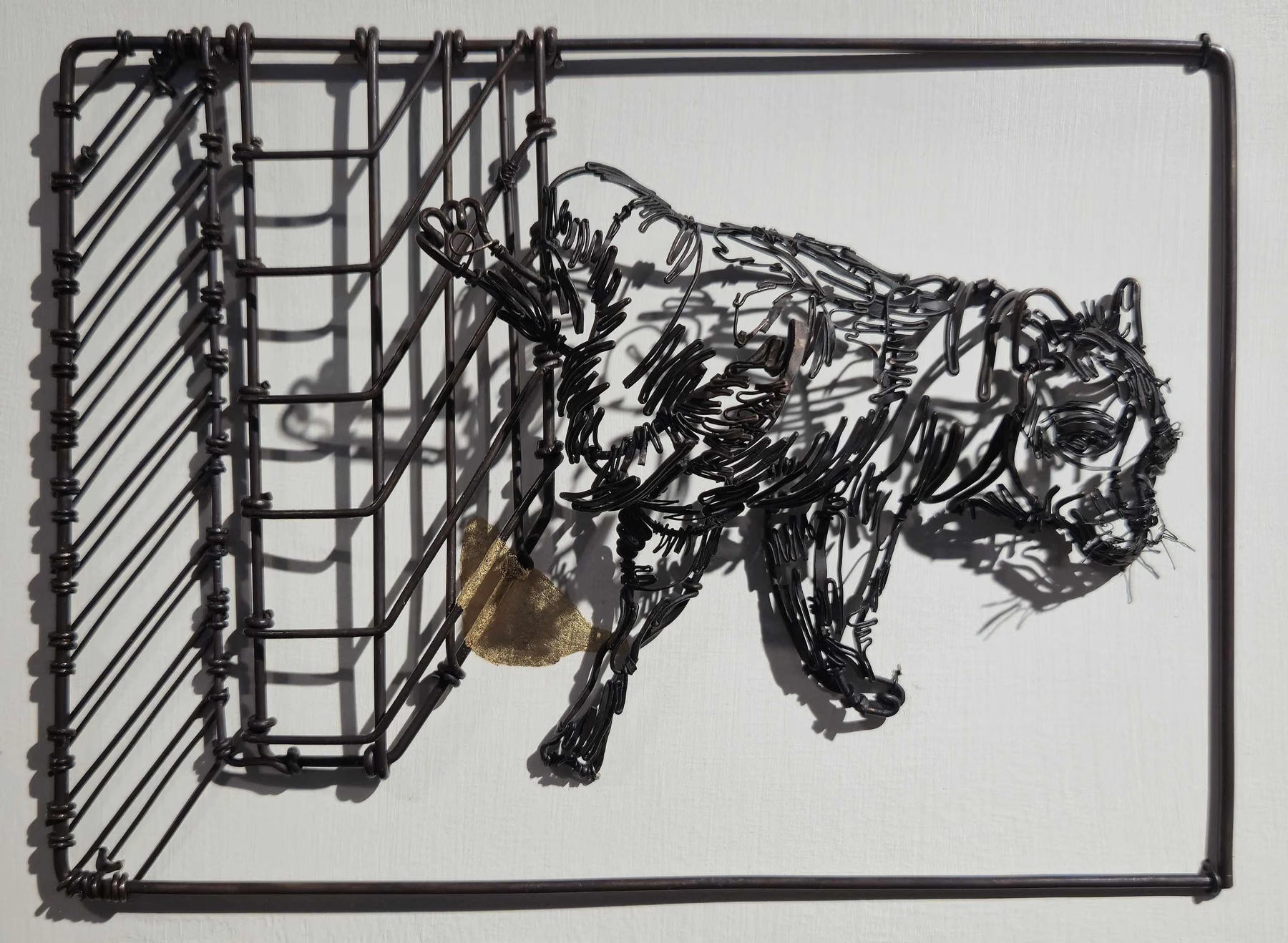
The gallery’s2026 work list includes Naughty Puppy, made from copper wire, wood and gold leaf, measuring17×22.5×7cm. The supplied image shows a dog’s head, body and paws built from dark lines that overlap with cast shadows, alongside gold details. The apparently light outline depends on many bends and joins, creating a form that resembles a drawing extended into space.
Naughty Puppy uses dark copper wire to outline a dog’s head and paws, with wood and gold details
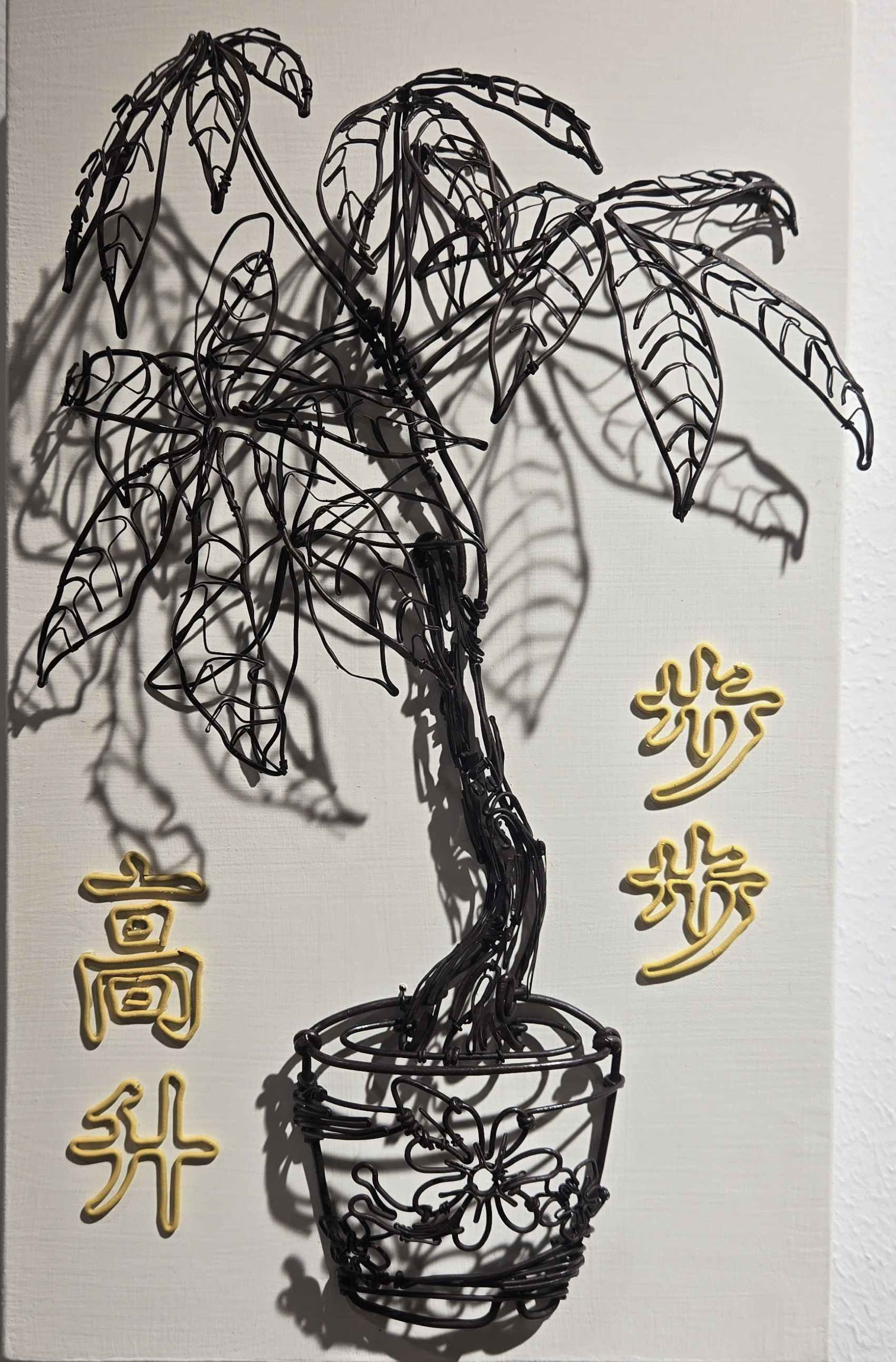
Everyone Has a Money Tree II, also dated2026, uses copper wire and wood and measures23×14×6.5cm. Its image shows a pot, trunk and leaves alongside the Chinese phrase meaning “rise step by step,” which is part of the work and should remain intact. These are examples from the media materials; the actual installation and daily display list should be checked at M01. The auspicious title is not a promise about collecting returns.
Everyone Has a Money Tree II forms a potted tree from copper wire beside gold Chinese characters meaning rise step by step
Plan public viewing separately from the VIP preview
M01 is in Taipei World Trade Center Exhibition Hall1, at No.5, Section5, Xinyi Road, Xinyi District, Taipei. Public hours are2–7pm on October30;11am–7pm on October31 and November1; and11am–6pm on November2. October29 and the earlier part of October30 are VIP preview periods with different entry eligibility.
Donna Art’s role here is the gallery partnership for the MIT emerging-artist section, which should be distinguished from its other booths or artists. Find M01 on the floor plan and check ticketing, admission eligibility and opening times before going. No ticket price is quoted here and free entry is not assumed. For visitors interested in materials and making, the way wire connects everyday images with space offers a reason to slow down and look.
Questions and answers
Can the general public simply visit on October29?
October29 is a VIP preview day. Public viewing starts at2pm on October30, subject to the organizer’s admission and ticketing rules.
Where is HSU Chun-Yu’s booth?
Booth M01 in the MIT emerging-artist section at Taipei World Trade Center Exhibition Hall1, No.5, Section5, Xinyi Road, Xinyi District, Taipei.
What materials does she use, and how can visitors approach the work?
Copper and iron wire are key materials. Start with posture, examine bends and joins, then consider the relationship between open spaces, background and shadows.