Women runners and artists in fiction: Taiwan connects 12 literary creators with new audiences
An October 31 literary matchmaking event at C-LAB brought together work about women in sport, art, history and everyday life. The exchange connects creators with publishers and other industries; participation does not mean publication or an adaptation deal.
A woman runner’s story can extend beyond winning, while women artists’ creative lives deserve a place beyond the margins of history. On October 31, Taiwan’s Ministry of Culture held its third 2026 literary creation programme matchmaking event at C-LAB, under the theme Next-Gen. Twelve creators introduced work to publishing, film, television, games and theatre professionals. This was an exchange to explore collaboration, rather than a launch announcing twelve books or twelve confirmed adaptations.
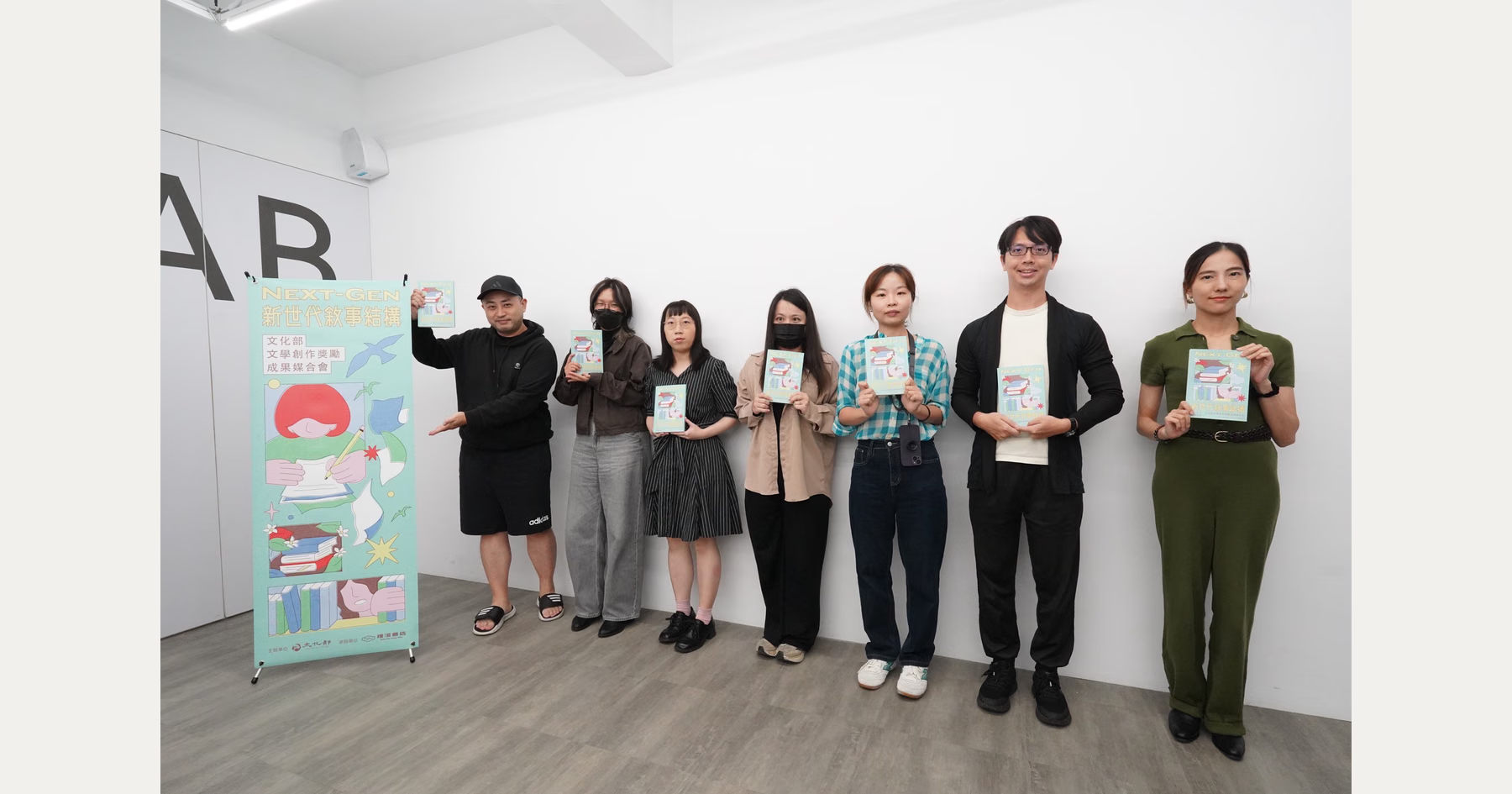
Participants received programme support between 2024 and 2026. Their work spans novels, short-story collections, children’s fiction and fiction drawing on folk culture, with themes including women’s sport, Taiwanese women’s history, entertainment, housing and environmental memory. Seven creators appear holding sample readers in the group photograph; five others joined online. Twelve is the total number participating, not the number pictured together.
From competitive running to artistic work, women’s experiences lead the narrative
Hao Ni-er’s 《強風向她》 centres on women runners and their competitive experiences, exploring self-discovery and growth beyond results. The premise shows how sports fiction can consider a person’s understanding of her place, rather than simply recording performances. These are literary themes, not findings about every woman athlete’s psychology or instructions for training. Work titles are retained in Chinese here rather than presented as official English editions.
Ho Wen-jeng’s 《女子圖像》 follows women working in the arts across different Taiwanese periods, including painters, photographers and a film sound recordist. It places overlooked creative experiences alongside political and artistic developments. Chen Yu-hsuan’s 《被烙下的蓬萊仙島》 draws on Changhua history and historical women to reflect on change through fiction. A novel’s historical material should remain distinct from independently established historical facts.
A girl’s ambitions, housing pressures and memories of home offer other entry points
Chen Ai-chi’s 《下狗女子》 follows a sixteen-year-old who dreams of becoming a star, considering how young performers seek self-worth within industry constraints. Yang Tzu-wei’s 《飛向太陽》 sends an eight-year-old girl on an adventure with a rooster that can no longer fly, using fantasy to address loss, trust and growth. Both begin with girls, but their ages, circumstances and literary directions differ; they should not be reduced to one formula for women’s coming-of-age stories.
Other works turn to housing and place. Lin Yu-kai’s 《租屋筆記》 uses crime fiction to explore housing scams, neighbourhood conflict and rented space. Hsieh Yu-chen’s 《踏浪而來的人》 draws on the 1980s scrap-metal industry in Wanli, Tainan, weaving together pollution, legends and belief. Such settings offer possibilities for work across media, but matchmaking is not a signed screen deal, and fictional plots are not legal or rental advice.
An introduction is not an adaptation guarantee
The event gives creators a way to introduce work to different industries and explore new forms for written stories. Other participating titles include 《溪浮仙人》, 《迷霧之下》, 《印魚》, 《迎鬧熱》 and 《直拳》, addressing folk belief, games, power in screen production, cultural transmission and combat sports. This variety supports discussion, while publication, licensing and production each require further steps.
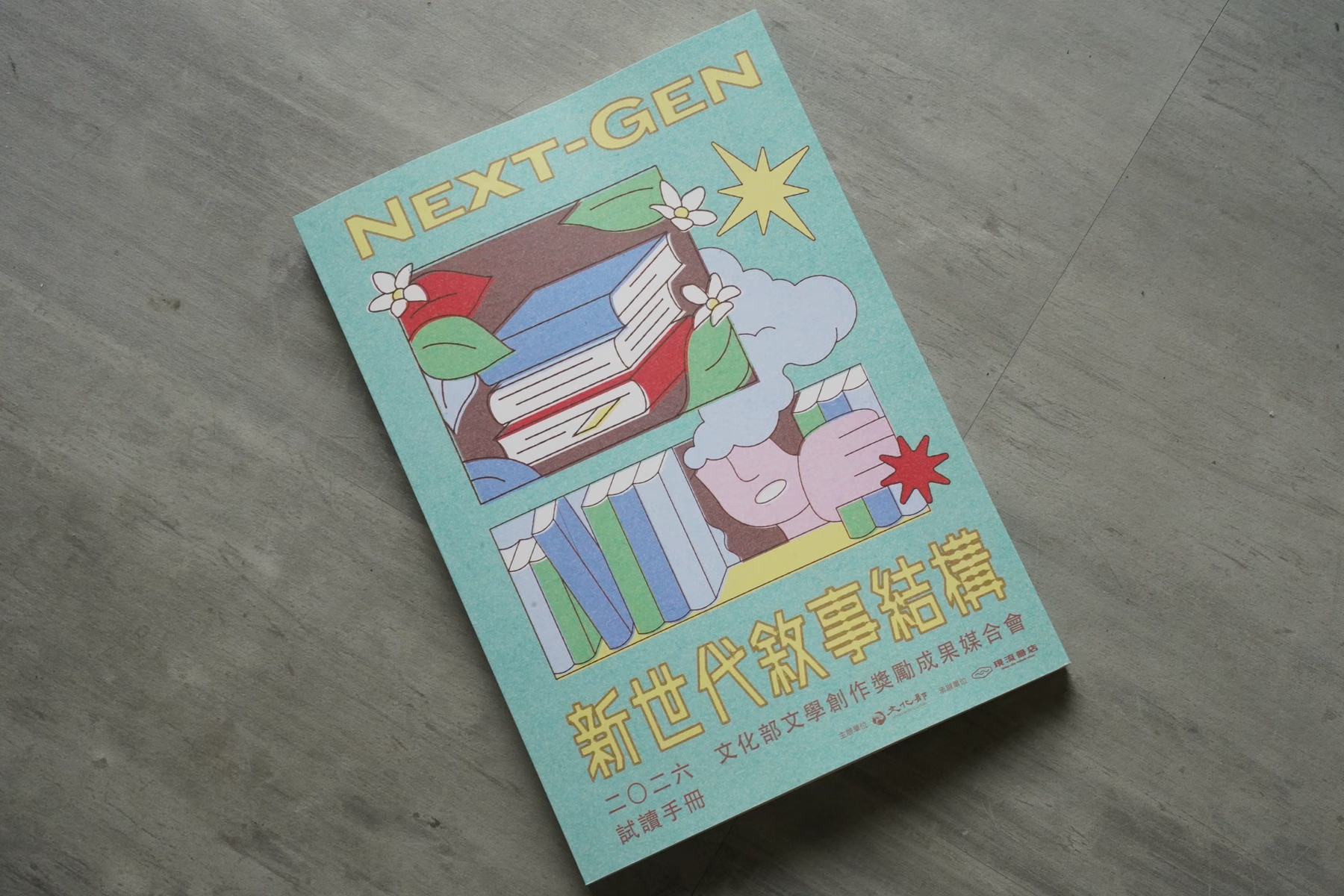
2026 Next-Gen sample reader on a grey tabletop
The ministry began the youth creation support programme in 2017 and changed it in 2025 into a literary creation programme without an age limit. Its newly released cumulative figures report support for nearly 400 works, including 105 that have been published; several have also become screen, stage or other cross-media projects. The figure 105 counts published works, not adaptations. Readers can follow the literary publishing and matchmaking platforms for updates. No common release date or complete retail list for these works has been established here, and a sample reader does not mean every work is on sale.
Questions and answers
Does the event mean all twelve works have been published?
No. Twelve creators took part in an exchange and matchmaking event. That does not establish publication or an adaptation contract for every work; individual progress needs confirmation.
What different women-centred themes appear?
《強風向她》 focuses on women runners, 《女子圖像》 on women artists, and 《被烙下的蓬萊仙島》 combines historical material with fiction. They take different narrative approaches.
Is the literary support programme still limited to young people?
The released information says it became an age-unrestricted literary creation programme in 2025. This does not mean applications are currently open; consult the current official notice for eligibility and deadlines.